
Home » Data Solutions » In-Building Wireless » Cellular Distributed Antenna Systems (DAS)

In today’s hyper-connected world, dropped calls and weak signals are not just frustrating; they are a liability. Large buildings, dense construction materials, and energy-efficient windows often disrupt or block cellular signals, creating dead zones where users cannot make calls, access data, or stay connected to critical systems. For hospitals, hotels, corporate campuses, or multi-tenant high-rises, these connectivity issues can harm safety, productivity, and tenant satisfaction.
The In-Building Wireless Solutions (IWS) team at MCA provides fully integrated Cellular Distributed Antenna Systems (DAS) and signal boosters to eliminate these challenges on a large scale. Our turnkey solutions capture cellular signals from outside towers and redistribute them throughout your building, ensuring reliable indoor coverage. Designed to support all major U.S. wireless networks, including Verizon, AT&T, T-Mobile, and FirstNet, our DAS solutions and signal boosters enhance 911 response capabilities, improve operational efficiency, and deliver scalable connectivity for smart buildings, IoT systems, and mobile workforces.
Our team delivers full-lifecycle Cellular DAS deployments built for reliability, scalability, and multi-carrier performance. Using a Neutral Host approach, we engineer systems that support all major U.S. carriers—ensuring seamless indoor coverage for voice, data, and smart technologies. Our process includes RF benchmarking, iBwave-certified design, equipment integration, carrier coordination, and post-install optimization. Keep reading to learn how MCA manages every phase - from site surveys to signal testing, commissioning, and long-term support - to deliver carrier-approved connectivity inside any facility.
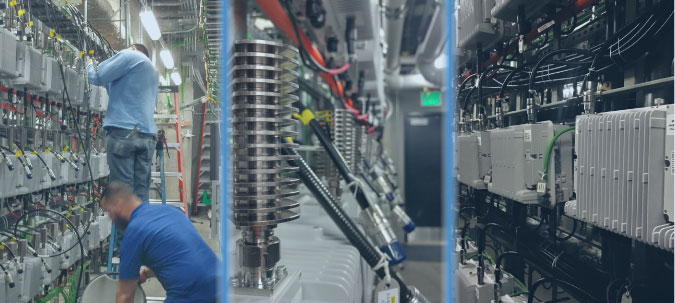

In-building cellular Distributed Antenna Systems are now a critical utility for sectors like commercial real estate, healthcare, education, retail, and government. By addressing indoor coverage challenges, DAS ensures reliable connectivity for voice, text, and data services. This drives safety, productivity, tenant satisfaction, and supports the increasing demands of connected technologies. From enabling 911 calls to powering IoT infrastructure and helping to maintain business continuity during outages, Cellular DAS is essential for modern operations.
Cellular DAS plays a critical role in enhancing safety and boosting tenant and employee satisfaction by ensuring reliable, uninterrupted connectivity in any building.
Scroll to Learn More >>
DAS improves indoor 911 call quality and routing, making it easier for emergency services to locate callers in complex structures like high-rises, schools, and healthcare facilities—where timely response can save lives.
Strong and seamless coverage eliminates dead zones and dropped calls, enabling consistent mobile access for tenants, employees, and guests. This improves workplace productivity, morale, and tenant retention, ensuring a better overall experience for occupants.
DAS ensures your business stays online during outages or emergencies by providing reliable cellular failover for critical operations. With strong in-building LTE/5G signals, DAS keeps essential operations running smoothly when wired internet fails.
Reliable connectivity depends on consistent, robust signal quality. DAS ensures your building offers uninterrupted mobile service—even in challenging environments.
Scroll to Learn More >>
DAS extends cellular coverage to areas where outdoor signals fail, like stairwells, basements, parking decks, and elevators. Strategically placed antennas overcome barriers such as reinforced concrete and energy-efficient glass, delivering reliable service building-wide.
By reducing the distance between devices and transmission points, DAS improves uplink and downlink performance, reduces network congestion, and enables faster data speeds—especially in high-density locations like stadiums, airports, and convention centers.
DAS reduces latency, which is critical for real-time services like VoIP, video conferencing, push-to-talk, and mobile apps. This is especially vital for industries like healthcare, finance, and customer service, where reliable, low-latency connections are essential.
Cellular DAS is built to adapt to changing technologies and demands, protecting your investment over the long term
Scroll to Learn More >>
DAS systems can expand to support additional frequency bands, carriers, and technologies like 5G and CBRS, ensuring they remain relevant and adaptable to future needs.
Modern DAS solutions support multiple wireless carriers simultaneously, allowing all tenants and visitors to choose their preferred carrier with no loss in service. Neutral-host systems offer full interoperability for seamless connectivity.
Investing in a Cellular DAS not only enhances connectivity but also increases property marketability and reduces long-term expenses.
Scroll to Learn More >>
Installing a robust DAS infrastructure makes properties more attractive to tenants and buyers. Seamless wireless coverage is now a critical component of functional spaces, leading to higher retention rates and improved marketability.
Integrating DAS during construction eliminates the need for costly future retrofitting. This proactive approach minimizes disruptions, reduces lifecycle costs, and ensures seamless deployment from the start.
DAS supports smart building systems like lighting, HVAC, elevators, sensors, and guest Wi-Fi. It enhances operational efficiency and scalability for future technologies, ensuring your building is prepared to meet evolving connectivity demands.
Cellular DAS enhances coverage, supports smart technologies, and boosts property value—keeping your building safe, connected, and future-ready.
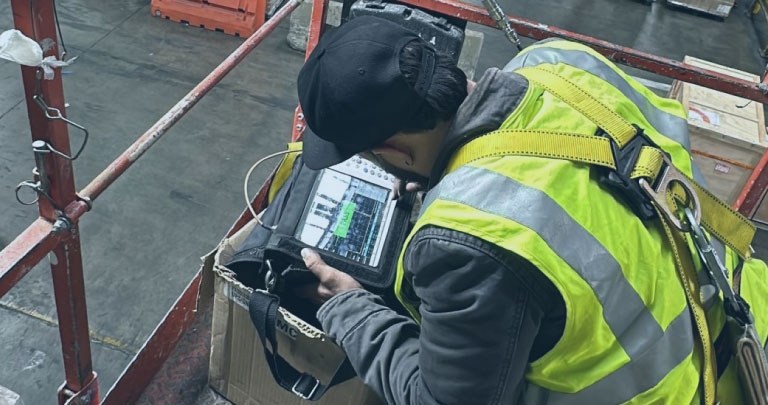
A robust Cellular Distributed Antenna System starts with meticulous planning—far beyond the hardware. At MCA, our comprehensive discovery and design process ensures every DAS system is purpose-built to resolve in-building coverage challenges, meet carrier and facility requirements, and adapt to future technological advancements. From initial benchmarking to detailed budgeting, we approach every project with precision, clarity, and efficiency to deliver a customized solution that performs flawlessly from day one.
Before diving into system design, MCA collaborates closely with stakeholders to conduct a full assessment of the building's RF environment, occupancy patterns, layout, and construction materials. This detailed analysis pinpoints where coverage is most critical while identifying essential carrier services for tenants, employees, or operational needs. Whether your goal is to enable seamless indoor 5G, support IoT expansion, or strengthen signals in hard-to-reach areas, MCA’s planning process ensures your priorities are clearly defined and seamlessly integrated into the system's design.
MCA utilizes industry-leading PCTel spectrum analyzers, such as the SeeHawk Monitor System, to conduct in-depth on-site benchmarking. This system from PCTel is used for monitoring spectrum and measuring radio signals at radio sites, capturing real-time data on existing cellular signal strength, interference levels, and environmental noise across multiple carrier bands. Benchmarking allows us to identify coverage gaps and determine whether a passive or active DAS system is required. It also provides the critical RF data necessary to secure carrier interest and streamline the signal source agreement process.
Following benchmarking, MCA engineers leverage iBwave design software to create comprehensive, carrier-ready DAS blueprints. These highly detailed CAD-quality plans include heatmaps, precise antenna placements, cabling layouts, equipment configurations, and donor antenna specifications. iBwave designs facilitate smooth collaboration with wireless carriers and building owners, enabling faster approvals and well-defined project scopes during construction or retrofitting phases.
MCA provides transparent project estimates complete with itemized bills of materials (BOMs), infrastructure pathway details, and labor cost breakdowns. Our cost modeling accounts for every detail—from material lifts and ceiling access to NEMA-certified enclosures and backup power systems. This ensures your Cellular DAS design is both technically sound and financially practical, minimizing the risk of change orders, budget overruns, or compliance issues during the buildout.
To make DAS ownership accessible, MCA offers a range of project financing options tailored to both tenant-owned and developer-financed deployments. Whether you require a traditional CAPEX model or an OPEX structure with predictable monthly payments, we provide solutions to meet your financial needs. Additionally, we assist in arranging co-funded or neutral-host deployments with wireless carriers, particularly for high-traffic venues, public buildings, and mixed-use developments.
With MCA, your Cellular DAS system isn’t just designed - it’s engineered to perform, evolve, and deliver seamless connectivity for years to come.
Let us help you stay ahead of the curve with a solution that meets today’s needs and tomorrow’s demands.

Cellular DAS is an advanced solution composed of multiple interconnected components designed to ensure seamless in-building cellular coverage. While terminology may differ across OEMs, the core functionality of these components remains consistent. For instance, what one provider calls a “Remote Radio Unit” (RRU) might be labeled a “Remote Radio Head” (RRH)” by another. Regardless of the names, all DAS systems share are designed to optimally capture, process, distribute, and maintain cellular signal strength and coverage.
A Distributed Antenna System (DAS) begins with an external signal source, typically received via rooftop-mounted donor antennas that capture signals from nearby carrier towers. For enhanced performance or capacity, direct carrier signal feeds—such as small cells, on-site Base Transceiver Stations (BTS), or NodeBs—may be used instead. In multi-carrier systems, a Point of Interface (POI) tray consolidates, balances, and conditions incoming signals from various operators before sending them to the system’s headend. This process safeguards signal integrity and prevents overpowering downstream components.
The headend, often called the Headend Control Module (HCM) or Base Station Unit (BSU), serves as the centralized hub of the DAS. This equipment filters signals, separates band-specific frequencies, and assigns routing paths. RF interface modules (RIMs) housed within the headend prepare signals for optical transport while ensuring compliance with carrier-specific power and spectrum requirements. Typically located in a secure, climate-controlled telecom room, the headend connects to the POI tray upstream and the fiber optic distribution network downstream.
Remote Units are key components in a cellular DAS, distributing signals to in-building antennas. These include Remote Radio Heads (RRHs) or Units (RRUs), which convert optical signals to RF and amplify them for zone-specific coverage. Installed in telecom closets or plenum spaces, they connect to the headend via fiber to reduce signal loss. Some manufacturers use Digital Remote Units (DRUs) for advanced processing or monitoring. Regardless of terminology, all remote units enhance downlink and uplink signals, ensuring smooth handoff to antennas. They are crucial in both hybrid DAS 2.0 and fiber-deep DAS 3.0 systems.
In-building antennas, sometimes called Remote Antenna Units (RAUs), deliver cellular signals directly to mobile devices. These antennas are connected via coaxial cables and rely on passive components like directional couplers, splitters, combiners, and tappers to optimize signal distribution. Their purpose is to balance signal power across floors, zones, and heavily constructed areas, eliminating dead zones and ensuring a seamless user experience. During commissioning, these components are finely tuned to meet both coverage and carrier-specific requirements.
Fiber optic cabling forms the backbone of the DAS, carrying digital signals from the headend to remote units throughout the building. With minimal signal loss and immense bandwidth, fiber enables remote equipment to be installed at significant distances from the central hub without compromising performance. Both single-mode and multi-mode fibers are used, depending on building layouts and desired performance levels. In new builds or retrofits, fiber paths are often co-planned with other systems, like ERCES, to streamline conduit use and minimize infrastructure redundancy.
The passive system is connected via plenum-rated coaxial cables, typically ½” or ¼” in diameter, linking each antenna to the nearest remote unit or junction. Careful cable routing ensures minimal signal loss, balanced power distribution, and adherence to fire safety standards. The design phase coordinates installation routes to account for ceiling access, distance limitations, and riser space, aligning with project specifications.
Modern DAS infrastructure relies on flexible, scalable power distribution to keep remote components running. Power Supply Units (PSUs), located in Intermediate Distribution Frame (IDF) closets, deliver AC or DC power to remote units via copper, CAT5, or hybrid fiber cabling. Hybrid fiber, combining optical fiber for signal and copper for power, simplifies advanced installations. Some OEMs, like JMA, enhance efficiency with Digital Electricity™, a patented high-voltage delivery method from VoltServer Inc. This approach reduces power infrastructure complexity, especially in hard-to-reach areas with limited electrical access.
Uninterrupted cellular coverage during power outages is ensured by Backup Battery Units (BBUs) or UPS systems, typically located in telecom rooms or IDF closets. These systems provide power for 12 to 24 hours, meeting carrier requirements for critical sites like hospitals, emergency shelters, and government facilities. Smart battery monitoring and automatic failover enhance reliability, ensuring uptime during emergencies. MCA engineers design DAS power systems to meet building codes, carrier standards, and operational needs.
In large campuses or facilities, a single DAS headend often struggles to provide full coverage. Network Expansion Units (NEUs) solve this by extending the fiber network to reach remote buildings. These rack-mounted devices replicate the headend's signal processing, seamlessly distributing signals to remote units. By ensuring consistent performance and minimizing signal loss over long distances, NEUs fully integrate all buildings into a unified DAS system. They’re ideal for universities, hospitals, airports, and enterprise campuses where reliable connectivity is crucial.
Modern DAS networks utilize centralized monitoring and control platforms, either on-premises or cloud-based. These systems provide real-time diagnostics, performance tracking, fault alerts, and alarm logging across the entire signal path—from the POI tray to the antennas. They allow for proactive identification of performance issues or component failures, simplify firmware updates, and enable remote system optimization, all while minimizing on-site disruptions.
A well-designed DAS balances active and passive components to deliver consistent, carrier-approved signal coverage across every floor, room, and corridor of a facility. Whether your system is donor-fed or small cell-powered, understanding these components—and how they interoperate—is key to ensuring high performance, scalability, and long-term reliability. MCA’s engineering team brings decades of experience integrating these technologies across commercial, healthcare, hospitality, and education environments nationwide.

MCA partners with the industry’s top cellular DAS manufacturers to deliver tailored, future-ready coverage solutions that meet the demands of complex facilities, campuses, and large public venues. Our portfolio includes all-digital, fiber-fed, and hybrid DAS systems engineered for scalability, 5G readiness, and carrier interoperability. Whether enhancing a new facility or modernizing legacy infrastructure, MCA designs, integrates, and supports cellular DAS solutions with full coordination from system architecture to carrier certification.
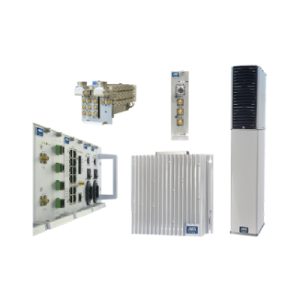
JMA’s TEKO™ DAS is a modular, high-capacity platform designed for seamless multi-operator, multi-technology coverage. Supporting 5G, 4G LTE, and legacy cellular bands, TEKO™ is engineered for complex enterprise environments, offering distributed power management and flexible zoning across large venues and campuses. Its centralized architecture enables streamlined integration and maintenance, while Digital Electricity™ power delivery simplifies remote unit installations and reduces the need for wired infrastructure.
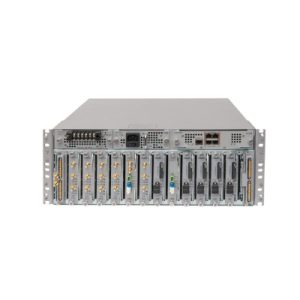
Corning’s Everon™ DAS is an all-optical, fiber-deep platform that supports multiband, multi-operator cellular coverage. Purpose-built for hospitals, high-rise offices, airports, and education campuses, the 6000 Series offers low-latency, high-bandwidth connectivity with passive DAS simplicity and active DAS performance. Designed with scalability in mind, Everon™ accommodates 5G and CBRS, making it a long-term investment for connectivity-first buildings.
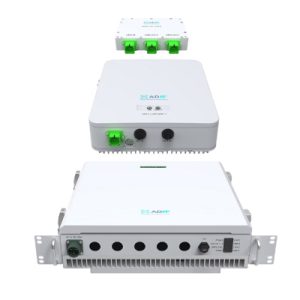
The ADXV Series DAS from ADRF is a versatile, carrier-grade optical distribution system delivering reliable signal coverage from VHF to 4 GHz for indoor and outdoor applications. Supporting all protocols and modulations, its modular design allows easy scalability, while features like Auto Commissioning Routine™, built-in Spectrum Analyzer, Signal Generator, and a web-based GUI simplify setup and optimization. NEBS Level 3 compliant with short lead times, it’s a cost-efficient solution for venues of any size.
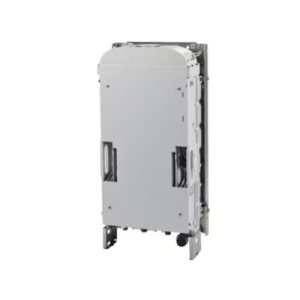
Nokia’s AirScale DAS platform delivers high-capacity indoor and outdoor coverage through a centralized baseband unit and distributed remote radios. It routes signals via an aggregation hub, enabling dense coverage and advanced sectorization with devices like Osprey RRHs and Hasbrok Massive MIMO radios. Designed for multi-operator, multi-technology deployments, AirScale simplifies integration for enterprises and carriers.
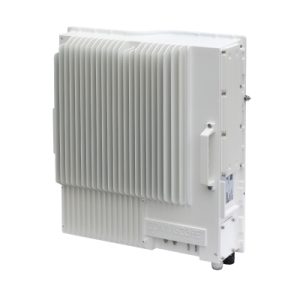
Commscope’s ION-U is a modular DAS platform designed for easy deployment, reduced hardware, and minimal specialized labor. Its unified low- and high-power headend supports indoor and outdoor coverage from one master unit, while embedded intelligence aids system design, auto-generates documentation, and streamlines setup with a plug-and-play interface. Features like color-coded connectors, automatic cable validation, and remote tools simplify installation, while built-in diagnostics, spectrum analysis, and PIM monitoring ensure top network performance and quick issue resolution.
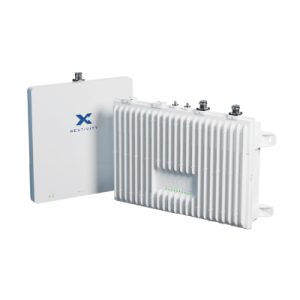
The Fiplex FLEX Series offers a modular, compact approach to public safety signal enhancement. These digital Class A BDAs are equipped with advanced signal filtering, networked system architecture, and optional fiber-fed expansion capabilities. Designed to meet NFPA and IFC compliance standards, FLEX systems are optimized for indoor installations requiring high survivability and minimal maintenance. With Honeywell’s acquisition of Fiplex, this line continues to evolve, enhancing capabilities and maintaining strong code alignment.
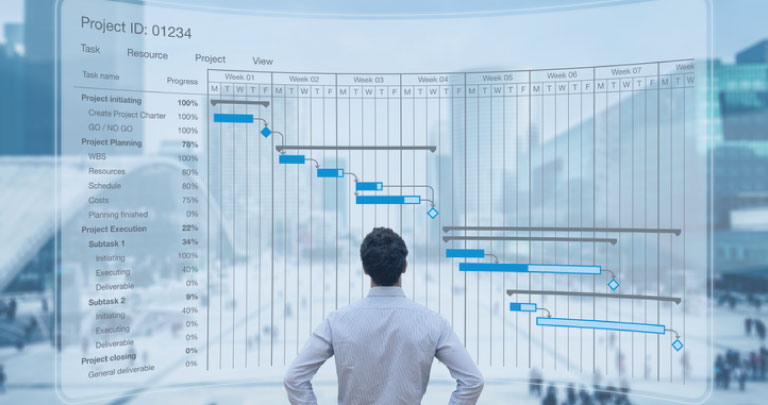
Deploying a successful Cellular DAS system requires more than installing hardware—it demands expert coordination, seamless execution, and collaboration with national wireless carriers. Once the contract is signed, our IWS team manages every stage, from construction coordination and RF validation to commissioning and carrier approval. With over 90 offices and one of the largest DAS integration teams in the country, MCA delivers systems on time, thoroughly tested, and ready for activation across all supported carriers.
MCA serves as your centralized project manager, seamlessly coordinating with OEMs, general contractors, electrical subcontractors, and construction teams. Our experts ensure that hardware is delivered on time, installations align with construction milestones, and contractors adhere to manufacturer specifications and industry best practices. From sequencing and material logistics to quality inspections and documentation, we handle every detail required by wireless carriers and facility stakeholders to keep your project on track.
Before installation begins, MCA collaborates with facility engineers and contractors to ensure all foundational elements are ready. This includes verifying climate-controlled headend rooms, proper grounding, available rack space, cable pathway routes, and preparing rooftops or riser shafts for donor or small cell signal sources. We also review AC and DC power requirements, identify battery backup needs, and confirm everything meets client or carrier guidelines for a smooth deployment.
To streamline deployment and minimize on-site errors, MCA stages and pre-tests DAS systems in advance. We validate POI trays, ensure all remote and headend equipment is ready for integration, and organize installation materials by zone or floor. Fiber and coax terminations, connectors, and enclosures are labeled and prepped for rapid installation. This meticulous approach reduces field adjustments, ensuring fast, accurate execution at every step.
Unlike ERCES deployments, Cellular DAS systems require close collaboration with wireless carriers. MCA manages the entire signal source approval process, engaging with AT&T, Verizon, T-Mobile, and others to secure direct RF feeds, BTS provisioning, or small cell integration. We handle all Point of Interface (POI) documentation, RF engineering submissions, and coordinate on-site testing schedules to meet each carrier’s commissioning standards. This ensures systems are activated efficiently and align with provider performance expectations.
Cellular DAS systems must adhere to FCC regulations to avoid interfering with the broader RF environment, including public safety radio networks and city-operated private wireless systems. At MCA, we ensure compliance by managing system registrations, verifying signal amplification, and ensuring spectrum integration across carriers. For off-air donor antennas, we handle licensing and authorization with FCC GROL-certified technicians when needed. Our thorough approach minimizes regulatory risks and ensures interference-free signal distribution throughout your building.
MCA’s team of OEM-certified installers delivers comprehensive DAS builds for both new and existing structures. From structured cabling and headend rack installations to coax runs and antenna placement, every detail is executed with precision. We work closely with building management and trades to avoid conflicts, ensure compliance with NEC and fire codes, and maintain detailed documentation of all installation paths, penetrations, and mounting. Whether it’s a hospital, office tower, stadium, or campus, we adapt the installation process to suit the unique needs of each site.
Once installation is complete, MCA’s technicians integrate and fine-tune the system for peak performance. We verify uplink and downlink signal levels, balance output across zones, perform fiber and coax sweep testing, and optimize antenna gain and handoff thresholds. Remote units are configured for carrier-specific requirements, and the headend is calibrated to minimize signal loss and maximize coverage. All necessary software updates and firmware adjustments are completed prior to carrier testing.
After commissioning, MCA works directly with wireless carriers to conduct acceptance testing, including RF quality checks, KPI validation, and final network onboarding. We lead each walk-through, resolve any remaining punch list items, and provide a comprehensive closeout package with as-builts, signal maps, and system specifications. MCA ensures all required carrier approvals are secured, delivering a fully operational system ready to provide reliable indoor coverage from Day One.
A Cellular DAS system’s lifecycle doesn’t end at installation. MCA offers ongoing support through service-level agreements (SLAs) or fully managed service programs. Our team provides remote monitoring, performance analytics, and annual system validations to ensure uptime, consistent coverage, and carrier compliance. Whether you need emergency dispatch, scheduled inspections, or long-term firmware maintenance, MCA is here to support your in-building wireless infrastructure at every stage.
At MCA, our Cellular DAS solutions are built on engineering precision, regulatory compliance, and certified technical expertise. From design to deployment, our nationwide team of credentialed professionals ensures your system meets the highest standards for safety, performance, and carrier readiness. Building owners, contractors, and wireless providers trust our solutions to deliver reliable connectivity.
MCA is a UL-listed integrator recognized in numerous jurisdictions for meeting stringent safety and quality standards. This certification reflects our unwavering commitment to delivering reliable, standards-compliant DAS infrastructure that earns the approval of carriers and regulatory authorities.
Our field technicians hold FCC General Radiotelephone Operator Licenses (GROL), ensuring every deployment adheres to federal regulations for signal transmission and RF hardware operation. This guarantees regulatory compliance while protecting your infrastructure investment.
Our design experts are certified at the highest levels of iBwave software training, enabling them to create detailed, floor-by-floor coverage models, equipment layouts, and Bills of Materials (BOMs) tailored to your facility. This precision results in faster carrier approvals and minimizes costly changes during installation.
Our technicians are factory-trained by leading OEMs, including JMA Wireless, Corning, ADRF, and CommScope. This hands-on training ensures system components are installed and commissioned to manufacturer specifications, guaranteeing compatibility, longevity, and peak performance.

With extensive experience navigating carrier-specific requirements, our certified project managers streamline the approval and validation processes. They coordinate seamlessly with property stakeholders and national carriers to ensure a smooth, efficient integration from day one.
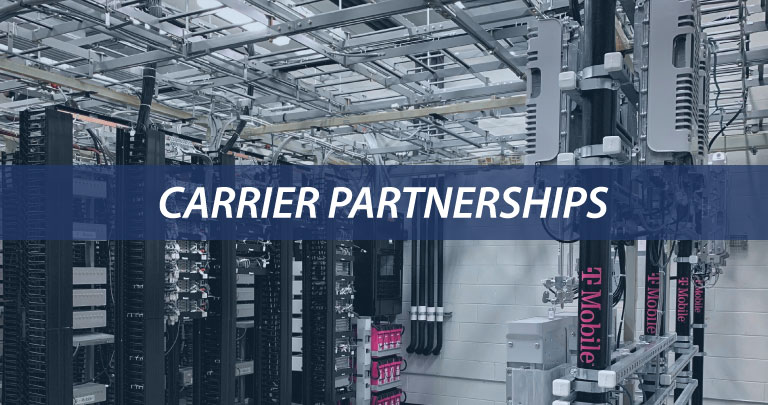
MCA partners with national-scale wireless carriers like Verizon, AT&T, T-Mobile, and FirstNet to ensure seamless cellular DAS integration and acceptance. We manage signal source agreements, align designs with carrier requirements, and oversee the entire process from approval to activation. Our expertise in multi-carrier DAS deployments ensures your system supports current and future technologies, meets performance standards, and accelerates deployment.

Creating an accurate DAS estimate involves much more than measuring building size. MCA carefully evaluates carrier signal availability, material-based RF attenuation, coverage needs, floor layouts, installation access, and multi-tenant demands. We also assess antenna placement, backhaul options, and pathway sharing with other systems. Every estimate is customized to balance performance, capacity, and long-term value—providing clarity and accuracy before construction begins.

MCA offers a range of flexible financing models to make Cellular DAS deployments more accessible without heavy upfront expenses. Options include managed service agreements, lease financing, and RF-as-a-Service (RFaaS), converting capital expenditures into predictable operating costs. We also facilitate carrier-funded deployments when available. These scalable plans are designed to meet your operational goals, budget constraints, and long-term infrastructure strategies.
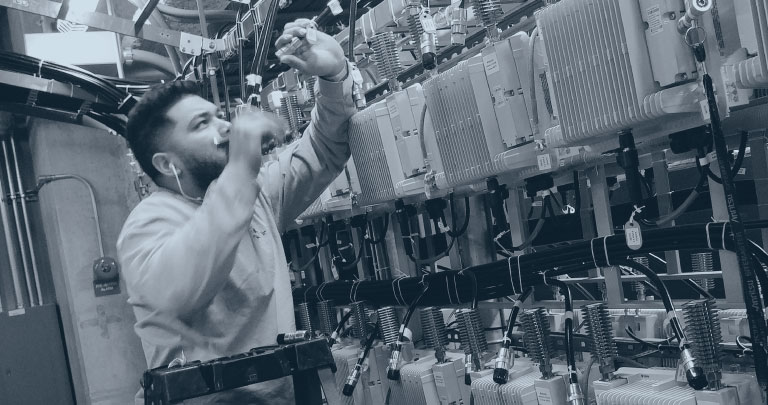
MCA delivers unmatched expertise in every Cellular DAS deployment, combining advanced RF engineering, certified iBwave design, strong OEM relationships, and a nationally deployed field team. As a trusted integrator for all major U.S. carriers, we ensure your system is properly designed, approved, and activated for multi-operator performance. Guided by our Service-First DNA, we manage the full system lifecycle - from benchmarking and design to carrier coordination, commissioning, and remote monitoring - making MCA the partner of choice for seamless, reliable indoor cellular connectivity.











Building Safety: Exploring "9-1-1 Inside"
Public Safety ERCES
& Motorola Solutions
Understanding ERCES
& DAS SYSTEM Costs
4 Considerations for
Cellular DAS Deployments
Understanding DAS
Funding Options
UL 2524 Certified DAS Solutions
In-Building Safety
Events with MCA & SBC
In-Building Mobile
Coverage with InfiniG

Security threats are evolving. Is your facility’s protection evolving with them?
From AI-powered surveillance and access control to concealed weapon detection and cloud-based video backup, today’s security landscape demands more than just cameras and locks—it requires integration, automation, and insight.
This quick 20-Point Security Audit helps you evaluate your current systems, uncover hidden vulnerabilities, and identify opportunities for improvement.
Fill out the form below to download the checklist and discover how MCA’s integrated security ecosystems can:
Whether you’re attending GSX or evaluating your next phase of facility protection, MCA is your trusted advisor in next-gen security.