
Home » Data Solutions » Advanced Networking Solutions » Network Infrastructure Management Systems

In today’s complex digital ecosystems, managing critical network infrastructure requires intelligent, scalable solutions for full visibility, automation, and service assurance across all connectivity layers. MCA’s Network Infrastructure Solutions (NIS) team delivers advanced management platforms unifying control across microwave, IP/MPLS, optical, and FTTX domains. These solutions help public agencies, critical infrastructure providers, and enterprises simplify operations, reduce downtime, and ensure reliable performance at scale.
As Nokia’s leading resale partner in the USA, and in collaboration with our sister company Infinity Technology Solutions—Nokia’s top North American Value-Added Distributor—MCA provides tailored tools for next-gen broadband, private wireless, and carrier-grade transport networks. Powered by Nokia’s software ecosystems, including NSP, Altiplano, WaveSuite, NetGuard, and Corteca, our solutions enable centralized control, intelligence, and automation. With a service-first approach, MCA ensures seamless integration and optimization, empowering your network to drive digital transformation.MCA provides advanced network management solutions for modern, multi-technology environments. From IP/MPLS networks and optical transport systems to fiber access infrastructure, microwave backhaul and 5G-ready core networks, our tools provide unified control across every domain. MCA's solutions deliver intelligent automation and deep operational insights to simplify complexity and optimize performance at scale. Seamlessly integrated with Nokia’s software ecosystem, our solutions empower organizations to manage broadband infrastructure, packet optical services, and subscriber access networks with unmatched speed, resilience, and precision.


Efficiently managing optical networks is key to scaling modern photonic and packet-optical infrastructure. Nokia’s advanced network management solutions provide the visibility, control, and automation needed to optimize high-capacity WDM, OTN, and P-OTN networks. From centralized orchestration to real-time performance monitoring, these tools enable operators to manage long-haul, regional, and metro networks with ease, ensuring high performance and reliability. Let’s explore the key components of Nokia's optical management ecosystem.
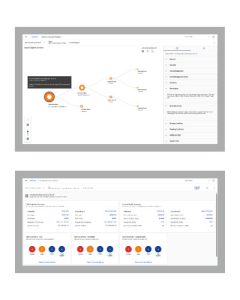
Nokia’s Network Services Platform (NSP) brings end-to-end SDN control and service orchestration across both IP and optical layers. For P-OTN transport, it enables dynamic wavelength path computation, automated fault restoration, and SLA assurance for Carrier Ethernet, OTN, and wavelength-based services. Its multilayer coordination capabilities allow seamless integration between IP/MPLS transport and DWDM/OTN layers, ensuring traffic is routed at the most efficient layer while maintaining quality of service.
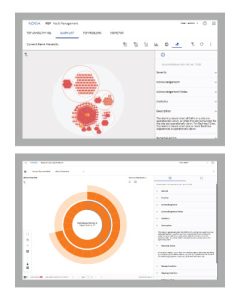
Nokia’s integrated Fault Management System (FMS) and Performance Monitoring (PM) tools provide continuous visibility into the optical network’s health. FMS offers intelligent alarm correlation and root cause analysis, while PM tracks critical optical metrics such as latency, signal quality, and throughput. Additionally, we offer support for legacy TSM-8000 FMS systems, ensuring seamless operations for older infrastructure. Together, these tools empower operators to quickly address network issues, minimize downtime, and meet the high reliability demands of mission-critical transport environments.
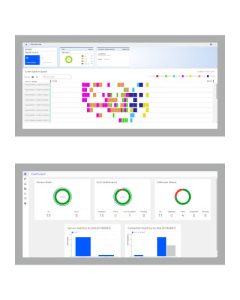
Nokia’s WaveSuite portfolio streamlines optical network operations with advanced automation, service enablement, and analytics tools. From automating tasks like onboarding and provisioning to enabling on-demand service activation and delivering real-time network insights, WaveSuite helps operators reduce complexity, ensure consistency, and optimize performance. Designed to scale across large transport networks, it empowers operators to deliver reliable services while maintaining operational efficiency and SLA compliance.
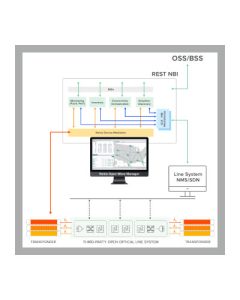
Nokia’s NA Suite delivers advanced automation and orchestration for modern optical networks, supporting open, disaggregated, multi-vendor environments. Built on cloud-native principles, it offers tools for network management, SDN control, and real-time service restoration. Features include programmable transport networks, coherent pluggables, open optical interfaces, and true multi-vendor interoperability. With intent-based orchestration and simplified operations, Transcend helps operators streamline network complexity and boost performance across diverse optical ecosystems
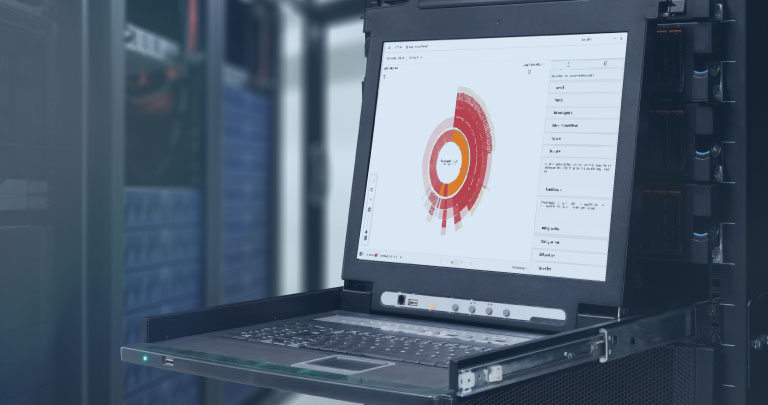
As modern transport networks rapidly evolve, they're integrating high-speed IP/MPLS routing, software-defined metro cores, and mixed fiber-and-microwave transport backbones into dynamic, multi-domain infrastructures. Managing these complexities requires advanced solutions that unify network control, streamline operations, and ensure reliable service delivery. From centralized SDN control to intelligent automation and security, these solutions help CSPs and operators optimize network performance and meet growing demands.
Nokia's Network Services Platform (NSP) provides centralized SDN control and service orchestration across microwave, IP/MPLS, Carrier Ethernet, and optical layers. NSP enables real-time path computation, bandwidth-on-demand, traffic steering, and intent-based routing policies. Integrated telemetry offers granular visibility into link utilization, latency, and service health, allowing operators to proactively manage performance and enforce SLAs at scale. With its advanced orchestration capabilities, NSP helps operators efficiently handle multi-layer networks while ensuring optimal service delivery.
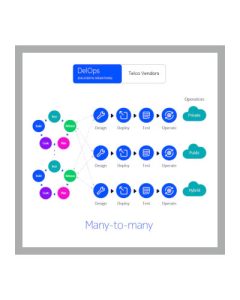
The DelOps Suite brings DevOps-style automation to carrier-grade network environments, supporting CSPs in adopting modern CI/CD workflows. Designed to extend automation beyond software delivery, DelOps incorporates configuration management, testing, and version control for microwave, IP and, optical transport networks. It enables GitOps workflows, continuous validation, and rapid rollback, ensuring safe and reliable updates across large infrastructures. By streamlining deployment processes, DelOps empowers operators to reduce human error, enhance agility, and maintain operational consistency.
Nokia's Fault Management System (FMS) aggregates fault and alarm data from IP, optical, and core layers into a single platform. It uses real-time correlation and root cause analysis to reduce alert fatigue and accelerate mean time to resolution (MTTR). Integrated with NSP and performance monitoring tools, FMS provides NOC teams with full visibility into network events, enabling faster fault isolation and resolution. By automating workflows and consolidating data, FMS ensures operators can maintain reliable network performance from edge to core.
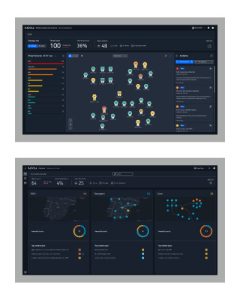
With transport networks carrying increasingly sensitive and mission-critical traffic, security is paramount. Nokia’s NetGuard Security Suite integrates advanced XDR and EDR capabilities, detecting and mitigating threats in real time. It monitors behavioral anomalies, inspects traffic flows, and triggers automated countermeasures across microwave transport systems, IP/MPLS cores and 5G backbones. Combined with NSP and FMS, NetGuard provides a layered security approach that delivers actionable insights, protecting telecom-grade infrastructure from evolving cyber threats.

Fiber access networks are growing rapidly, supporting diverse use cases from urban FTTH to rural broadband and multi-tenant rollouts. Managing this growth requires more than basic provisioning—it demands lifecycle orchestration, real-time assurance, and cloud-native automation to adapt to evolving subscriber needs. MCA delivers advanced solutions for GPON, XGS-PON, and 25G PON deployments. These technologies provide operators with centralized visibility, granular network control, and tools to enhance subscriber experiences in city networks or edge environments.
Altiplano, Nokia’s flagship SDN controller for fiber access networks, delivers centralized, vendor-agnostic management for GPON, XGS-PON, and 25G PON infrastructure. It features built-in support for network slicing, multi-tenant operations, and service-aware orchestration, enabling providers to scale efficiently without added complexity. With zero-touch provisioning for ONTs and OLTs and open APIs for seamless integration with external OSS/BSS platforms, Altiplano streamlines operations while its cloud-native architecture ensures flexibility across centralized and edge-hosted deployments. Comprehensive telemetry, policy automation, and real-time control empower operators to activate services faster, enhance customer experiences, and simplify lifecycle management from the start.
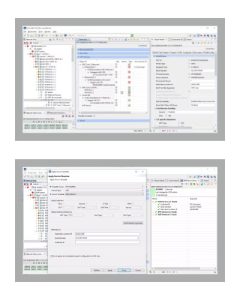
AMS, Nokia’s element management platform (EMP) for PON networks, delivers key capabilities like configuration, monitoring, and maintenance for OLTs and ONTs across legacy and modern infrastructure. Widely used in fixed access networks, it simplifies provisioning, troubleshooting, and upgrades, shielding OSS from network complexity while integrating seamlessly with third-party solutions. Supporting firmware upgrades, profile management, and fault diagnostics, AMS is crucial for operators managing large networks or transitioning to SDN-based operations. Tools like the Access Provisioning Center (APC) for rapid deployment and the Statistics and Data Collector (SDC) for service quality tracking boost efficiency and speed time-to-market.
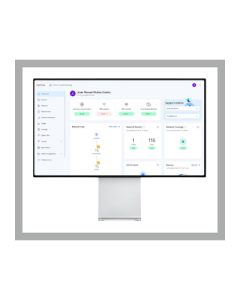
The Corteca Suite is a lightweight, cloud-native platform designed to simplify network management for alternative operators, utilities, and rural broadband providers. It streamlines key functions like ONT discovery, provisioning, and lifecycle management, offering features such as preconfigured service templates, real-time diagnostics, and zero-touch onboarding to reduce complexity and accelerate service activation. With an intuitive web interface, API integration, and a self-service portal for subscription management and troubleshooting, Corteca enhances both provider and customer experiences. Seamlessly integrating with the Altiplano control framework, the suite supports diverse use cases, including consumer internet, enterprise PON, and mobile transport, enabling rapid, efficient deployments and high-quality service delivery.
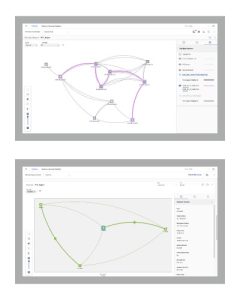
Accelerate and streamline your FTTx rollouts with Nokia’s Control Tower Suite (a part of Cloud Acceleration Services)—a centralized platform that automates workflows, unifies passive and active network delivery, and ensures quality, speed, and budget compliance at every stage. Designed to support home connection activation, OLT and DPU deployment, and end-to-end fiber validation, it brings operational transparency and governance to even the most complex buildouts. By integrating with your existing tools and subcontractors, Control Tower reduces rollout costs by up to 30% and increases deployment speed by up to 25%. Its modular, vendor-agnostic approach ensures consistent execution across regions, partners, and technologies—making it ideal for both targeted community builds and large-scale national broadband initiatives.

As 5G Standalone architectures grow and telco cloud environments scale, the mobile core has become a dynamic, programmable engine powering next-gen services. To succeed in today’s complex networks, service providers need advanced automation tools. Our Nokia solutions for 5G Core, containerized workloads, and edge cloud, with features like network slicing, CI/CD automation, and monitoring of core functions (UPF, SMF, AMF) to tackle the speed and complexity of modern networks. Paired with MCA’s expertise, these tools create a self-optimizing, scalable, and resilient foundation for innovation.

For operators adopting Nokia’s Core Software-as-a-Service (SaaS) model, the Core SaaS Service Portal provides a centralized platform for visibility, service control, and lifecycle automation of virtualized 4G and 5G core components. Operators can deploy, scale, and manage cloud-native functions like UPF, AMF, and SMF on demand, with Nokia handling infrastructure, security, and software maintenance. This streamlined approach reduces operational overhead, accelerates the deployment of network slicing and B2B services, and simplifies the adoption of new capabilities.
Purpose-built for mobile core and multi-access edge compute (MEC) environments, the NetGuard Cybersecurity Dome offers AI-driven analytics and real-time threat detection and mitigation. By monitoring APIs, interfaces, containers, and interconnection points for unusual activity, it provides robust end-to-end protection for mission-critical mobile core functions. Its integration with core orchestration layers ensures proactive defense against threats like DDoS attacks, protocol misuse, and east-west vulnerabilities, safeguarding the entire telco cloud stack.
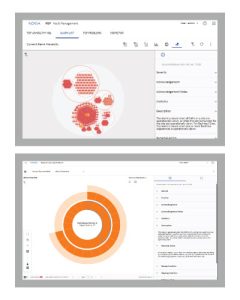
Nokia’s Fault Management System (FMS), enhanced with advanced performance telemetry, offers centralized monitoring and fault correlation across all core network functions. It tracks key metrics such as latency, resource utilization, and packet loss in real time while correlating fault events across critical elements like the user plane (UPF), control plane (SMF, AMF), and network exposure functions (NEF). These capabilities allow operators to identify service degradation early, meet SLA commitments, and maintain optimal network performance across distributed, cloud-native 5G architectures.
Nokia’s DelOps Suite revolutionizes telecom operations by embedding GitOps and CI/CD workflows into the core of 5G network deployment and management. Tailored to the specific complexities of CSP environments, DelOps automates every stage of the network lifecycle—from secure rollouts and continuous integration to staged testing, version control, and rollback processes. Operators can confidently deliver core network updates, minimize downtime, and accelerate service innovation at scale while maintaining optimal performance and security.
Nokia’s network management portfolio is one of the most comprehensive in the telecommunications industry. This guide answers common questions about how these tools are deployed, the networks they support, and how they integrate into real-world operations.
NSP (Network Services Platform) is Nokia’s unified SDN management platform for IP/MPLS and optical transport networks. It enables centralized control, path computation, traffic engineering, and real-time assurance across both layers. WaveSuite, on the other hand, is a modular application suite designed specifically for optical and packet-optical environments. It includes tools for node automation, service enablement, and advanced analytics. While NSP focuses on SDN and control-plane orchestration, WaveSuite specializes in operations-centric functionalities for the optical domain.
Not in the traditional sense. Performance Management (PM) capabilities are integrated into various platforms like NSP, WaveSuite Network Insight, Altiplano, and FMS. Instead of a single "PM" product, Nokia provides performance data collection, KPI tracking, and SLA analytics as embedded features across its ecosystem.
Nokia’s Fault Management System (FMS) provides centralized alarm and event correlation across network domains. It plays a critical role in service assurance by enabling real-time root cause analysis and integrating performance metrics for comprehensive troubleshooting. FMS is often deployed with NSP, WaveSuite, or OSS frameworks to deliver complete network visibility.
Altiplano is a full-featured SDN platform used by Tier 1 service providers for managing large-scale GPON, XGS-PON, and 25G PON networks. It supports features like slicing, multi-tenant control, and deep OSS/BSS integration. Corteca, in contrast, is a lightweight, cloud-native solution designed for altnets, municipalities, utilities, and rural broadband providers. It offers tools for access control, subscriber management, and self-service, optimized for quick deployment and simplified operations.
NSP gathers real-time telemetry for IP/MPLS and optical networks using native device protocols and mechanisms like NETCONF/YANG, gRPC, and streaming telemetry. It enables service health monitoring, SLA tracking, OAM metrics (e.g., Y.1731 and TWAMP), and programmable alerts, allowing for proactive operations and troubleshooting.
DelOps is Nokia’s telco-specific adaptation of DevOps. While traditional DevOps focuses on software delivery pipelines, DelOps incorporates delivery and operations, addressing multi-vendor environments, telecom protocols, and real-time CI/CD processes for network infrastructure. It is optimized for deploying updates, configurations, and validation processes in large-scale CSP environments.
No. While NetGuard Cybersecurity Dome, XDR, and EDR solutions are designed for cloud-native 5G security, they also support IP/MPLS cores, transport layers, and MEC environments. NetGuard monitors APIs, containers, interconnection points, and behavior anomalies across multiple domains—not just the 5G core.
Yes. WaveSuite modules, such as Node Automation and Service Enablement, can function independently or alongside NSP. These tools are ideal for operators who want to manage optical networks directly without adopting full SDN orchestration. However, combining WaveSuite and NSP delivers seamless IP-optical convergence.
Nokia solutions like NSP, Altiplano, and FMS use open APIs and standardized data models (e.g., YANG, RESTCONF, NETCONF) to ensure compatibility with third-party systems, OSS/BSS platforms, and network elements from other vendors. This makes Nokia tools ideal for hybrid or multi-vendor networks.
Nokia’s cloud-native solutions—such as Corteca, Core SaaS Portal, DelOps, and components of Altiplano—support deployment in private, public, or hybrid cloud environments. These platforms enable CSPs and enterprises to manage core, access, and some optical network domains as services, reducing infrastructure overhead while boosting scalability and resilience.

With decades of real-world experience in critical infrastructure, public safety, utilities, and private enterprise, MCA's NIS team ensures your network is not only expertly managed but truly future-ready. From seamless integration of Nokia's NSP in national backbones to deploying Altiplano for dense urban FTTH rollouts or enabling CI/CD workflows with DelOps for cloud-native 5G cores, we deliver powerful, reliable solutions for long-term operational success.

Security threats are evolving. Is your facility’s protection evolving with them?
From AI-powered surveillance and access control to concealed weapon detection and cloud-based video backup, today’s security landscape demands more than just cameras and locks—it requires integration, automation, and insight.
This quick 20-Point Security Audit helps you evaluate your current systems, uncover hidden vulnerabilities, and identify opportunities for improvement.
Fill out the form below to download the checklist and discover how MCA’s integrated security ecosystems can:
Whether you’re attending GSX or evaluating your next phase of facility protection, MCA is your trusted advisor in next-gen security.