
A Moment of Truth in the Emergency Wing
The hum of the hospital is a constant symphony of controlled urgency. In the emergency department, a nurse calmly tends to a patient when the atmosphere suddenly shifts. A man in the waiting area, agitated and distressed, becomes hostile, his voice rising to a shout. Before the situation can escalate, the nurse discreetly presses a button on her V200 body camera. Instantly, the device begins recording and sends a silent alert across the hospital’s security network.
In the hospital’s central command center, a security officer sees the alert pop up. With a single click, they activate the GoLive feature, gaining a real-time, first-person view from the nurse’s camera via VideoManager EX. The officer sees exactly what the nurse sees, assesses the man’s behavior, and dispatches the nearest security guard to de-escalate the situation peacefully. This is not a vision of the future; it is the reality of a healthcare facility powered by an integrated safety and communications ecosystem.
This story of immediate, intelligent response is at the core of a profound transformation in hospital safety. It’s a shift from reacting to events to proactively managing them, where voice, data, and video technologies converge to create a unified shield. By connecting every person and every device, we build an environment where caregivers can focus on what they do best: healing.
Definition: An integrated hospital safety ecosystem links radios, cameras, access control, sensors, and alerting software so teams can detect, verify, and respond in seconds.
Eyes and Ears Everywhere: Intelligent Surveillance
A hospital’s commitment to safety begins at its perimeter. Long before a person steps through the doors, advanced surveillance acts as a vigilant guardian, protecting the campus from external threats and ensuring a secure environment for everyone. Avigilon Unity cameras, powered by sophisticated AI, provide the intelligent eyes needed to monitor sprawling medical centers.
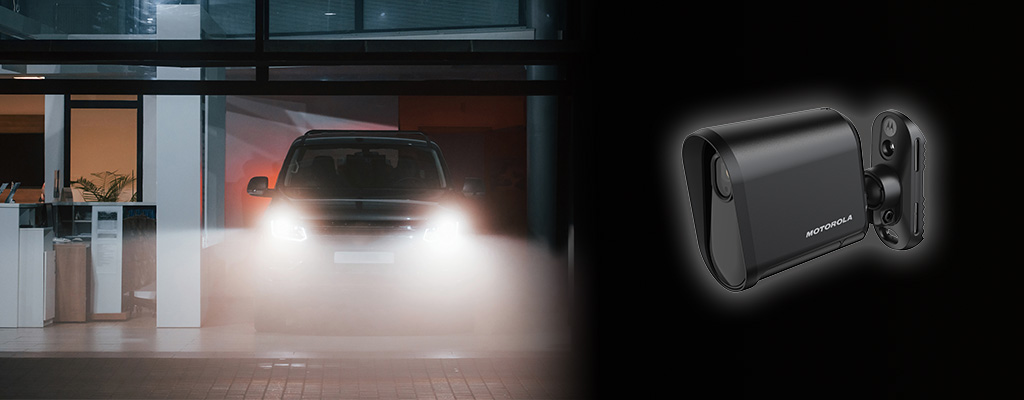
Imagine a car pulling up to the emergency entrance late at night. An Automatic License Plate Recognition (ALPR) camera scans the plate and instantly flags it against a law enforcement watchlist. Security is notified before the driver even exits the vehicle, allowing for a prepared and cautious response.
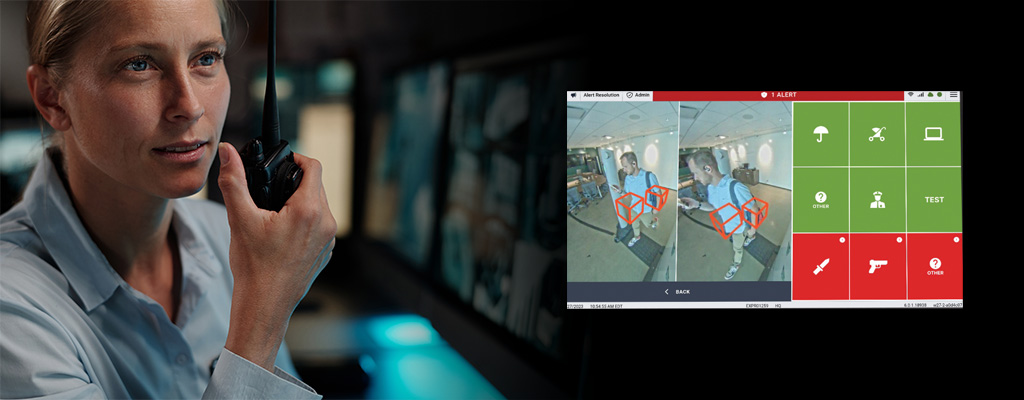
Inside, the power of Avigilon Unity’s Visual Alerts comes to life. A camera in a quiet corridor detects a puddle of water from a leaking pipe and sends an alert to maintenance before it becomes a slip-and-fall hazard. In another wing, the system’s AI detects unusual crowd density forming near a pharmacy and notifies security, preventing potential issues before they arise. These alerts, from detecting smoke to identifying an object left in a secure area, are prioritized within the Focus of Attention (FoA) interface, ensuring that operators address the most critical events first
System Capabilities
ALPR cameras scan license plates against watchlists to identify potential threats at the perimeter.
Avigilon Unity Visual Alerts use AI to detect slips, falls, water, smoke, fire, and unusual crowd density.
The Focus of Attention (FoA) system prioritizes alerts, directing security to the most critical incidents.
Quick Recap: Visual Alerts use AI to detect risks – like crowding, water leaks, smoke, or left objects – and push prioritized notifications to operators for faster action.
A Secure Gateway: Unifying Access and Awareness
Controlling who moves through a hospital is a complex challenge, balancing the need for open access with robust security. At all major entry and exit points, hospitals now rely on advanced concealed weapon detection systems, such as Evolv Express, to seamlessly screen every individual who enters. These systems work in tandem with on-site security personnel and complement integrated access control technology, forming a powerful frontline of defense.
Picture a busy main lobby. As patients, visitors, and staff flow through the entrance, each passes through the Evolv Express security portal. When a potential threat is detected, such as a visitor carrying a concealed weapon, security guards are immediately alerted, allowing them to respond discreetly and efficiently.
Meanwhile, a visitor in the lobby becomes disruptive with the front desk staff. The receptionist, wearing a visible body camera designed to deter bad behavior, discreetly presses a button to activate it. This action not only starts a recording but can also trigger an alert within the Decision Management System (DMS), which automatically locks down nearby critical areas like the pharmacy, infectious disease wards, or intensive care units (ICUs). Security receives the alert and the live video feed, providing them with the necessary context to respond effectively.
This integration extends to every door. When a secure door to a sensitive area – like an ICU or infant center – is propped open, the system doesn’t just log the event. It automatically sends an alert to the nearest security officer’s radio and pulls up the live video feed from the corresponding camera. The officer can see who propped the door and why, addressing a potential security breach in seconds. This unified approach transforms access control from a passive system into an active, intelligent defense network that works seamlessly alongside other detection and alerting technologies.
System Capabilities:
Concealed weapon detection systems provide continuous, non-invasive screening at every major entrance and exit.
Body cameras worn by front desk staff can trigger alerts and localized lockdowns via the DMS.
Propped or forced door alerts are sent directly to security radios, along with live video from the scene.
Access credentials can be managed centrally, granting or revoking entry permissions instantly.
Definition: Concealed weapon detection (CWD) screens visitors as they enter, integrating with access control and video so security can discreetly intervene.
Protecting the Most Vulnerable: Patients and Infants
Within the hospital walls, the duty of care intensifies, especially for vulnerable patients. The integration of third-party solutions like RFID technology into the Motorola Solutions ecosystem provides an invaluable layer of protection for at-risk individuals.
In the geriatric wing, an elderly patient with dementia begins to wander toward an unauthorized exit. The RFID tracking band on his wrist (Resident Guard) triggers an alert the moment he passes a checkpoint. The alert is sent to nurses’ radios, and the Avigilon system automatically focuses the nearest camera on the patient, tracking his movements. Staff can intervene immediately and gently guide him back to safety, preventing a potentially dangerous situation.
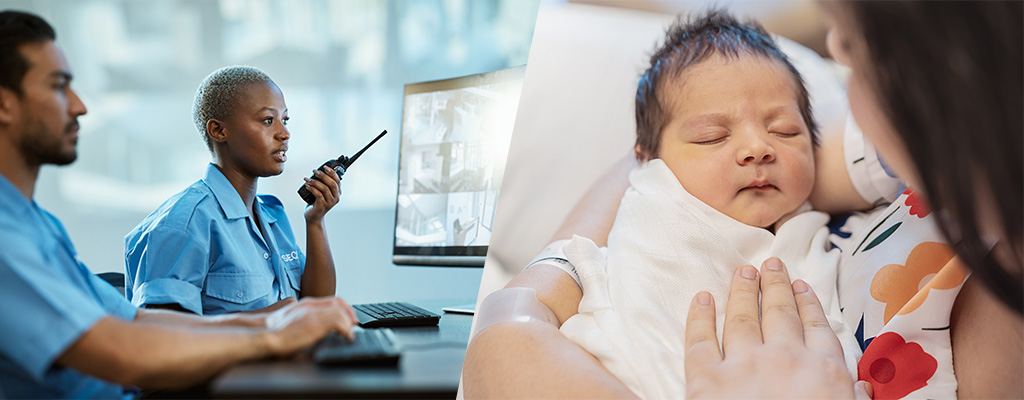
This same principle protects the hospital’s youngest patients. In the maternity ward, every infant wears a small, tamper-proof monitoring tag (Cuddles). If an unauthorized attempt is made to remove a baby from the wing, an alarm sounds, an alert is broadcast over the radio network, and all exits from the ward are automatically locked. Security can view live video of the entire area, ensuring a swift and decisive response to prevent an unthinkable tragedy.
System Capabilities:
RFID bands for wandering patients trigger radio alerts and camera tracking when they near restricted exits.
Infant monitoring tags trigger alarms, lockdowns, and video feeds if an unauthorized removal is attempted.
Seamless integration connects third-party tracking solutions with the central communications and video platform.
Quick Recap: RFID patient/infant protection triggers location-based alerts and automatic door actions, while nearby cameras auto-focus to aid rapid response.
A Unified Ecosystem for Healing and Hope
When you weave these stories together – the empowered nurse, the intelligent camera, the secure door, and the protected patient – a powerful narrative emerges. It is a story of connection, where disparate systems are united to create a single, intelligent organism that anticipates, protects, and responds. This is the promise of an integrated ecosystem from Motorola Solutions.
In this environment, every staff member feels supported and secure, knowing they have the tools to manage any situation. Here, technology works silently in the background, allowing caregivers to deliver compassionate, uninterrupted care. This is where innovation and collaboration intersect to build a future where our healthcare institutions are true sanctuaries of healing.
MCA: Your Partner in Creating Safer Healthcare
At MCA, we believe that we are truly better together. As a trusted partner of Motorola Solutions, we are committed to helping hospitals and medical centers build a safer tomorrow. Our purpose is to understand the unique challenges of your environment and design an integrated solution that unifies your voice, data, and security technologies into a seamless, powerful force.
We begin by listening to and collaborating with your team to create a system tailored to your specific needs. From initial design and implementation to comprehensive training and ongoing support, we stand by your side at every step. Together, let’s build a safer, more connected healthcare environment where patients and providers can thrive.
Frequently Asked Questions
Alerts from body-worn cameras and AI video stream to security, who use GoLive to verify and guide responders, reducing risk to staff and patients.
Modern CWD like Evolv Express screens continuously and integrates with access control and video so security can respond discreetly without long lines.
Yes. Workflows can lock specific doors or zones (e.g., pharmacy, ICU) based on alerts from cameras, CWD, or panic activations.
Tamper-resistant infant tags trigger alarms, auto-lock exits, and pull live video. Security and nursing receive instant radio and mobile alerts.
Access, video, and body-cam systems can enforce role-based permissions, encryption, and audit trails aligned with healthcare privacy policies.
In most cases, yes. The platform approach federates existing video, access control, radios, and sensors to avoid rip-and-replace.
Begin with a high-risk pilot (ED + lobby + maternity), integrate alerts/playbooks, train staff, then scale by wing or building.
About MCA
We believe every workplace should be safe, secure, and efficient. As trusted advisors, we deliver integrated communication, connectivity, and security solutions with a Service First mindset – driven by a team that cares deeply about our customers and each other.
Why MCA? At MCA, we help solve critical communication, connectivity, and security challenges with turnkey, integrated system solutions – from two-way radios and in-building wireless to video surveillance, access control, and more. MCA is built from over 50 companies with deep technical expertise and strong local roots. And we’re still growing – expanding our capabilities, our reach, and our team.
Our 100+ Solution Centers bring together sales, installation, service, and customer operations teams to deliver seamless, nationwide support. Guided by our Service First value, we don’t just connect the wires and walk away – we provide customized solutions backed by deep expertise and lifecycle support.
