
How Unified RF Coverage Systems Power Safer University Campuses
Higher education institutions operate as dynamic, interconnected environments – often resembling small cities – where safety, efficiency, and connectivity are essential to daily operations and emergency response. On these expansive campuses, reliable communication is not simply an asset but a necessity for supporting diverse populations, intricate infrastructure, and a wide range of operational requirements.
This article explores the vital role of communication across college and university campuses, highlights persistent challenges, and details modern, integrated solutions MCA delivers to empower safer, more connected academic communities.
The Role of Communication in Higher Education Operations
University campuses require seamless coordination between many departments and stakeholders. Effective communication underpins every facet of campus operations.
Daily Operations
Facilities management, campus transportation, maintenance teams, and event organizers depend on robust communication tools to keep services running efficiently. Real-time, reliable channels help coordinate logistics, streamline activities, and provide a positive experience for students, faculty, and visitors.
Campus Safety and Security
Reliable communication is the cornerstone of campus emergency preparedness. Campus police, sworn law enforcement officers employed by the institution, must maintain secure, mission-critical communications for incident response, crowd management, and coordination with municipal agencies. Swift, dependable communication channels are vital for executing emergency protocols and ensuring the well-being of everyone on campus.
Student and Faculty Communications
Modern campuses rely on pervasive wireless connectivity to support digital student IDs, mobile access credentials, and campus apps that facilitate everyday activities such as entering buildings, accessing dormitories, and receiving announcements. This connectivity is equally critical for personal communications among students and faculty, as well as providing immediate access to emergency 911 services from any campus location. Reliable communication is the cornerstone of campus emergency preparedness.
The Unique Communication Challenges of College Campuses
The scale and complexity of higher education environments present unique challenges that can impact operational resilience and emergency response.
Campus-Wide Dead Zones
Diverse architectural styles – from century-old stone buildings to modern complexes – often create substantial radio and cellular coverage gaps. Spaces such as lecture halls, residence halls, laboratory facilities, and parking structures may be shielded from reliable signal coverage, exposing students and staff to connectivity limitations and hampering emergency calls or notifications.
First Responder Communication Gaps
Campus police and external first responders need to communicate effectively across all areas of the campus, including within dense or subterranean buildings. Without an infrastructure designed to ensure reliable in-building radio coverage, critical incident response may be delayed, placing the campus community at risk.
Regulatory Compliance
Compliance with local and national fire and building codes requires that institutions provide first responders with full, uninterrupted radio coverage. Deploying Emergency Responder Communication Enhancement Systems (ERCES) is often legally mandated, ensuring communications infrastructure meets stringent safety requirements.
Modern Solutions for Enhanced Campus Connectivity
MCA brings higher education customers a portfolio of integrated communication solutions engineered for the demands of large, complex academic institutions – each designed to foster coverage, interoperability, and operational readiness.
Private Radio Systems
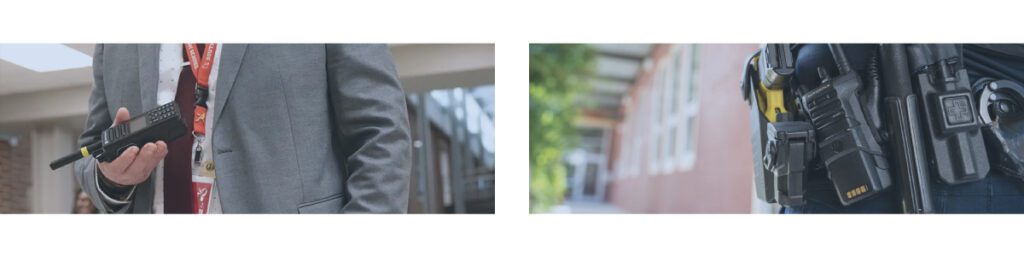
MOTOTRBO™ radio systems deliver instant, reliable push-to-talk functionality that operates independently from public networks. Facilities management, event staff, transportation, and more can rely on clear, efficient communication across campus – even during high-traffic events or public network disruptions. Robust onsite infrastructure provides persistent, secure channels tailored to each department’s operational needs.
Mission-Critical Comms
Large universities often maintain dedicated campus police departments staffed by sworn law enforcement officers. These professionals require secure, interoperable radio networks to carry out their duties. ASTRO P25 networks deliver highly reliable, encrypted voice and data communications, leveraging APX-series radios designed to meet public safety standards. These systems enable campus police to coordinate complex response efforts, seamlessly interface with municipal agencies, and maintain ongoing situational awareness across campus.

Public Safety DAS
Emergency Responder Communication Enhancement Systems (ERCES), or Public Safety DAS, ensure that police, fire, and EMS radios function everywhere on campus. These solutions are engineered to extend and amplify first responder radio frequencies – even in hard-to-reach or shielded areas such as basements, stairwells, and high-density structures – safeguarding compliance and enabling seamless, immediate emergency response.
Cellular DAS
Cellular Distributed Antenna Systems (DAS) are critical for ensuring comprehensive LTE and 5G coverage across all campus facilities, including academic buildings, athletic centers, and student dormitories. Given that dormitories are high-occupancy living spaces with elevated fire incident rates, reliable connectivity is paramount. Cellular DAS guarantees students continuous access to mobile credentials for secure entry, facilitates daily communications, and most critically, ensures immediate 911 call capability from any location within these structures.
MCA: Your Partner in Creating Safer Campuses
MCA is the trusted communications partner for higher education institutions seeking expertise in securing, connecting, and optimizing their campus environments. Our approach begins with a comprehensive assessment of your facilities, workflows, and safety requirements to design a tailored solution that combines leading-edge technologies and proven engineering practices.
MCA offers a full portfolio of solutions from top manufacturing partners, including private radio systems, ASTRO P25 networks, ERCES/Public Safety DAS, and Cellular DAS. Together, these systems provide the resilience, interoperability, and reliability that today’s colleges and universities demand. Our commitment extends throughout the solution lifecycle, ensuring ongoing performance and support for your campus.
Contact MCA today to schedule a consultation and discover how we can help you build a safer, more connected academic community.
Frequently Asked Questions About Campus Communications
Public Safety DAS (ERCES) ensures uninterrupted radio coverage for police, fire, and EMS during emergencies, as required by building codes. Cellular DAS boosts commercial LTE / 5G coverage for daily use and 911 calls, ensuring connectivity for students and staff.
Campus police often interoperate with municipal responders. ASTRO P25 delivers encrypted, mission-critical communication that integrates seamlessly with public safety networks.
Dead zones typically appear in basements, stairwells, concrete dormitories, labs, parking garages, and older academic buildings that block signal penetration.
Most U.S. jurisdictions reference IFC 510 and NFPA 1225 for ERCES installation and testing. The AHJ determines the specific coverage thresholds and testing procedures.
Yes. MCA performs coverage assessments, installs new radio and DAS systems in phases, and ensures code compliance without disrupting campus operations.
MCA designs, installs, and maintains integrated communications – MOTOTRBO™, ASTRO P25, ERCES, and Cellular DAS – backed by local service teams and nationwide expertise.
About MCA
We believe every workplace should be safe, secure, and efficient. As trusted advisors, we deliver integrated communication, connectivity, and security solutions with a Service First mindset – driven by a team that cares deeply about our customers and each other.
Why MCA? At MCA, we help solve critical communication, connectivity, and security challenges with turnkey, integrated system solutions – from two-way radios and in-building wireless to video surveillance, access control, and more. MCA is built from over 50 companies with deep technical expertise and strong local roots. And we’re still growing – expanding our capabilities, our reach, and our team.
Our 100+ Solution Centers bring together sales, installation, service, and customer operations teams to deliver seamless, nationwide support. Guided by our Service First value, we don’t just connect the wires and walk away – we provide customized solutions backed by deep expertise and lifecycle support.
