
Rising Waters, Rising Stakes: Flood Preparedness and Mass Notification Strategies for Government Agencies
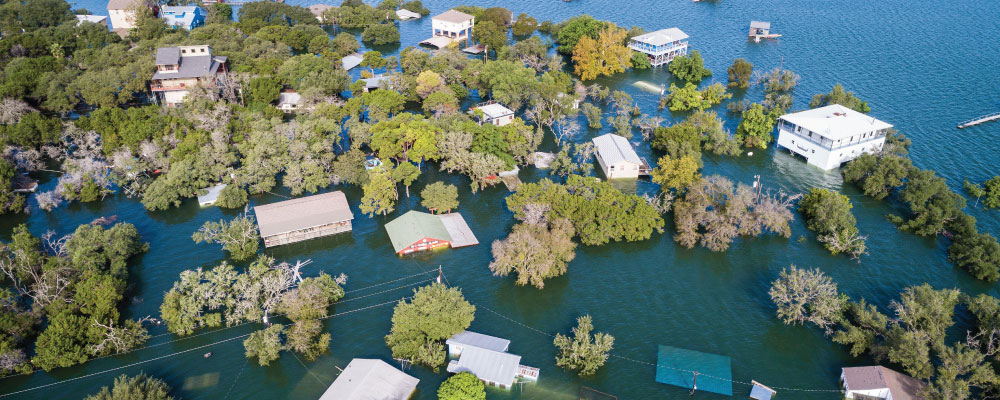
Flooding has become the most frequent and costly natural disaster in the United States, causing an average of $8 billion in damage and claiming nearly 90 lives each year. From rural townships and industrial corridors to densely populated metropolitan areas, no region is immune to the rising threat. In 2024, the National Weather Service issued an unprecedented 91 flash flood emergencies—more than any other year since the designation was introduced in 2003. These alerts, reserved for the most catastrophic events, serve as a sobering indicator of the intensifying climate challenges faced by emergency managers nationwide.
While hurricanes often dominate headlines, most flood-related disasters in the U.S. are driven by more frequent and less predictable phenomena: severe storms, tropical systems, and extreme rainfall events. As the atmosphere warms, it holds more moisture, fueling heavier downpours and shorter windows of response. Events like stalled storm fronts, back-to-back rainfall systems, and rapid-onset flash floods are becoming the norm, not the exception. Communities once considered low risk now face recurrent inundation due to changing rainfall patterns, urban development, and saturated soil conditions.
For local, state, and federal government agencies tasked with public safety, infrastructure protection, and emergency communication, this trend presents a clear mandate: increase readiness, modernize alerting infrastructure, and ensure timely, localized communication during every phase of a flood event. The speed, clarity, and geographic precision of public warnings can determine the difference between safe evacuation and life-threatening exposure. As the scope and severity of flooding evolve, so too must the systems that keep people informed and directed to safety.

The Government’s Role in Flood Risk Mitigation and Public Safety
Public safety in the face of rising flood threats demands a proactive, layered approach from government agencies at all levels. From zoning decisions to emergency alerting, the burden of preparedness lies heavily on the shoulders of municipalities, counties, and state and federal institutions charged with protecting infrastructure and life safety.
At the foundation of any flood mitigation strategy is smart zoning and infrastructure planning. Local and regional governments must evaluate floodplain boundaries and enforce development restrictions in at-risk areas to reduce future vulnerabilities.
Simultaneously, investments in reinforced levees, upgraded stormwater systems, and resilient culvert and dam structures are essential to contain and redirect floodwaters during periods of heavy rain. These capital improvements play a critical role in reducing both human risk and economic loss when flood conditions emerge.
Beyond infrastructure, comprehensive preparedness planning is critical. Agencies must establish and routinely update flood response strategies that include:
- Clearly mapped flood zones and at-risk populations
- Public evacuation routes and shelter coordination
- Protection measures for schools, hospitals, and other essential facilities
These plans require close coordination across stakeholders—from county Emergency Management Agencies (EMAs) and local public works departments to FEMA, NOAA, and the National Weather Service. Regular exercises and interagency communication protocols are vital to maintaining a responsive and unified posture during crisis conditions.
Most importantly, agencies must move beyond static plans and embrace real-time situational awareness. The integration of hydrological monitoring systems—such as flood gauges, stream sensors, and rainfall telemetry—enables agencies to trigger automatic alerts when water levels breach predefined thresholds.
These data points can be directly linked to MCA’s mass notification platforms, activating sirens, public address systems, and digital alerts that escalate in severity as flood conditions worsen. This fusion of environmental monitoring and intelligent alerting is key to executing timely evacuations and minimizing risk to both people and property.
Warning the Public: Understanding Flood Alerts and Their Activation
Timely public warnings are essential to saving lives during flood events, especially when conditions escalate quickly. To support effective decision-making and coordinated evacuations, emergency agencies rely on a standardized set of flood alerts issued by the National Weather Service. These alerts serve as the foundation for local and regional mass notification protocols and must be understood by both responders and the public alike.
The Four Key Flood Alert Levels
Flood Watch
Conditions are favorable for flooding soon. Residents should remain alert, monitor weather updates, and review evacuation plans.
Flood Warning
Flooding is occurring or will occur soon in the affected area. Immediate action should be taken to protect life and property, including moving to higher ground and preparing for possible evacuation.
Flash Flood Watch
Sudden, rapid-onset flooding is possible due to intense rainfall or upstream runoff. These events can occur with little to no warning. Residents should prepare now and remain alert.
Flash Flood Emergency
This is the most severe classification, reserved for catastrophic flooding that poses an imminent threat to life. Evacuation is strongly advised, and emergency services may already be conducting rescues in impacted areas.
Escalation Protocols for Alert Messaging
To synchronize public alerts with real-time conditions, MCA offers two scalable activation platforms tailored to different levels of government. RapidWarn serves municipal, county, and regional clients, enabling local agencies to automate tone and voice messaging based on preconfigured flood scenarios. When triggered manually or via sensor integration, RapidWarn can escalate warnings in step with NWS classifications—ensuring residents receive the appropriate level of urgency through sirens, loudspeakers, SMS, and other channels.
For large-scale deployments at the state and federal level, MCA’s OptiWarn platform provides advanced capabilities, including multi-agency coordination, GIS-based alert targeting, cross-jurisdictional activation, and encrypted control over wide-area siren networks. OptiWarn is designed to interface with hydrological data feeds, NOAA alerts, and EAS protocols to drive comprehensive, state-managed flood alerting initiatives.
Together, these platforms ensure that flood warnings are not only issued promptly, but delivered consistently, audibly, and with precise escalation—from watch to emergency—based on verified threat levels.
Whelen Outdoor Sirens: Ground-Zero Communication Tools for Flood Events
When floods threaten lives and property, wide-area audible alerting becomes the most immediate and effective tool for reaching at-risk populations. Whelen’s outdoor warning sirens—including the WPS2900, VORTEX, and Omni-Alert series—serve as critical infrastructure for flood-prone municipalities, riverfront communities, and industrial zones located near vulnerable waterways. These systems deliver high-powered tone and intelligible voice messaging that can cut through ambient noise, travel across open terrain, and rapidly inform residents of danger.
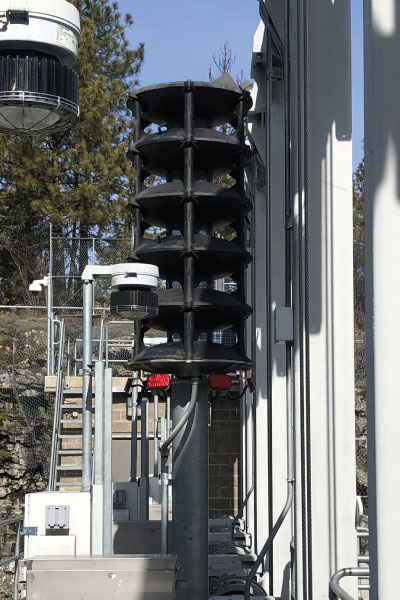
Designed and manufactured in the U.S., Whelen sirens are built to withstand harsh weather, wind, and moisture exposure. Each unit is tested for durability in real-world conditions and operates independently via local battery backup to ensure reliability even during power outages. With support for radio, IP, and NOAA integration, these systems can be activated manually or automatically from local command centers or state-level control hubs.
Integration with Flood Monitoring Systems
MCA enhances Whelen deployments by linking them to real-time flood monitoring systems, including hydrological sensors, stream gauges, and precipitation telemetry networks. When water levels exceed preset thresholds, the connected alerting platform can automatically trigger siren activation and issue customized voice instructions that reflect the severity of the threat. These alerts are not static—escalating tone sequences and updated instructions can be delivered as conditions worsen, keeping communities informed every step of the way.
A defining feature of MCA’s Whelen implementations is polygon-based geographic targeting. Using intuitive GIS tools, authorized users can draw a four-point polygon around the specific area impacted by flood conditions. Only the sirens and speakers within that defined area are activated—preventing false alarms in unaffected zones and maintaining public trust in the alerting system. Voice messages and tone combinations can also be tailored by location, allowing agencies to provide precise instructions for evacuation, shelter-in-place, or hazard avoidance depending on the proximity and risk level.
With Whelen sirens deployed and managed by MCA, government agencies gain a scalable, field-proven solution that anchors their flood alerting strategy at the ground level—ensuring clarity, speed, and geographic precision when every second counts.
Centralized Control and Scalability with RapidWarn
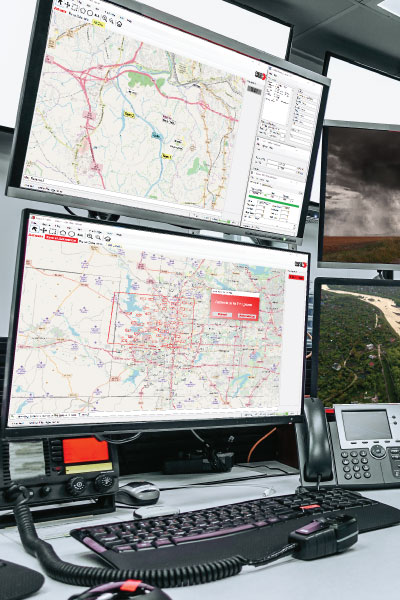
In flood emergencies, seconds matter—and so does having full situational control. RapidWarn, MCA’s advanced siren activation and management platform, empowers local and county-level emergency management agencies with a unified interface to monitor, activate, and coordinate outdoor sirens, IP-based paging systems, and visual alerting devices across their entire jurisdiction.
Purpose-built for critical communications, RapidWarn brings multi-jurisdictional command and control to a single, intuitive dashboard. Emergency managers can execute alerts in real time or schedule automated triggers based on preconfigured flood scenarios, integrating seamlessly with existing dispatch workflows and EOC protocols. Whether issuing a localized evacuation notice or escalating a regional flash flood warning, RapidWarn delivers precision and reach without delay.
Robust Integrations and Radio Compatibility
RapidWarn is engineered to interconnect with the nation’s most trusted public safety and weather alerting systems, including:
- NOAA Weather Radio for real-time environmental monitoring
- National Weather Service (NWS) alerts to automate escalation and targeting
- P25, Digital, and analog VHF/UHF radio networks to maintain operational continuity across agencies and responder groups
These integrations enable centralized orchestration while preserving flexibility for local teams to act autonomously when necessary.
Real-Time Control, Encryption, and Diagnostics
The platform’s map-based push-button interface allows users to activate sirens, strobe lights, and voice messages by drawing a target zone directly on a digital map. All commands are transmitted using AES-encrypted communications, ensuring secure activation even under high-threat or compromised network conditions.
To always guarantee readiness, RapidWarn continuously monitors device health across the alerting network. Real-time diagnostics provide immediate visibility into system status, including battery levels, signal integrity, intrusion alarms (available only in two-way communication configurations), and speaker performance—empowering agencies to troubleshoot quickly and ensure fail-proof response when the next flood event strikes.
Backed by MCA’s engineering expertise and deployed across hundreds of U.S. jurisdictions, RapidWarn ensures your alerting strategy is not just audible—but actionable, reliable, and secure.
Portable Alerting and Continuity for Field Operations
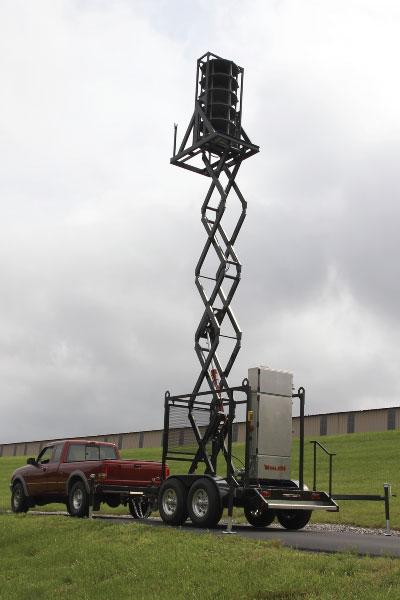
When flooding disrupts fixed infrastructure or threatens areas not covered by permanent siren systems, MCA’s Portable Mass Notification System (MNS) Trailers provide a critical solution for extending coverage and maintaining communication continuity. Rapidly deployable and self-contained, these trailers deliver powerful tone and voice alerting exactly where it’s needed—whether during an active emergency or throughout recovery and rebuilding operations.
Deployed in minutes, each trailer is designed for mobility and resilience in unpredictable field conditions. Built on rugged chassis with weather-resistant enclosures, they ensure operational readiness in high water, storm debris, and utility-compromised environments.
Trailer Configuration and Platform Compatibility
MCA’s portable alerting units can be custom-outfitted with:
- Whelen high-powered sirens and speakers, such as Omni-Alert or WPS configurations
- Integrated solar arrays and long-life backup batteries for off-grid operation
- Full RapidWarn controller integration for remote activation, tone sequencing, and zone targeting from any authorized command center
Whether activated locally or as part of a broader flood response plan, these trailers support consistent, intelligible messaging in dynamic or degraded environments.
Support for Dynamic Deployments
Ideal for emergency response teams and public agencies, MCA’s Portable MNS Trailers are used in:
- Temporary flood zones where rising water has shifted risk areas beyond permanent siren coverage
- Displaced population camps requiring urgent communication on shelter, health, and resource distribution
- Infrastructure or utility staging areas to keep field crews informed and coordinated during rapid mobilization or infrastructure restoration
With MCA’s engineering support and logistics coordination, agencies can position these systems in advance of forecasted events or move them as needed throughout a prolonged flood response. They ensure that when conditions change, communications don’t fail—keeping both the public and critical personnel informed and protected.
Case for Federal and State Investment in Flood-Resilient Mass Notification
As flood-related emergencies grow in frequency, scale, and complexity, federal and state agencies are increasingly prioritizing proactive investments in mass notification systems that can save lives and mitigate property damage. Scalable, interoperable platforms like MCA’s Whelen sirens and RapidWarn activation systems provide communities with the necessary infrastructure to act decisively during flood events—and are well-positioned for grant-funded support.
Using FEMA disaster declarations, NOAA hydrological data, and local hazard vulnerability assessments, government agencies can build compelling cases for funding based on real-world risk and regional need.
Eligible Grant Programs for Flood Alerting Systems
MCA’s flood-resilient mass notification solutions—including outdoor sirens, voice broadcast systems, and centralized activation platforms—are eligible under several major federal programs, including:
- FEMA Hazard Mitigation Grant Program (HMGP)
Supports post-disaster mitigation projects that reduce future loss of life and property. - Building Resilient Infrastructure and Communities (BRIC)
Prioritizes forward-thinking, pre-disaster resilience investments at state and local levels. - Nonprofit Security Grant Program (NSGP)
Originally created to defend against terrorist threats, the NSGP also supports physical security enhancements—including outdoor sirens and emergency alerting systems—for at-risk religious institutions, community centers, and nonprofits. In 2024, over $274 million was made available, with maximum awards of up to $600,000 per organization across multiple sites.
Whether deploying fixed sirens across flood-prone communities or mobile MNS trailers for regional continuity, MCA’s systems meet the criteria for these funding streams. Our team also assists agencies and nonprofits with application support, technical design documentation, and compliance alignment—ensuring every dollar invested contributes directly to life safety and operational resilience.
Build a Flood-Ready Community with MCA
As flash floods and extreme rainfall events become a year-round reality, the ability to deliver fast, targeted, and intelligible alerts is no longer optional—it’s essential. Proactive planning, real-time monitoring, and system integration are the cornerstones of effective flood preparedness, enabling agencies to protect lives and direct safe evacuations before conditions turn deadly.
MCA brings more than 30 years of experience in emergency communications to every deployment, with a proven track record of designing, integrating, and supporting flood alerting systems tailored to local risk. Backed by trusted partners like Whelen Engineering and powered by technologies like RapidWarn and OptiWarn, we help cities, counties, and states implement scalable solutions that work—no matter the terrain, threat level, or response window.
Whether you need to cover a few high-risk intersections or protect an entire river basin, MCA delivers engineered coverage, intelligent escalation, and operational continuity that performs when every second counts.
Contact MCA today to start building a flood-ready mass notification system for your community.
