
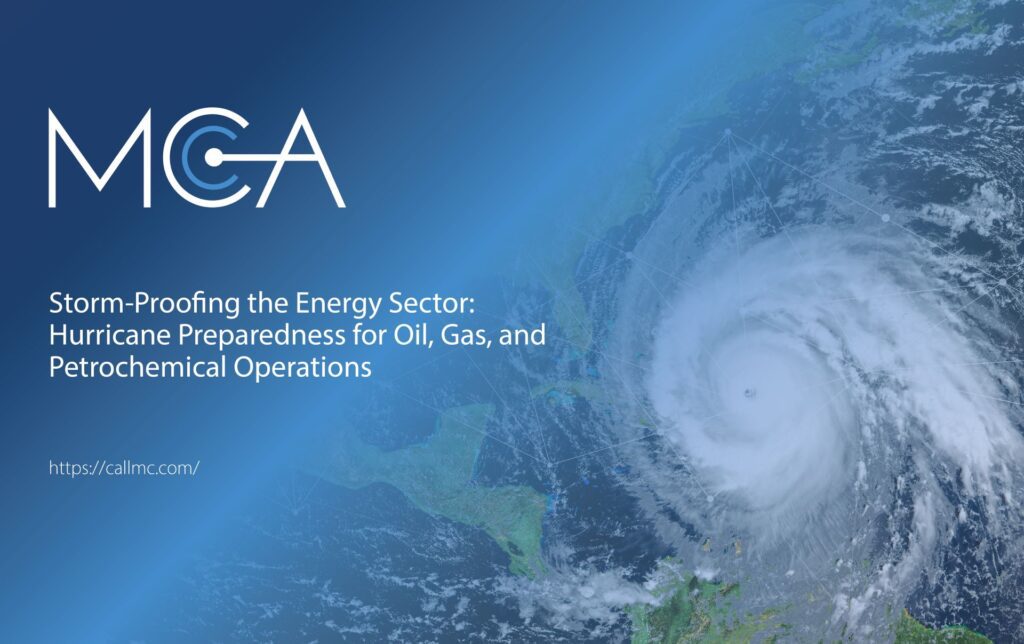
Hurricane Impacts in 2024: Challenges for the Oil and Gas Industry
The 2024 hurricane season was one of the most destructive in recent history, exposing the vulnerabilities of the U.S. energy sector. With the Gulf of Mexico at the epicenter, Hurricanes Francine, Helene, and Rafael tested the resilience of offshore rigs, coastal refineries, and critical supply chain infrastructure. These storms wreaked havoc on production, refining, and transportation, driving market chaos and spotlighting the urgent need for more robust hurricane preparedness strategies.
Anatomy of a Crisis: The Impact on Energy Infrastructure
Production Shut-ins
Offshore oil and gas production in the Gulf took a massive hit, as operators scrambled to evacuate personnel and secure rigs. Hurricane Francine alone shut in 42% of crude oil production and 53% of natural gas output. Offshore facilities, often touted as engineering marvels, were no match for relentless winds and towering waves.
Refinery Shutdowns and Capacity Reductions
Coastal refineries, vital to processing crude oil into fuel, were forced to shut down or operate at reduced capacity. Francine’s landfall triggered a 20% drop in refining capacity, creating bottlenecks that rippled through the supply chain. Hurricane Helene compounded the crisis with a 30% reduction in oil production, leaving refineries strained and fuel supplies dwindling.
Supply Chain Disruption
Flooded access roads, collapsed highways, and damaged pipelines turned transportation of crude oil and refined products into a logistical nightmare. Key shipping ports in Texas and Louisiana and critical energy transportation hubs, were closed during and after the storms. These closures, combined with storm surges and debris, delayed shipments, and escalated fuel shortages, highlighted the fragility of the interconnected energy supply chain.
Market Volatility and Cascading Effects
The chain reaction of disrupted production, constrained refining, and supply bottlenecks sent shockwaves through energy markets. Fuel prices soared as uncertainty gripped traders and consumers alike. With infrastructure damaged and timelines for recovery uncertain, the energy sector entered a state of prolonged instability.
Lessons from the 2024 Hurricane Season
The events of 2024 are a stark reminder that hurricanes are no longer a periodic inconvenience but a systemic risk to the oil and gas industry. Offshore rigs, refineries, petrochemical plants, and transport pipelines form the backbone of U.S. energy independence, yet they remain highly exposed to extreme weather events.
To weather the storms of the future, energy operators must embrace a dual approach: strengthening physical infrastructure and leveraging advanced technologies. Power redundancies, flood-proof facilities, and reinforced communication networks are critical to mitigating damage. At the same time, predictive analytics, real-time monitoring, and advanced forecasting can enhance decision-making and response times.
As hurricanes grow more frequent and destructive, industry’s survival depends on its ability to adapt. The Gulf Coast’s energy infrastructure is not just a regional asset, it is the nation’s lifeblood. Protecting it is no longer optional; it is an imperative for operational continuity, environmental safety, and national energy security. The 2024 season has made one thing clear: the time to stormproof the energy sector is now.
A Glimpse into MCA’s Technology-Driven Hurricane Preparedness Solutions
MCA partners with oil, gas, and petrochemical operators to deliver a comprehensive, technology-based approach to hurricane readiness and disaster continuity. With decades of experience in disaster response and utility-scale power restoration, MCA integrates voice, data, and security systems into a robust and resilient framework tailored for the energy sector.
Voice Solutions: Keeping Field Crews Connected
- MotoTRBO™ Digital Radios ensure clear communication across refinery sites and terminal facilities, even when cellular networks are down. Combined with ROIP (Radio over IP), they provide redundancy and consistent functionality during extended outages.
- WAVE PTX™ Solutions enable nationwide broadband push-to-talk communication, seamlessly integrating with MOTOTRBO systems to connect on-site teams with off-site managers or emergency response crews.
- Mobile Video Systems, including dash cameras, body-worn devices, and drones, deliver real-time visibility for operations, security, and damage assessments in hard-to-access areas.
- Vehicle and Fleet Upfitting equips emergency response and maintenance vehicles with critical tools, such as communication systems, warning lights, video recording equipment, and secure storage, to support safe and effective disaster response.
Data Solutions: Building Network Resilience
- TRaCK Box™ Portable Networking Systems provide rapid cellular connectivity with built-in Wi-Fi and Ethernet backhaul. Paired with Starlink satellite terminals, they ensure connectivity even when traditional networks fail.
- During widespread service disruptions, intelligent edge routers support real-time SCADA communication and remote monitoring of tanks, pipelines, and other critical systems.
- Cloud-Managed Infrastructure offers secure, streamlined IT support for multiple locations, minimizing the need for on-site interventions and maximizing system uptime.
Security Solutions: Monitoring and Risk Mitigation
- AI-Enabled Video Surveillance Systems provide real-time situational awareness and historical review for faster response and recovery.
- Access Control Systems manage lockdowns, track reentry, and control credentialed personnel on-site after an event.
- Smart Sensors and Perimeter Analytics-based detection systems identify breaches, flooding, and environmental threats near tank farms and pipeline access points, enabling proactive risk mitigation.
Mass Notification Systems: Delivering Alerts When Every Second Counts
MCA’s Data Division offers advanced Mass Notification Systems that combine Whelen outdoor speaker and siren systems with MCA’s proprietary RapidWarn™ activation platform.
- Whelen’s most powerful siren model, the WPS2910, delivers a Sound Pressure Level (SPL) of 129 dBc at 100 feet and can project audible warning tones up to an estimated 6,100 feet (approximately 1.2 miles) at 70 dB and up to 12,200 feet (approximately 2.3 miles) at 60 dB, providing extensive coverage for large refineries, industrial complexes, or shore-based facilities. Voice alerts are effective at a shorter distance.*
- Digital pre-recorded messages include hurricane warnings, flash flood alerts, mandatory evacuations, and custom site-specific instructions.
- Integration with NOAA alerts and polygon-based activation targets specific geographic zones for alerts, reducing unnecessary panic and delivering actionable communication.
*Disclaimer: The effective range of Whelen siren tones and voice messages can vary significantly depending on environmental conditions, terrain, atmospheric factors, and local ambient noise levels. While Whelen systems are engineered to deliver powerful and clear voice communication exceeding one mile in many applications, actual performance may differ in practice. All stated ranges are approximate and intended for general informational purposes only; they do not constitute a guaranteed performance specification. For detailed engineering analysis or site-specific range studies, please consult with MCA’s mass notification solutions team.
Preparedness in Action: From Prevention to Recovery
MCA’s approach follows continuity-first principles:
- Before the Storm: MCA conducts sound propagation modeling, RF site surveys, system audits, and network assessments. Communications kits are pre-staged, power redundancy is ensured, and readiness checks are conducted on all infrastructure.
- During the Storm: Radio networks, cellular failover, and mass alerting systems keep operations connected and staff well-informed. Visual and audible warnings reach critical areas, even when power and fiber lines are down.
- After the Storm: Field teams use mobile video systems, body cameras, and TRaCK Box units to assess damage and initiate safe reactivation protocols. Command staff manage the response through real-time dashboards and integrated platforms.
Commitment to Customers: MCA’s Response to Hurricane Helene
When Hurricane Helene devastated parts of Western North Carolina, impacting areas where MCA operates, our team stepped up to support our customers, just as we’ve done in the Gulf region locations of Texas, Louisiana, and Florida during previous disasters.
Technicians braved storm-damaged regions to restore critical communications infrastructure for public safety teams and utility providers. Our staff delivered fuel and emergency equipment, ensuring shelters, hospitals, and emergency responders had the reliable connectivity needed for effective operations. Rapid deployment of in-building wireless systems kept emergency response centers in North Carolina and across our Gulf locations, like TX, LA, and FL, online, enabling uninterrupted rescue efforts.
This response exemplifies our team’s unwavering commitment to rapid recovery efforts. Whether in North Carolina or the Gulf states of Texas, Louisiana, and Florida, MCA goes above and beyond, ensuring that we deliver solutions that save lives and restore stability when it matters most.
Don’t Wait for the Next Storm: Act Now
Oil, gas, and petrochemical operators face unique challenges when it comes to hurricane preparedness. Building resilience goes beyond physical reinforcements. Without integrated alert systems, reliable connectivity, and full operational visibility, even the most robust facilities risk serious setbacks during recovery.
Partnering with MCA means turning hurricane preparedness into a structured, actionable program. Backed by proven success in federal disaster zones and critical infrastructure, MCA’s solutions are designed specifically for the oil and gas industry.
Let us help you safeguard your operations before the next hurricane season. Contact MCA to schedule your facility’s tailored resilience audit and preparedness assessment.
About MCA
MCA is one of the largest and most trusted technology integrators in the United States, offering world-class voice, data, and security solutions that enhance the quality, safety, and productivity of customers, operations, and lives.
More than 65,000 customers trust MCA to provide carefully researched solutions for a safe, secure, and more efficient workplace. As your trusted advisor, we reduce the time and effort needed to research, install, and maintain the right solutions to make your workplace better.
Our team of certified professionals across the United States delivers a full suite of reliable technologies with a service-first approach. The MCA advantage is our extensive service portfolio to support the solution lifecycle from start to finish.
