

What Is Optical Networking?
Optical networking refers to the transport of data using light transmitted over fiber. It supports extremely high bandwidth, long-distance connectivity, and low latency – making it the backbone technology for cloud, 5G, and data center interconnect (DCI) networks.
Engineering the Next Wave of Optical Innovation for Service Providers and Enterprises
The relentless growth of cloud services, data center traffic, and bandwidth-intensive applications has placed unprecedented demands on network infrastructure. To meet this challenge, service providers and enterprises require optical networks that are not only robust and high-capacity but also flexible and efficient. This need for scalable, high-performance connectivity is the principal driver behind the innovation in modern optical networking.
What are Nokia’s 1830 Photonic Service Solutions?
Nokia’s 1830 Photonic Service Solutions offer a comprehensive suite of modular and scalable platforms designed to address the evolving demands of optical networking and data center interconnect (DCI) applications. This portfolio, which includes the 1830 Photonic Service Interconnect (PSI) and 1830 Photonic Service Switch (PSS), provides the foundational photonic layer for high-capacity networks. By integrating and transporting wavelength-specific coherent optics from sources such as transponders and routers, these systems dramatically increase the data-carrying capacity of optical fibers.
The core function of the 1830 solutions is to amplify, manage, and switch optical signals for transport over metro, regional, long-haul, and subsea routes. Operating at the photonic layer enables significant cost and power efficiencies compared to traditional digital implementations. The portfolio is built on application-optimized platforms that share common hardware, offering network operators significant deployment versatility and streamlined operations.
What Is WDM (Wavelength Division Multiplexing)?
WDM allows multiple data channels – each on its own wavelength – to travel simultaneously over a single optical fiber. This dramatically increases total fiber capacity without requiring new fiber installation.
Key Components of the 1830 WDM Optical Line Systems
Nokia’s 1830 WDM solutions are built on a comprehensive set of capabilities that enable the creation of powerful, efficient optical networks.
- WDM Multiplexing: Combines multiple coherent optics onto a single fiber, substantially increasing its data capacity.
- Optical Amplification: Employs Erbium-doped fiber amplifiers (EDFAs) and Raman amplification to boost signal power, extending reach over thousands of kilometers.
- Reconfigurable Optical Add/Drop Multiplexers (ROADMs): These components, featuring Wavelength Selective Switches (WSS), selectively add, drop, or switch any wavelength with any spectral width between different fiber routes.
- C+L Band Operation: Doubles the usable optical fiber spectrum by operating across both the C-band and L-band, maximizing network scale.
- Dynamic Gain Equalization (DGE): Integrated into amplifiers and ROADMs, DGE optimizes the power levels across all WDM channels to ensure peak performance.
- Optical Protection Switching (OPS): Delivers sub-50ms redirection of traffic to an alternate fiber path, providing 1+1 protection against failures.
A Closer Look at the 1830 Portfolio
The Nokia 1830 portfolio includes distinct platforms tailored to specific network deployment needs, allowing operators to choose the ideal form factor and feature set for their environment.
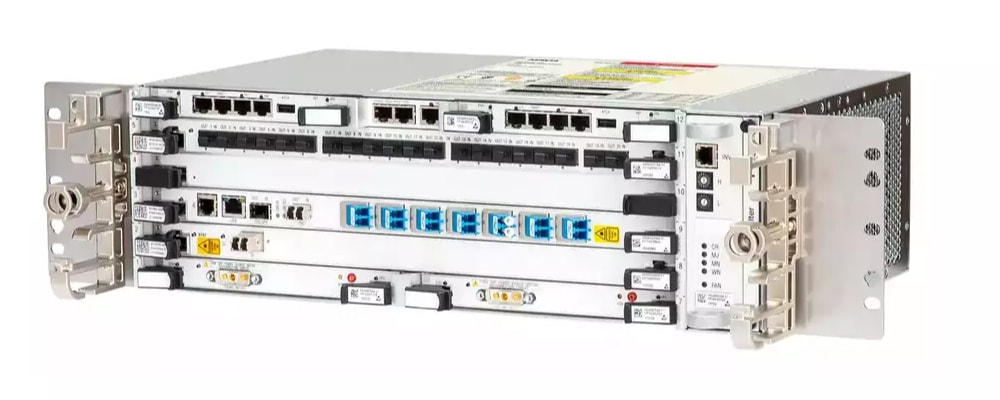
1830 Photonic Service Switch (PSS)
The 1830 PSS family offers a versatile range of DWDM multiservice, multilayer P-OTN transport platforms. It allows operators to deploy coherent transponders, packet transport cards, and WDM optical line system functions within a single, unified chassis. This integration provides streamlined and efficient transport from compact access sites to the converged OTN/DWDM core.
- Benefits: The 1830 PSS allows organizations to scale their optical networks to meet unpredictable traffic demands. It capitalizes on cutting-edge coherent transport, agile line systems, and a scalable P-OTN switching infrastructure. This ensures unconstrained service grooming at the wavelength, port, and sub-port levels for unmatched flexibility.
- Use Cases: The PSS is ideal for Tier 1 service providers expanding a national backbone network, carrier-neutral providers supporting DC interconnect and cloud peering, and cable MSOs deploying regional optical networks.
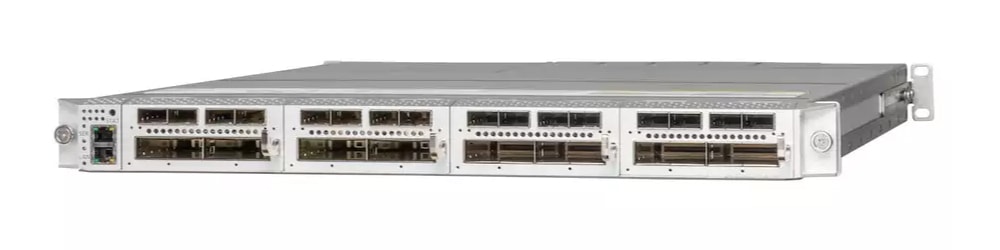
1830 Photonic Service Interconnect – Modular (PSI-M)
The 1830 PSI-M is a compact, modular optical networking platform designed for optimal performance in DCI applications across metro, regional, and long-haul distances. Its modular architecture empowers carriers to customize interfaces and capacities to meet specific demands.
- Benefits: The PSI-M delivers maximum scalability in a blade-optimized form factor. With four modular I/O slots, carriers can create versatile configurations by mixing and matching interfaces. Its plug-and-play operation, open programmable interfaces, and advanced streaming telemetry significantly reduce operational costs and simplify management.
- Use Cases: The PSI-M is ideally suited for expanding data centers within metro areas, connecting local data caching sites to metro points of presence, and interconnecting data centers over long-haul or ultra-long-haul distances.
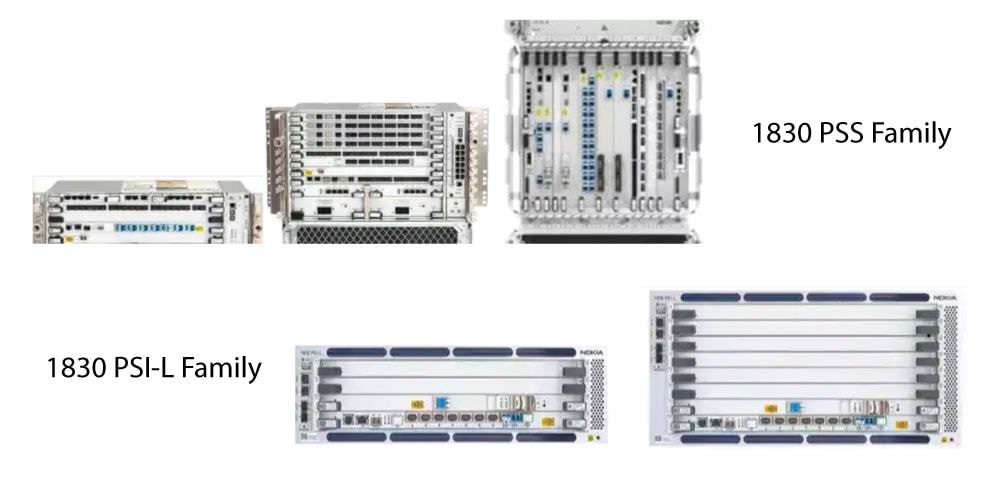
1830 Photonic Service Interconnect – Line (PSI-L)
The 1830 PSI-L family consists of compact, modular platforms dedicated exclusively to optical line system functions. This provides a flexible, standalone solution for interconnecting P-OTN switches, transponder platforms, or IP routers in a Coherent Routing architecture. Optimized for DCI, the PSI-L features front-to-back airflow and supports both AC and DC power in various rack-unit sizes.
What Is a ROADM and Why Does It Matter?
A ROADM (Reconfigurable Optical Add/Drop Multiplexer) allows operators to remotely route wavelengths, automate service turn-up, and scale capacity without physical fiber rework – critical for flexible, modern optical networks.
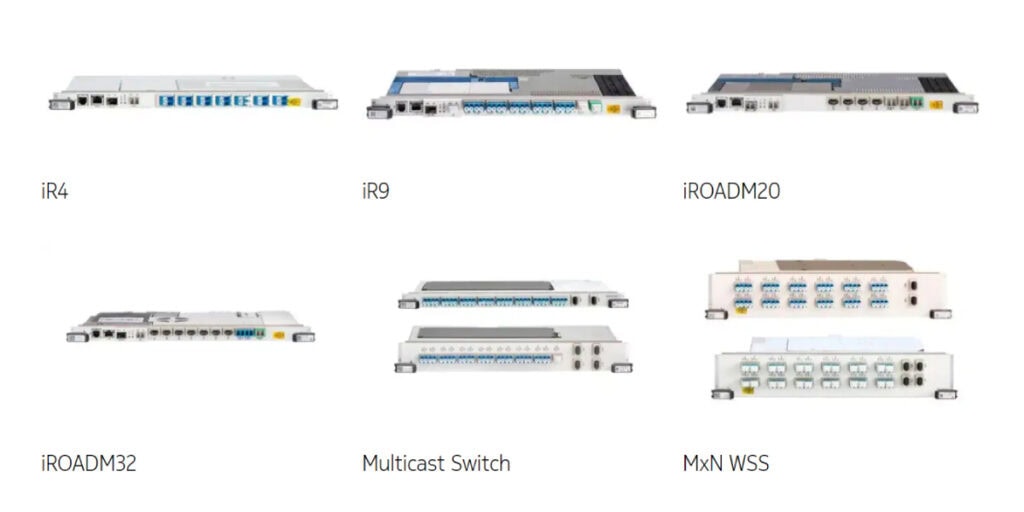
Advanced ROADM and Wavelength Routing
At the heart of a flexible optical network is the ROADM. Nokia’s integrated ROADM (iROADM) family consolidates multiple functions – wavelength switches, amplifiers, and DGE – into a single line card. These ROADMs integrate with multicast switches (MCS) or MxN WSS to support various wavelength switching functionalities:
- Colorless-Flexgrid (C-F): Allows any wavelength to be added or dropped from any port.
- Colorless and Directionless (CD-F): Enables any wavelength to be routed to any direction.
- Colorless, Directionless, and Contentionless (CDC-F): The most flexible configuration, eliminating blocking conflicts and enabling automated service restoration.
These capabilities are crucial for maximizing network capacity, as they allow for agile wavelength routing and optimized scaling with C+L-band WDM and OTN switching.
Your Partner for Advanced Optical Networking
MCA has highlighted the Nokia 1830 Photonic Service Solutions because they provide a powerful, flexible foundation for building the high-capacity networks our customers require. Our commitment is to serve as a trusted advisor, which demands a deep understanding of the premier technologies available to solve complex connectivity challenges. The 1830 portfolio’s ability to maximize fiber capacity, extend reach, and provide operational flexibility aligns with our goal of engineering solutions for a safer, more secure, and more efficient workplace.
The Nokia 1830 family is part of a broader set of solutions MCA offers. The ideal system for your specific needs – whether it is a model from this portfolio or a solution from another one of our trusted partners – can only be determined through a detailed consultation. Our team of experts is ready to collaborate with you, understand your unique challenges, and architect the solution that best supports your operational objectives.
Frequently Asked Questions
Nokia’s 1830 platforms are designed to increase fiber capacity, extend long-haul optical reach, and provide scalable, programmable photonic networking for service providers and enterprises.
The 1830 PSS provides multiservice optical transport with integrated OTN switching, while the PSI-M and PSI-L focus on compact, modular architectures ideal for high-speed DCI and optical line system functions.
C+L band allows optical equipment to use twice the traditional spectrum range, enabling operators to nearly double fiber throughput without deploying additional fiber.
ROADMs enable automated wavelength routing, service agility, and network resilience. They remove the need for manual patching and support scalable architectures like CDC-F (colorless, directionless, contentionless).
Absolutely. The PSI-M and PSI-L platforms are purpose-built for high-capacity DCI – supporting metro, regional, long-haul, and cloud interconnection with open, programmable interfaces.
About MCA
We believe every workplace should be safe, secure, and efficient. As trusted advisors, we deliver integrated communication, connectivity, and security solutions with a Service First mindset – driven by a team that cares deeply about our customers and each other.
Why MCA? At MCA, we help solve critical communication, connectivity, and security challenges with turnkey, integrated system solutions – from two-way radios and in-building wireless to video surveillance, access control, and more. MCA is built from over 50 companies with deep technical expertise and strong local roots. And we’re still growing – expanding our capabilities, our reach, and our team.
Our 100+ Solution Centers bring together sales, installation, service, and customer operations teams to deliver seamless, nationwide support. Guided by ourService First value, we don’t just connect the wires and walk away – we provide customized solutions backed by deep expertise and lifecycle support.
