
Authored by: Edjir Celin, Sales Director
In Healthcare, Seconds Aren’t Just Important – They’re Critical
In most industries, response time is a performance metric. In healthcare, it is something more. It directly impacts outcomes, safety, and in some cases, lives. Hospitals and healthcare campuses operate in environments where urgency is constant, and the ability to act quickly is not optional – it is expected.
While much of the focus is on clinical response within the facility, many critical situations begin outside it. Parking lots, entrances, walkways, and remote buildings are often the first point of contact for patients, visitors, and staff. These are the spaces where accidents happen, where individuals may need immediate assistance, and where communication gaps can create unnecessary delays.
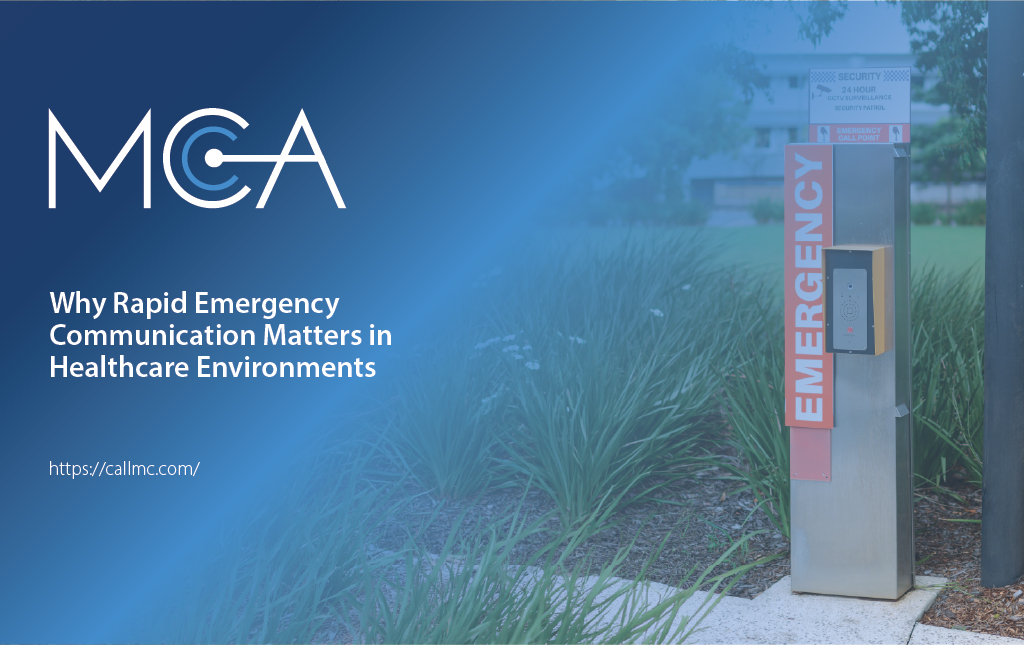
Emergency call boxes help close that gap. By providing immediate, one-touch access to security or response teams, they extend the same level of urgency and responsiveness beyond the hospital walls. They ensure that help is not just available – it is instantly accessible, wherever it is needed.
Removing Barriers to Immediate Assistance
One-Touch Access in High-Stress Situations
When someone needs help in a healthcare environment, they are often not at their best. They may be injured, disoriented, overwhelmed, or assisting someone else in distress. In these moments, even simple tasks can become difficult.
Emergency call boxes are designed to remove complexity from the equation. With a single button press, users are connected directly to hospital security or emergency personnel. There is no need to search for a phone, dial a number, or explain who to contact. The path to assistance is immediate and intuitive.
This simplicity is especially valuable for visitors unfamiliar with the campus, as well as for patients or individuals with limited mobility. It ensures that anyone, regardless of their situation, can quickly access help.
Reducing Dependence on Personal Devices
It is easy to assume that mobile phones provide sufficient coverage for emergency communication. However, in real-world healthcare environments, that assumption does not always hold up.
Phones can run out of battery, be left behind, or be difficult to use in urgent situations. In parking structures or large facilities, cellular service may be inconsistent. During high-traffic events or emergencies, networks can become congested, further limiting reliability.
Call boxes provide a dedicated communication channel that does not rely on personal devices or public networks. They are always available, always powered, and always ready to connect users with help.
Reliability When Systems Are Under Pressure
Built for Continuous Operation
Healthcare environments do not shut down, and neither can the systems that support them. Emergency call boxes are engineered for continuous operation, ensuring they remain functional at all times – day or night, in all weather conditions.
Whether installed in parking lots, entrances, or remote areas, these systems are designed to withstand environmental challenges while maintaining consistent performance. This durability ensures that communication is never compromised when it is needed most.
Resilience During High-Demand Events
Hospitals often experience periods of high demand, whether due to seasonal surges, large events, or emergency situations. During these times, traditional communication channels can become strained.
Cellular networks, in particular, may experience congestion, making it difficult to place calls or send messages. Emergency call boxes provide a reliable alternative that operates independently of these networks, ensuring that communication remains available even when other systems are under pressure.
Supporting Emergency Preparedness
Reliability is not just about day-to-day operations – it is also a critical component of emergency preparedness. Hospitals must be ready to respond to a wide range of scenarios, from medical emergencies to security incidents and large-scale events.
Call boxes support this readiness by providing a dependable communication infrastructure that can be relied upon in unpredictable situations. They act as a safeguard, reinforcing the overall resilience of the hospital’s safety systems.
Extending Emergency Response Beyond the Building
Where Incidents Often Begin
While hospitals are highly controlled environments inside, the areas outside the building are more variable. Parking lots, garages, and walkways are high-traffic zones where incidents such as falls, accidents, or security concerns are more likely to occur.
These spaces are also where individuals may feel most vulnerable – especially during night shifts or in less populated areas. Ensuring that help is easily accessible in these locations is essential to maintaining a safe environment.
Creating a Connected Safety Environment
Emergency call boxes extend the reach of hospital security teams into these external areas. They create a network of accessible communication points that connect the entire campus, not just the interior spaces.
This connectivity ensures that no matter where an incident occurs, there is a clear and immediate path to assistance. It transforms the campus into a more cohesive and responsive safety environment.
Supporting Both Security and Care Teams
Faster Coordination Across Departments
In healthcare settings, emergency response often involves coordination between multiple teams, including security, clinical staff, and facilities management. Clear and immediate communication is essential to ensuring that the right resources are deployed quickly.
Call boxes help streamline this process by providing a direct line to security teams, who can then coordinate with other departments as needed. This reduces delays and improves overall response efficiency.
Protecting Staff, Patients, and Visitors
Healthcare campuses serve a wide range of individuals, each with different needs and vulnerabilities. Staff may be working long or overnight shifts, patients may require assistance navigating the campus, and visitors may be unfamiliar with the environment.
Emergency call boxes provide a consistent and reliable way for all of these groups to access help. By supporting a wide range of users, they help create a safer, more inclusive environment.
A Critical Layer in Healthcare Safety Infrastructure
The most effective healthcare safety strategies are layered. No single system can address every scenario, but together, multiple systems create a more resilient and responsive environment.
Emergency call boxes play a critical role in that layered approach. They provide immediate access to help, operate reliably in all conditions, and extend emergency communication across the entire campus.
For healthcare organizations focused on improving safety, response times, and overall patient and staff experience, the value is clear. Call boxes are not just an added feature – they are a foundational component of a comprehensive safety strategy.
About MCA
We believe every workplace should be safe, secure, and efficient. As trusted advisors, we deliver integrated communication, connectivity, and security solutions with a Service First mindset – driven by a team that cares deeply about our customers and each other.
Why MCA? At MCA, we help solve critical communication, connectivity, and security challenges with turnkey, integrated system solutions – from two-way radios and in-building wireless to video surveillance, access control, and more. MCA is built from over 50 companies with deep technical expertise and strong local roots. And we’re still growing – expanding our capabilities, our reach, and our team.
Our 100+ Solution Centers bring together sales, installation, service, and customer operations teams to deliver seamless, nationwide support. Guided by our Service First value, we don’t just connect the wires and walk away – we provide customized solutions backed by deep expertise and lifecycle support.
