
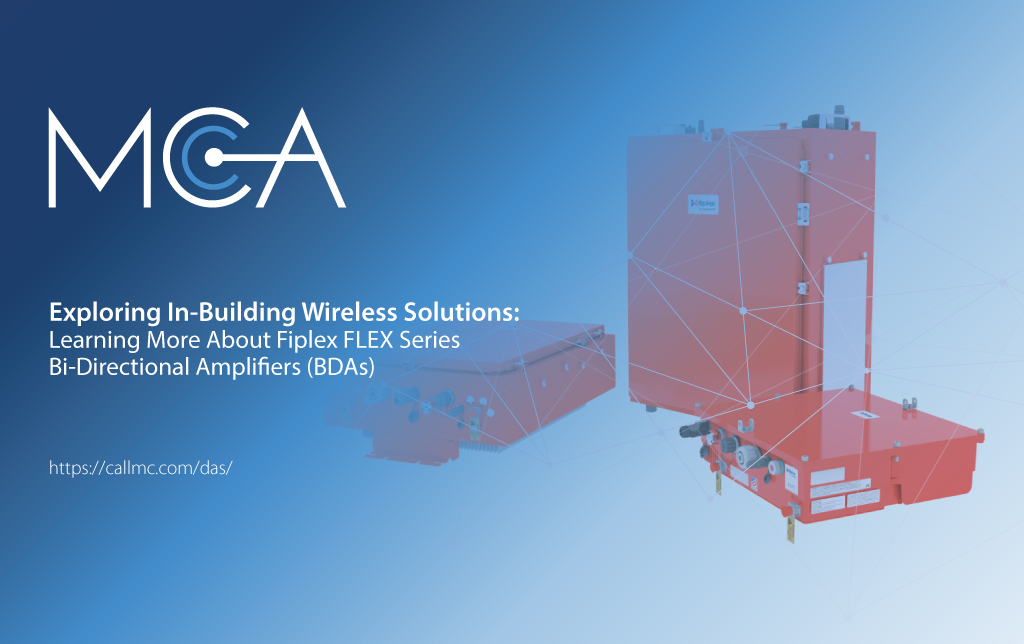
Boosting In-Building Wireless Signals for First Responders With UL 2524-Certified ERCES Solutions from Fiplex and MCA
Emergency responders face life-threatening communication challenges when entering modern buildings constructed with steel, concrete, and Low-E glass materials that block critical radio signals. During emergencies, firefighters, police officers, and EMS personnel require uninterrupted communication with command centers and each other to coordinate rescue operations effectively. The inability to maintain reliable radio contact within buildings creates dangerous blind spots that compromise responder safety and operational effectiveness. Through our strategic partnership with Fiplex by Honeywell’s comprehensive safety portfolio, MCA delivers advanced signal booster solutions specifically engineered to ensure reliable in-building communication for emergency responders through certified Emergency Responder Communication Enhancement Systems (ERCES).
What are Fiplex Signal Boosters?
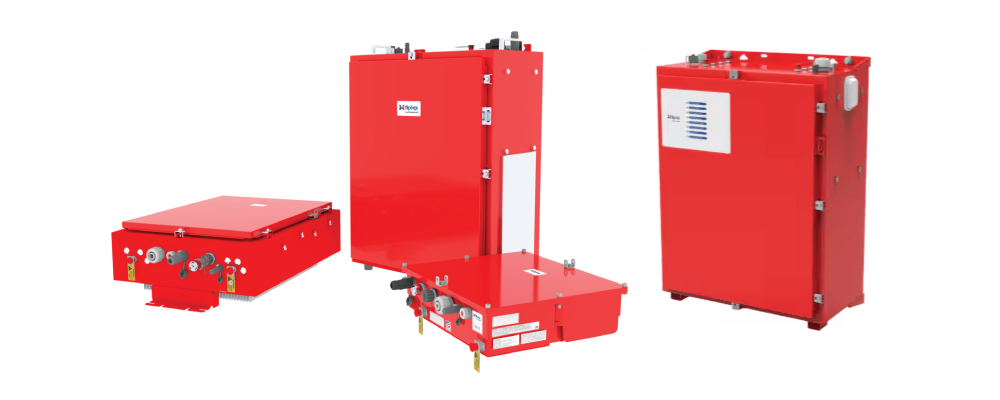
Fiplex by Honeywell Signal Boosters, professionally known as Bi-Directional Amplifiers (BDAs), represent sophisticated RF amplification systems designed specifically to enhance emergency responder communications within buildings where outdoor radio signals cannot penetrate effectively. These precision-engineered devices serve as the fundamental backbone of modern ERCES deployments, ensuring that critical two-way radio communications maintain reliable coverage throughout complex indoor environments.
The platform encompasses both digital and dual-band digital architectures that address the diverse frequency requirements of emergency response agencies while maintaining strict compliance with NFPA 1225 standards and UL 2524 certification requirements. Supporting comprehensive frequency families including VHF, UHF, Federal, and Public Safety 700/800 MHz allocations, these BDAs provide scalable, modular coverage solutions that accommodate buildings ranging from small facilities to expansive campus environments.
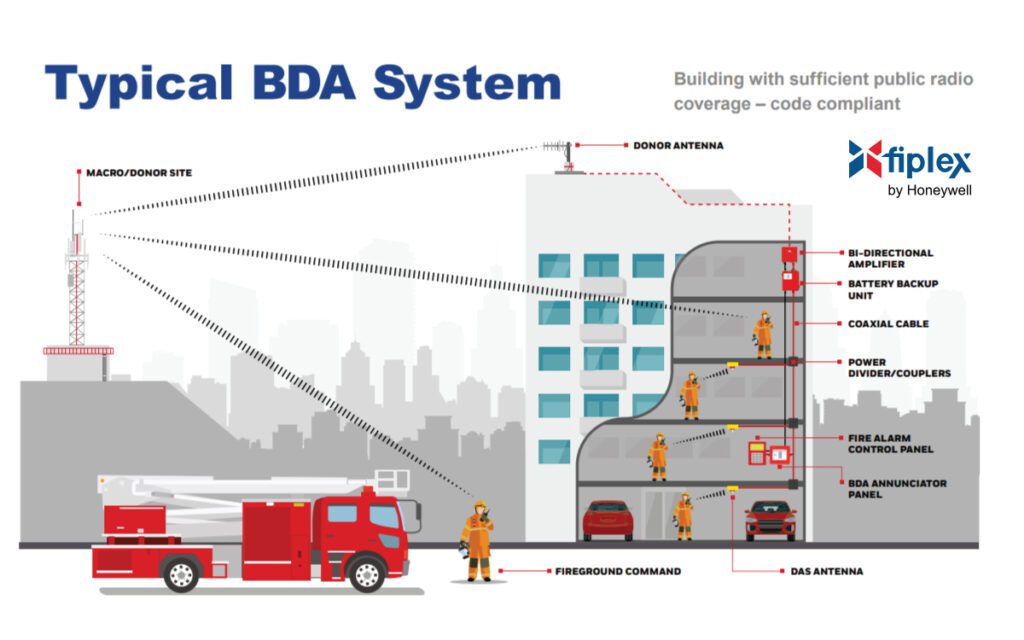
These systems function by capturing weak radio signals from outdoor networks, amplifying them to usable strength levels, and distributing enhanced signals throughout indoor spaces via strategically positioned antennas. The bi-directional capability ensures that communications flow seamlessly in both directions—from emergency responders to command centers and vice versa—maintaining critical operational coordination during emergency situations.
Critical Importance of BDAs in Emergency Response
Modern architectural practices prioritize energy efficiency and structural integrity through materials that inadvertently create significant barriers to radio frequency propagation. Steel reinforcement, concrete construction, and Low-E glass installations provide excellent building performance while simultaneously blocking the radio signals essential for emergency responder communications.
- Life Safety Implications: Communication failures during emergency operations can result in delayed response times, compromised coordination, and increased risk to both responders and building occupants. Stairwells, basements, mechanical rooms, and interior spaces often become communication dead zones where emergency personnel cannot maintain contact with incident commanders or request immediate assistance.
- Regulatory Requirements: Authorities Having Jurisdiction (AHJs) increasingly mandate ERCES installations for new construction and major renovations, recognizing that reliable emergency communications directly impact public safety outcomes. Compliance with NFPA 1225 standards and UL 2524 certification requirements ensures that installed systems meet stringent performance criteria while providing AHJs with confidence in system reliability.
- Building Code Integration: Modern building codes incorporate ERCES requirements as fundamental safety systems comparable to fire suppression and emergency egress systems. Property owners must demonstrate that emergency responders can maintain reliable communications throughout their facilities, making properly designed and certified BDA systems essential infrastructure components.
Advanced BDA Classification Systems
Fiplex / Honeywell BDAs incorporate sophisticated classification systems that address diverse deployment scenarios and regulatory requirements through Class A and Class B architectures, each optimized for specific operational environments and performance standards.
Class A and Class B BDAs play critical roles in ensuring reliable in-building public safety communication, but their applications differ significantly.
- Class A BDAs offer precise, channelized filtering, ideal for RF-dense environments where interference is high and noise mitigation is crucial. These devices filter and amplify specific channels, ensuring optimal communication for multiple agencies with minimal cross-channel interference. They are well-suited for urban areas and complex systems requiring precision.
- Class B BDAs, on the other hand, provide broad frequency amplification, enhancing entire bands rather than individual channels. They are more cost-effective and simpler to deploy, making them ideal for smaller facilities or single-agency applications. However, they are more susceptible to RF noise and may struggle in crowded RF environments.
The choice between Class A and Class B BDAs depends on the building’s needs, budget, and complexity. Class A systems excel in challenging RF environments, while Class B systems are a practical option for less demanding setups. Learn More About Class A vs B BDA’s >>
Comprehensive BDA Technology Platforms
Digital BDA Technology: Advanced Signal Processing
Digital BDAs process radio signals within the digital domain, enabling sophisticated signal enhancement techniques that significantly improve communication quality and system reliability compared to traditional analog amplification approaches.
- Digital Signal Processing: Advanced algorithms provide noise reduction, error correction, and adjacent channel filtering that maintains signal integrity while eliminating unwanted interference sources. This digital processing ensures that emergency responders receive clear, intelligible communications even in challenging RF environments.
- Enhanced Audio Quality: Digital processing techniques significantly improve audio clarity and intelligibility, ensuring that critical emergency communications remain understandable even under stressful operational conditions. Clear communications reduce response times and improve coordination effectiveness during emergency operations.
- Adaptive Performance: Digital systems automatically adjust processing parameters based on real-time signal conditions, maintaining optimal performance as RF environments change due to building occupancy, weather conditions, or interference sources.
- Future-Ready Architecture: Digital platforms provide compatibility with evolving communication technologies, ensuring that installed systems remain viable as emergency communication standards advance and new radio technologies emerge.
Dual-Band Digital BDA Systems: Integrated Multi-Frequency Support
Dual-band digital BDAs provide simultaneous support for both 700 MHz and 800 MHz public safety bands within unified system platforms, enabling comprehensive emergency communication coverage through single infrastructure deployments.
- 700/800 MHz Integration: These systems address both FirstNet Band 14 deployments and traditional 800 MHz trunked radio systems, providing agencies with flexible communication options while maintaining system integration and cost efficiency.
- Interoperability Enhancement: Dual-band capabilities enable communication between agencies operating on different frequency bands, supporting mutual aid operations and multi-agency response coordination essential for complex emergency scenarios.
- Infrastructure Consolidation: By supporting multiple frequency bands within single systems, dual-band BDAs reduce infrastructure requirements, installation complexity, and ongoing maintenance needs while providing comprehensive emergency communication coverage.
- Flexible Configuration Options: Dual-band systems offer both Class A channelized filtering and Class B broadband amplification options, enabling system designers to optimize performance characteristics for specific deployment requirements and operational environments.
Comprehensive Frequency Family Support
VHF/UHF Communications: Traditional Emergency Services
- VHF Coverage (136-174 MHz): Provides reliable coverage for fire departments, emergency medical services, and municipal agencies that utilize VHF frequency allocations. These frequencies offer excellent building penetration characteristics while maintaining compatibility with existing radio infrastructure investments.
- UHF Support (450-512 MHz): Addresses law enforcement, emergency services, and public works agencies operating within UHF frequency bands. UHF systems provide robust communication capabilities while maintaining compatibility with diverse radio equipment and agency-specific frequency assignments.
- Municipal Integration: VHF/UHF support enables seamless integration with existing municipal radio systems, protecting infrastructure investments while providing enhanced in-building coverage that extends outdoor system capabilities throughout complex indoor environments.
Federal Agency Communications: Specialized Requirements
- Federal Low Band (380-430 MHz): Supports government and federal agency communications requiring specialized frequency allocations outside traditional public safety bands. These systems address unique operational requirements while maintaining compatibility with federal communication standards and security protocols.
- Federal High Band (406.1-420 MHz): Provides Class A channelized filtering for government applications requiring precise frequency management and interference elimination. This specialized support ensures that federal agencies maintain secure, reliable communications within buildings while meeting specific operational security requirements.
Public Safety 700/800 MHz: Modern Broadband Integration
- FirstNet Band 14: Comprehensive support for FirstNet broadband communications enables emergency responders to access high-speed data services, video communications, and advanced applications essential for modern emergency operations. Band 14 coverage ensures that responders can utilize smartphones, tablets, and other broadband-enabled devices throughout buildings.
- Legacy 800 MHz Systems: Continued support for traditional 800 MHz trunked radio systems ensures that agencies can maintain existing communication protocols while transitioning to modern broadband technologies. This compatibility protects existing infrastructure investments while providing upgrade pathways.
- Interoperability Standards: Integrated 700/800 MHz support enables communication between agencies utilizing different frequency bands, supporting mutual aid operations and coordinated emergency response efforts essential for complex incidents requiring multiple agency coordination.

Advanced FLEX Platform Architecture
FLEX Series: Proven Performance Foundation
The FLEX Series represents Fiplex’s established BDA platform, providing reliable, field-tested performance for public safety communication enhancement applications across diverse building types and deployment scenarios.
- Proven Deployment History: Thousands of successful FLEX installations demonstrate platform reliability and performance consistency across varied environments, providing building owners and AHJs with confidence in system capabilities and long-term operational reliability.
- Flexible Configuration Options: FLEX systems support single-band, dual-band, Class A, and Class B configurations, enabling system designers to match specific deployment requirements while maintaining cost-effectiveness and performance optimization.
- Compact Installation Footprint: Space-efficient designs accommodate installation constraints common in existing buildings while providing professional appearance and accessibility for maintenance operations. Compact form factors reduce installation complexity and space requirements.
- Cost-Effective Solutions: FLEX platforms provide professional-grade performance while maintaining cost structures appropriate for small to mid-sized building applications, enabling widespread deployment of compliant ERCES systems across diverse facility types.
FLEX 2.0: Next-Generation Innovation
The FLEX 2.0 platform represents Fiplex’s latest technological advancement, incorporating enhanced flexibility, improved serviceability, and advanced performance characteristics designed for demanding modern ERCES applications.
- Modular System Architecture: Advanced modular design incorporates hot-swappable components that enable field service and system modifications without complete system shutdown. This serviceability approach minimizes maintenance disruptions while ensuring long-term system reliability and adaptability.
- Enhanced Performance Specifications: FLEX 2.0 systems provide improved power output, enhanced filtering capabilities, and advanced signal processing that addresses increasingly complex RF environments while maintaining exceptional signal quality and coverage consistency.
- Scalable Deployment Options: The platform accommodates expansion from simple single-zone coverage to complex multi-building campus deployments through modular component integration and sophisticated system coordination capabilities.
- Advanced Integration Capabilities: FLEX 2.0 systems integrate seamlessly with Master Units, Remote Units, Battery Backup Units, and annunciator systems, providing comprehensive ERCES solutions that address all regulatory requirements and operational needs within unified platforms.
Comprehensive ERCES System Integration
Master Unit Integration: Centralized System Intelligence
Master Units provide donor antenna interfaces and centralized system management capabilities that coordinate BDA operations while maintaining compliance with regulatory requirements and performance standards.
- Donor Signal Management: Master Units interface with outdoor antenna systems to capture radio signals from emergency agency base stations, providing the source signals that BDAs amplify and distribute throughout indoor coverage areas.
- System Coordination: Advanced Master Units coordinate multiple BDA operations, ensuring proper gain management, interference elimination, and optimal coverage distribution throughout complex building environments.
- Monitoring and Control: Centralized monitoring capabilities provide real-time system status information, alarm reporting, and diagnostic data that enable proactive maintenance and ensure continuous operational readiness.
Remote Unit Distribution: Extended Coverage Networks
Remote Units extend BDA coverage across multiple zones, floors, and building areas, providing scalable architecture that accommodates complex facility requirements while maintaining consistent coverage quality.
- Zone-Specific Coverage: Remote Units provide localized coverage enhancement in specific building areas, enabling targeted signal distribution while maintaining system coordination and interference management.
- Flexible Installation: Remote Units accommodate diverse installation environments and architectural constraints, providing coverage solutions for challenging spaces including stairwells, basements, parking areas, and specialized facility zones.
- Coordinated Operation: Advanced Remote Units maintain communication with Master Units to ensure proper system coordination, gain management, and coverage optimization throughout extended facility areas.
Battery Backup Integration: Continuous Operation Assurance
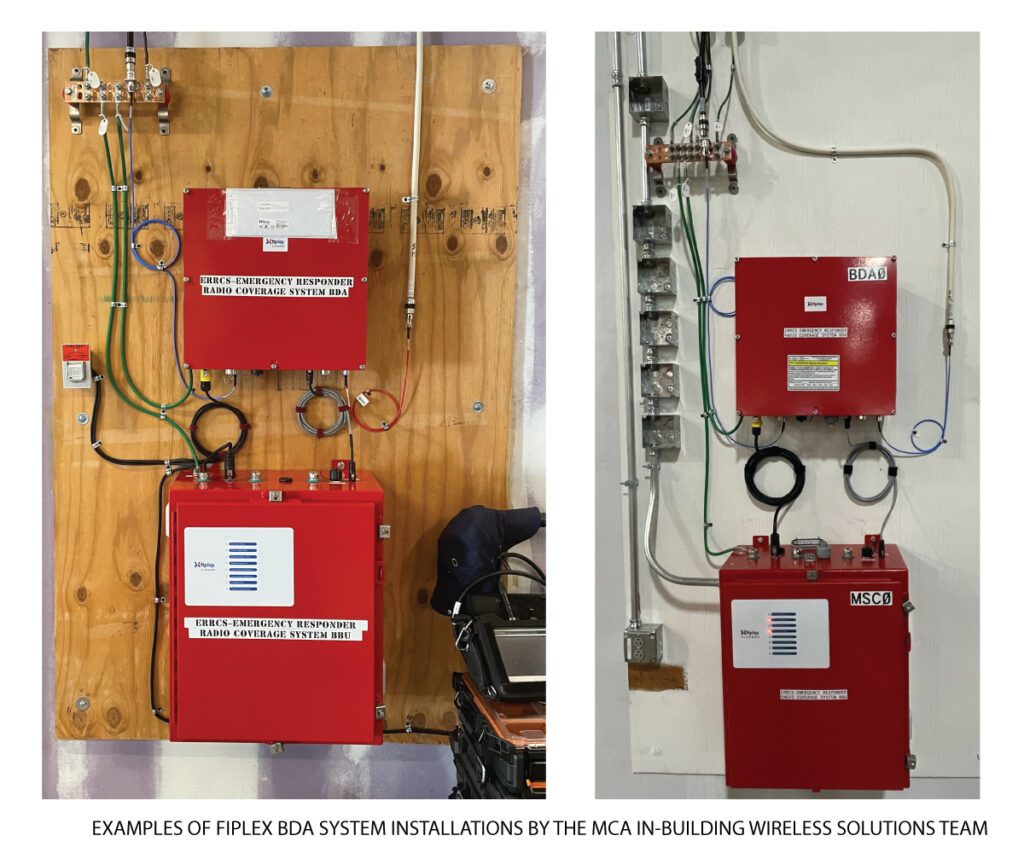
Battery Backup Units (BBUs) provide uninterrupted power during utility outages, ensuring that ERCES systems remain operational when emergency communications become most critical.
- Extended Runtime: BBUs provide 12-24 hours of backup power operation, meeting NFPA 1225 requirements while ensuring that emergency responders maintain reliable communications throughout extended emergency operations and utility outages.
- Automatic Switchover: Seamless transition between utility and backup power ensures uninterrupted system operation during power disruptions, maintaining critical communication capabilities when building occupants and emergency responders depend on reliable coverage.
- Status Monitoring: Integrated monitoring systems provide continuous battery status reporting, ensuring that backup power systems remain ready for emergency operation while alerting maintenance personnel to service requirements.
Annunciator Systems: Real-Time Status Communication
Annunciator panels provide visual and audible status information for ERCES systems, enabling building personnel and emergency responders to quickly assess system operational status during both routine operations and emergency situations.
- Visual Status Indication: LED indicators provide immediate visual confirmation of system operational status, enabling rapid assessment of communication system readiness during emergency response operations.
- Audible Alarm Capability: Audio alarms alert building personnel to system failures or maintenance requirements, ensuring prompt attention to issues that could compromise emergency communication capabilities.
- Strategic Placement: Annunciators install in fire command centers, security offices, and other strategic locations where building personnel can monitor system status and coordinate with emergency responders regarding communication system capabilities.
Regulatory Compliance and Certification Excellence
UL 2524 Certification: Safety and Performance Validation
UL 2524 certification validates that Fiplex BDAs meet stringent safety, reliability, and performance criteria established for ERCES applications, providing AHJs and building owners with confidence in system capabilities and regulatory compliance.
- Comprehensive Testing: UL 2524 certification requires extensive testing of electrical safety, mechanical construction, environmental resistance, and RF performance characteristics, ensuring that certified systems meet demanding public safety application requirements.
- Ongoing Compliance: Certified systems undergo regular compliance verification and quality auditing to maintain certification status, ensuring that production systems continue meeting established performance and safety standards throughout product lifecycles.
- AHJ Recognition: UL 2524 certification provides AHJs with standardized performance validation that simplifies system approval processes while ensuring that installed systems meet established public safety communication requirements.
NFPA 1225 Standards Compliance: Code Requirement Fulfillment
NFPA 1225 compliance ensures that Fiplex BDA systems meet comprehensive code requirements for in-building public safety radio coverage, addressing coverage levels, system reliability, and performance standards essential for emergency operations.
- Coverage Requirements: NFPA 1225 establishes minimum coverage levels throughout building areas, ensuring that emergency responders can maintain reliable communications in all spaces where emergency operations may occur.
- System Reliability: Code requirements address system backup power, monitoring capabilities, and maintenance protocols that ensure ERCES systems remain operational and ready for emergency use throughout their service lives.
- Performance Standards: NFPA 1225 specifies audio quality, coverage consistency, and signal strength requirements that ensure emergency responders receive communications with sufficient clarity and reliability for effective emergency operations.
Authority Having Jurisdiction Approval: Streamlined Permitting
UL 2524-certified Fiplex systems facilitate streamlined AHJ approval processes while providing building owners with assurance that installed systems meet regulatory requirements and performance expectations.
- Standardized Documentation: Certified systems include comprehensive documentation that addresses AHJ requirements, simplifying permit applications and system approval processes while reducing project timelines and approval uncertainties.
- Performance Assurance: Certification provides AHJs with independent validation of system capabilities, reducing approval complexities while ensuring that approved systems deliver reliable performance throughout their operational lives.
- Compliance Verification: Ongoing certification maintenance ensures that systems continue meeting evolving standards and requirements, providing long-term compliance assurance for building owners and regulatory authorities.
Advanced Technical Specifications and Performance Characteristics
Digital Signal Processing Capabilities*
- Channel Filtering: Advanced digital filtering provides precise channel isolation with programmable bandwidths including 100kHz, 75kHz, 62.5kHz, 50kHz, 37.5kHz, 25kHz, and 12.5kHz options, enabling optimization for specific radio system requirements and operational environments.
- Gain Management: Digital gain control provides up to 85 dB maximum amplification with 30 dB manual adjustment range in 1 dB increments, enabling precise optimization for specific coverage requirements and RF environments while maintaining stability and preventing oscillation.
- Power Output Specifications: Advanced systems provide composite output power capabilities reaching +37 dBm downlink and +24 dBm uplink, supporting high-power applications while maintaining signal quality and regulatory compliance.
- Noise Figure Performance: Low noise figure specifications of 4.5 dB typical and 6 dB maximum ensure that amplified signals maintain optimal signal-to-noise ratios essential for clear emergency communications in challenging RF environments.
Environmental and Mechanical Specifications*
- Environmental Protection: NEMA 4 and IP67-rated enclosures provide protection against dust, moisture, and environmental contaminants, enabling reliable operation in challenging installation environments including rooftops, basements, and mechanical areas.
- Temperature Range: Operating temperature specifications from -25°C to +55°C (-13°F to 131°F) ensure reliable operation across diverse climate conditions and installation environments without performance degradation or system failures.
- Professional Construction: Robust mechanical construction with dimensions accommodating complex RF circuitry while maintaining compact installation footprints suitable for space-constrained building environments and architectural integration requirements.
- Reliability Standards: Mean Time Between Failure (MTBF) specifications exceeding 50,000 hours demonstrate exceptional system reliability while minimizing maintenance requirements and ensuring consistent operational availability.
*Capabilities and specifications vary device by device, this is a general high-level overview of the Fiplex by Honeywell FLEX and FLEX 2.0 Series of BDAs. For exact specifications for specific parts of this product portfolio, please reach out to our team.
Professional Implementation and Expert Partnership
The Fiplex by Honeywell BDA portfolio represents one crucial component within MCA’s comprehensive emergency communication solutions. Our certified engineering teams possess extensive experience in ERCES design, regulatory compliance, and system optimization across diverse building types and jurisdictional requirements.
Our collaborative approach ensures optimal system selection based on thorough building assessment, RF analysis, and regulatory requirement evaluation. We determine whether Fiplex BDAs provide the optimal solution for specific deployment scenarios or if alternative technologies from our extensive partner network would better address unique operational requirements and compliance standards.
Through detailed consultations and comprehensive system design services, our expert teams create customized ERCES solutions that optimize emergency communication capabilities while ensuring full regulatory compliance and long-term reliability. This professional approach ensures maximum return on safety infrastructure investment while maintaining the performance standards essential for protecting emergency responders and building occupants.
The signal booster selection and design process requires careful evaluation of multiple factors including frequency requirements, building construction characteristics, coverage objectives, regulatory compliance standards, and integration requirements.
Contact MCA today to explore how Fiplex / Honeywell BDAs or other solutions from our comprehensive emergency communication portfolio can enhance your facility’s emergency responder communication capabilities. Our expert teams will conduct thorough evaluations of your specific requirements and recommend the most effective approach to achieving reliable, code-compliant emergency communications that protect lives when every second counts.
About MCA
We believe every workplace should be safe, secure, and efficient. As trusted advisors, we deliver integrated communication, connectivity, and security solutions with a Service First mindset – driven by a team that cares deeply about our customers and each other.
Why MCA? At MCA, we help solve critical communication, connectivity, and security challenges with turnkey, integrated system solutions—from two-way radios and in-building wireless to video surveillance, access control, and more. MCA is built from over 50 companies with deep technical expertise and strong local roots. And we’re still growing—expanding our capabilities, our reach, and our team.
Our 100+ Solution Centers bring together sales, installation, service, and customer operations teams to deliver seamless, nationwide support. Guided by our Service First value, we don’t just connect the wires and walk away—we provide customized solutions backed by deep expertise and lifecycle support.
