
ADRF Filters: Precision Signal Management for Critical Communications
Modern wireless infrastructure faces unprecedented challenges as organizations deploy increasingly complex distributed antenna systems and bi-directional amplifiers across diverse environments. Healthcare facilities, educational campuses, public safety installations, and commercial enterprises require seamless connectivity across multiple frequency bands while maintaining exceptional signal quality and regulatory compliance. The proliferation of overlapping services—from public safety communications to commercial LTE and emerging 5G networks—creates an RF environment where unwanted interference can compromise system performance, degrade user experience, and potentially impact life-safety operations.
Through our strategic partnership with Advanced RF Technologies, MCA delivers ADRF’s comprehensive portfolio of precision filters, engineered to provide exceptional signal management capabilities that ensure clean, interference-free operation across critical wireless infrastructure deployments.
What are ADRF Filters?
ADRF Filters represent a specialized family of RF filtering devices designed to address the fundamental signal quality requirements of modern wireless infrastructure systems. These precision-engineered components enable selective frequency management by allowing desired signal ranges to pass while attenuating or eliminating unwanted frequencies that could cause interference, noise, or performance degradation.
The platform encompasses both band-pass filters that isolate specific frequency ranges for clean signal transmission and band-stop filters that eliminate problematic interference sources while preserving all other frequencies. This comprehensive filtering approach ensures optimal system performance while maintaining compliance with stringent regulatory requirements including NFPA, IFC, and UL 2524 standards.
- Band-Pass Filters function as frequency-selective devices that allow signals within designated frequency bands to pass with minimal insertion loss while providing substantial attenuation to frequencies outside the desired range. These components prove essential for isolating public safety channels, separating commercial cellular bands, and preventing out-of-band interference in sensitive RF environments.
- Band-Stop Filters operate by attenuating signals within specific frequency ranges while allowing all other frequencies to pass unimpeded. These specialized devices eliminate interference from problematic frequency segments, such as Band 14 interference in public safety deployments, while preserving the integrity of desired communication channels.
Critical Importance in Modern RF Environments
Contemporary in-building RF environments present complex challenges characterized by multiple carriers, diverse frequency bands, and overlapping technologies operating within shared infrastructure. Without proper filtering, unwanted adjacent frequencies can penetrate amplifiers and DAS headends, creating noise floors that compromise system reliability and regulatory compliance.
Public Safety Applications
Public safety communications systems demand exceptional reliability and performance standards where signal integrity directly impacts emergency responder safety and operational effectiveness. Band-pass filters ensure that only authorized frequencies within designated public safety allocations receive amplification and distribution throughout critical facilities.
The filtering approach proves particularly essential for Emergency Responder Communication Enhancement Systems (ERCES) where regulatory compliance requires precise frequency control and interference elimination. Proper filtering ensures that 700 MHz and 800 MHz public safety bands, along with VHF and UHF allocations, maintain the signal quality necessary for reliable emergency communications.
Commercial Network Optimization
Commercial wireless deployments increasingly require sophisticated filtering to balance LTE, 5G, and Wi-Fi services while preventing intermodulation interference that could degrade user experience. Advanced filtering techniques enable system designers to optimize signal quality across diverse commercial frequency bands while maintaining the isolation necessary for clean multi-carrier operation.
Hybrid Environment Management
Modern wireless infrastructure often supports both public safety and commercial services within unified distribution platforms. Precision filtering enables these diverse services to coexist on shared DAS infrastructure without creating interference that could compromise either system’s performance or regulatory compliance requirements.
Comprehensive Product Portfolio
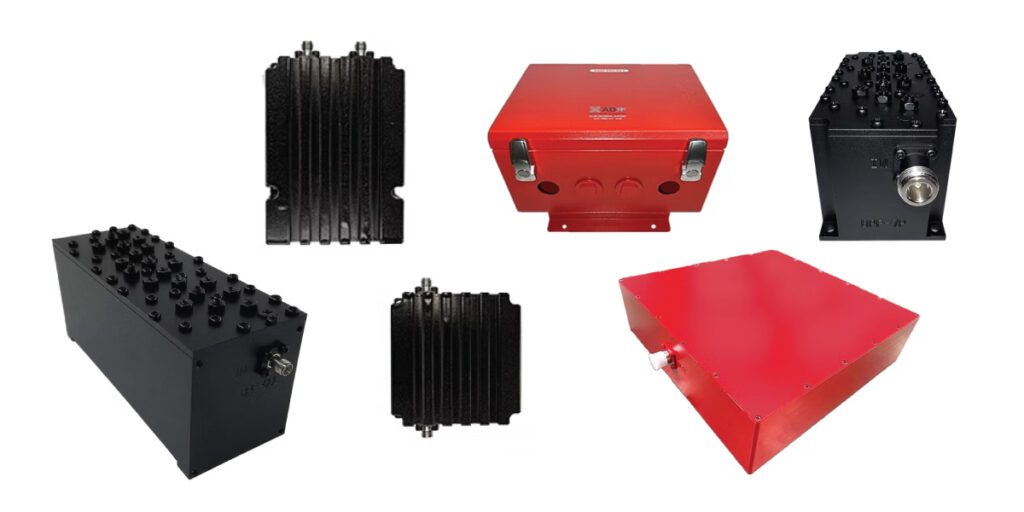
The ADRF filter family encompasses specialized models optimized for different frequency ranges and deployment scenarios, providing comprehensive filtering solutions that address diverse signal management requirements while maintaining exceptional performance standards.
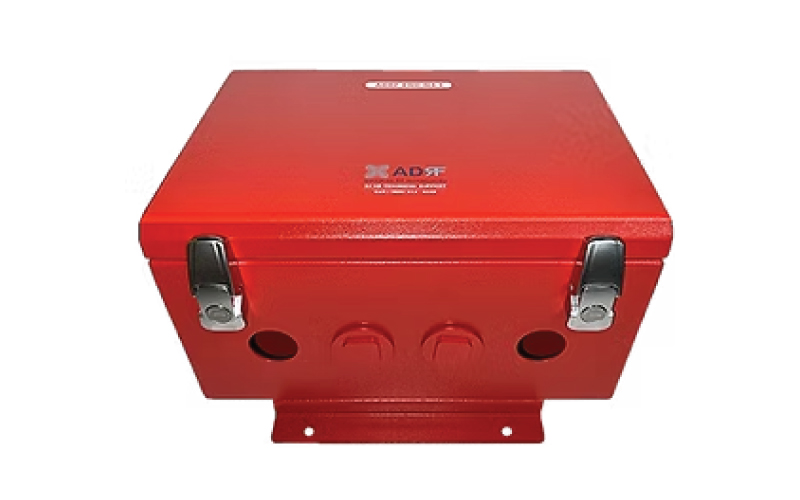
ADRF-ENC-N4-1: Professional Filter Housing Solution
The ADRF-ENC-N4-1 provides a robust, NEMA 4-rated enclosure specifically designed to house ADRF band-pass filters and multiplexers in challenging environmental conditions while maintaining professional installation standards.
Comprehensive Housing Capabilities:
- Multiplexer Support: Accommodates one ADRF-MPLX-U or MPLX-V series multiplexer
- Dual Band-Pass Integration: Houses up to two ADRF-BPF-7P or BPF-8P public safety filters
- Multi-Filter Configuration: Supports up to four ADRF-BPF-V-1 or BPF-U-1 compact filters
Professional Installation Features:
- Environmental Protection: NEMA 4 rating with secure door latches ensuring weather resistance
- Conduit Integration: Four conduit holes supporting 1-inch conduit connectors with included plugs
- Mounting Flexibility: Integrated wall mount bracket with professional appearance
- Robust Construction: 13.0 x 9.5 x 7.1 inch dimensions with 9.5 lb weight indicating substantial build quality
This enclosure solution enables professional installations that maintain equipment protection while providing organized access for maintenance and system modifications across diverse deployment environments.
Public Safety Band-Pass Filters: Precision Frequency Isolation
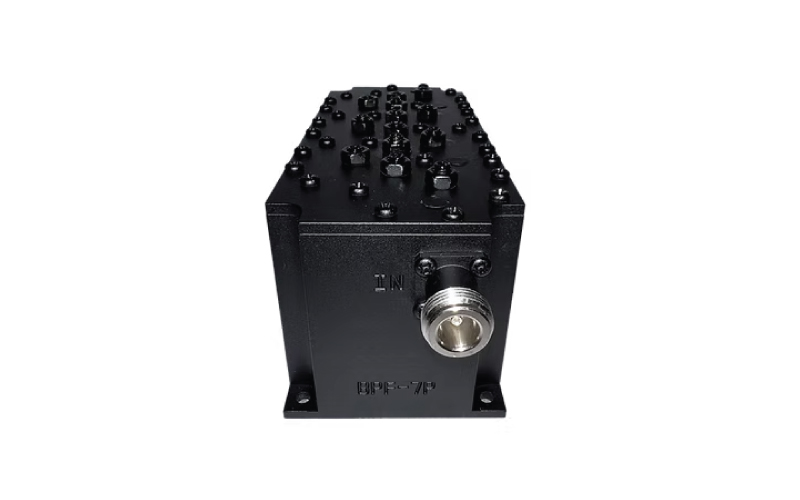
ADRF-BPF-7P: 700 MHz Public Safety Optimization
The ADRF-BPF-7P addresses the specific filtering requirements of 700 MHz public safety communications by providing precise frequency isolation that eliminates unwanted 800 MHz interference while preserving signal quality within the designated passband.
Technical Performance Specifications:
- Frequency Coverage: 758-805 MHz encompassing critical 700 MHz public safety allocations
- Insertion Loss: Maximum 1.5 dB ensuring minimal signal degradation
- Return Loss: Minimum 18 dB providing excellent impedance matching
- Attenuation Performance: Minimum 20 dB rejection at 808 MHz eliminating 800 MHz interference
Professional Construction:
- Compact Design: 5.8 x 2.6 x 2.6 inch form factor enabling flexible installation
- Lightweight Profile: 2.0 lb weight facilitating straightforward deployment
- Professional Connectivity: N-Type Female connectors ensuring reliable connections
- Environmental Capability: 14°F to 140°F operational temperature range
This filter proves essential for dual-band repeater deployments where elimination of unused 800 MHz signals ensures clean 700 MHz operation while maintaining regulatory compliance and optimal system performance.
ADRF-BPF-8P: 800 MHz Public Safety Excellence
The ADRF-BPF-8P provides complementary filtering for 800 MHz public safety applications, delivering identical performance characteristics optimized for the 806-869 MHz frequency range while eliminating 700 MHz interference.
Optimized 800 MHz Performance:
- Frequency Range: 806-869 MHz covering complete 800 MHz public safety allocation
- Identical Specifications: Matching insertion loss, return loss, and attenuation performance
- Coordinated Design: Same mechanical specifications ensuring installation consistency
- Interference Elimination: Minimum 20 dB rejection at 803 MHz removing 700 MHz interference
The complementary design enables system integrators to implement comprehensive dual-band filtering strategies that optimize performance across both primary public safety frequency bands while maintaining unified installation and maintenance approaches.
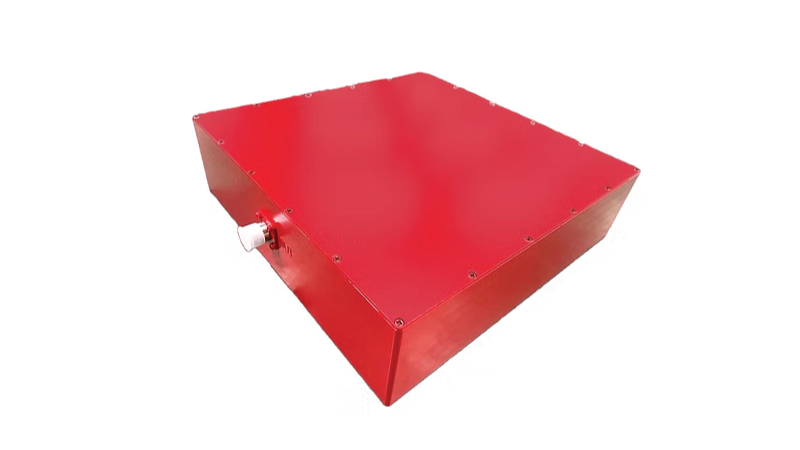
ADRF-BSF-14: Advanced Band-Stop Filtering
The ADRF-BSF-14 represents a specialized band-stop filter designed to address specific interference challenges associated with Band 14 frequencies while maintaining exceptional performance across all other operational bands.
Multi-Band Rejection Capabilities:
- Primary Rejection: 769-775 MHz with minimum 30 dB attenuation at 788-798 MHz
- Secondary Rejection: 799-816 MHz with minimum 30 dB attenuation at 758-768 MHz
- Extended Coverage: 851-866 MHz addressing additional interference sources
Advanced Performance Specifications:
- Minimal Insertion Loss: Maximum 1.5 dB across operational frequencies
- Excellent Matching: 1.3:1 VSWR ensuring optimal power transfer
- Low Intermodulation: Minimum 153 dBc PIMD at 2 x 20W preventing distortion
- High Power Handling: 50W input power capability supporting demanding applications
Robust Environmental Construction:
- Weather Protection: IP67 rating enabling reliable outdoor deployment
- Professional Dimensions: 11.96 x 11.89 x 3.15 inches accommodating complex filtering circuits
- Temperature Capability: 14°F to 133°F operational range ensuring reliable performance
- Visual Identification: Red (Pantone 200C) color coding for easy system identification
This specialized filter addresses complex interference scenarios where Band 14 signals create operational challenges while maintaining the broadband performance necessary for diverse communication services.
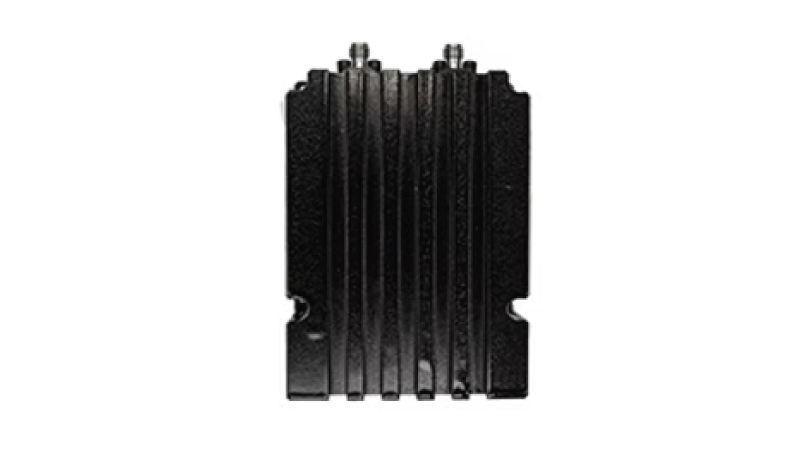
VHF and UHF Band-Pass Filters: Compact Signal Management
ADRF-BPF-V-1: VHF Precision Filtering
The ADRF-BPF-V-1 provides specialized filtering for VHF communications systems, delivering comprehensive out-of-band rejection while maintaining low insertion loss within the desired frequency range.
VHF Optimization Characteristics:
- Frequency Coverage: 138-174 MHz encompassing standard VHF communication allocations
- Insertion Loss: Maximum 2.0 dB preserving precious VHF signal strength
- Return Loss: Minimum 16 dB ensuring excellent impedance characteristics
- Multi-Band Rejection: 25 dB minimum at 76-110 MHz, 20 dB at 110-125 MHz, 40 dB at 379-513 MHz
Advanced Harmonic Suppression:
- Second Harmonic: Minimum 40 dB rejection preventing harmonic interference
- Third Harmonic: Minimum 60 dB attenuation ensuring clean operation
- Power Handling: 30W average capability supporting typical VHF applications
Compact Professional Design:
- Space Efficient: 3.7 x 2.7 x 1.2 inch dimensions enabling tight installations
- Lightweight: 0.6 lb weight facilitating flexible mounting options
- Professional Connectivity: SMA Female connectors ensuring reliable connections
- Wide Temperature Range: -4°F to 176°F operational capability
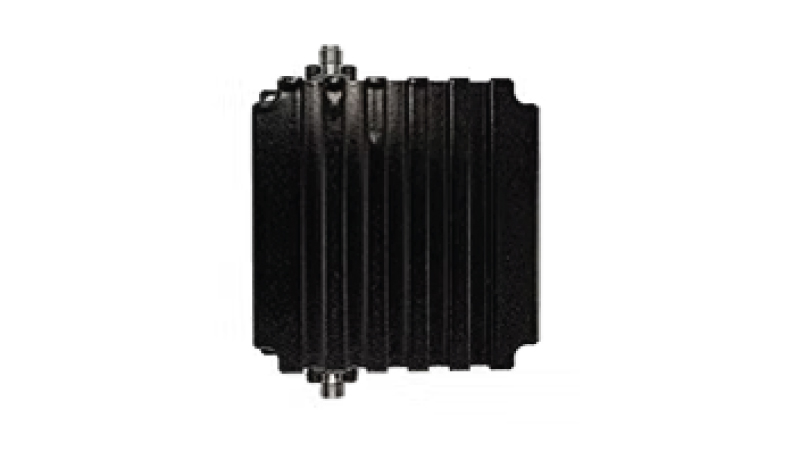
ADRF-BPF-U-1: UHF Signal Integrity
The ADRF-BPF-U-1 addresses UHF filtering requirements with optimized performance across the 380-512 MHz frequency range while providing comprehensive rejection of out-of-band interference sources.
UHF Performance Excellence:
- Frequency Range: 380-512 MHz covering complete UHF communication spectrum
- Low Insertion Loss: Maximum 1.0 dB maintaining signal strength
- VHF Rejection: Minimum 20 dB attenuation at 135-175 MHz preventing VHF interference
- Harmonic Control: 50 dB second harmonic, 60 dB third harmonic suppression
Optimized Compact Construction:
- Minimal Footprint: 2.8 x 2.7 x 1.2 inch profile maximizing installation flexibility
- Ultra-Lightweight: 0.5 lb enabling diverse mounting configurations
- Identical Connectivity: SMA Female connectors matching VHF variant
- Extended Temperature: -4°F to 176°F matching VHF operational range
Strategic Applications and System Integration
Emergency Responder Communication Enhancement Systems
ERCES deployments demand exceptional filtering performance that ensures regulatory compliance while maintaining the signal quality essential for life-safety communications. ADRF filters provide the precision frequency control necessary for these critical applications.
- Regulatory Compliance Support: The combination of ADRF-BPF-7P and ADRF-BPF-8P filters enables comprehensive dual-band filtering strategies that ensure only authorized public safety frequencies receive amplification and distribution. This approach supports compliance with NFPA 1221, IFC requirements, and UL 2524 standards while maintaining the signal quality necessary for reliable emergency communications.
- Interference Elimination: The ADRF-BSF-14 band-stop filter addresses specific interference challenges that can compromise public safety communications, particularly in environments where Band 14 signals create operational difficulties. This specialized filtering ensures clean operation while preserving the broadband capabilities necessary for diverse emergency services.
Commercial Distributed Antenna Systems
Modern commercial DAS deployments require sophisticated filtering approaches that optimize signal quality across multiple carriers and frequency bands while preventing interference that could degrade user experience.
- Multi-Carrier Optimization: Band-pass filters enable precise frequency management that supports multiple commercial carriers within shared infrastructure while maintaining the isolation necessary for clean operation. This approach proves particularly valuable in high-density environments where spectrum efficiency directly impacts system capacity and user satisfaction.
- Technology Integration: Advanced filtering facilitates the integration of LTE, 5G, and emerging wireless technologies within unified distribution platforms while preventing intermodulation products that could compromise service quality or regulatory compliance.
Hybrid Public Safety and Commercial Networks
Contemporary wireless infrastructure increasingly supports both public safety and commercial services within shared distribution systems, requiring sophisticated filtering strategies that enable clean coexistence.
- Service Isolation: Comprehensive filtering ensures that public safety and commercial services can operate within shared infrastructure without creating interference that could compromise either system’s performance or regulatory compliance requirements.
- Flexible Architecture: The modular filtering approach enables system designers to implement customized solutions that address specific frequency allocations and interference challenges while maintaining the flexibility necessary for future system evolution and technology upgrades.
Advanced Engineering and Quality Assurance
Precision Manufacturing Excellence
ADRF filters incorporate advanced manufacturing techniques and quality control processes that ensure consistent performance characteristics and long-term reliability across diverse deployment environments.
- RF Design Optimization: Computer-aided design techniques optimize electrical performance while precision manufacturing processes maintain the tight tolerances essential for achieving specified insertion loss, attenuation, and return loss characteristics across production runs.
- Material Science Applications: Advanced material selection and processing techniques ensure optimal electrical performance while providing the mechanical durability and environmental resistance necessary for reliable long-term operation in challenging deployment conditions.
Comprehensive Performance Verification
- Electrical Testing: All filter products undergo extensive RF performance testing that verifies insertion loss, return loss, attenuation, and harmonic suppression specifications across operational frequency ranges while ensuring consistent quality and reliability standards.
- Environmental Validation: Temperature cycling, humidity exposure, and mechanical stress testing ensure reliable operation under specified environmental conditions while maintaining long-term performance stability throughout demanding deployment scenarios.
- Quality Control Systems: Statistical process control methods and comprehensive inspection procedures ensure consistent manufacturing quality while detailed documentation supports system design and regulatory compliance requirements.
Professional Implementation and Expert Guidance
TThe ADRF Filter portfolio is a key part of MCA’s wireless infrastructure solutions. Our expert engineering teams specialize in RF filtering design, regulatory compliance, and custom solutions for various deployment needs. We conduct detailed frequency and interference analyses to recommend the best filters or alternative technologies from our partner network.
With tailored system designs, we optimize signal quality, ensure regulatory compliance, and maximize your infrastructure investment. Contact MCA to explore how ADRF Filters or other solutions can enhance your wireless communications with reliable, interference-free performance.
About MCA
MCA is one of the largest and most trusted technology integrators in the United States, offering world-class voice, data, and security solutions that enhance the quality, safety, and productivity of customers, operations, and lives.
More than 65,000 customers trust MCA to provide carefully researched solutions for a safe, secure, and more efficient workplace. As your trusted advisor, we reduce the time and effort needed to research, install, and maintain the right solutions to make your workplace better.
Our team of certified professionals across the United States delivers a full suite of reliable technologies with a service-first approach. The MCA advantage is our extensive service portfolio to support the solution lifecycle from start to finish.
