
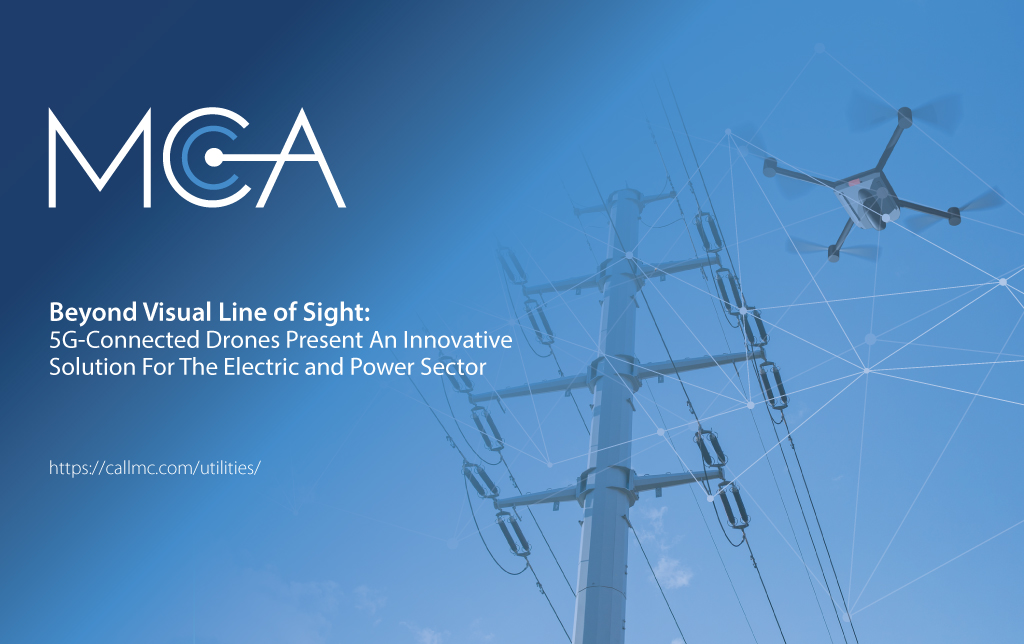
Beyond Visual Line of Sight: Drones, 5G, and Utility Innovation
Electric utilities face the monumental task of maintaining and inspecting vast, often remote, power infrastructure. From routine checks to storm damage assessment, ensuring grid reliability requires constant vigilance. Traditional inspection methods, while proven, can be slow, costly, and pose safety risks to field personnel.
As a trusted advisor, MCA partners with innovators like T-Mobile and Digi International to deliver solutions that address these operational challenges, transforming how utilities manage their critical assets. A primary example is the integration of cellular connectivity into unmanned aerial vehicles (UAVs), or drones, to create a powerful new tool for grid management.
This advancement sets the stage for a discussion of a transformative solution that extends drone fleets’ capabilities far beyond their traditional limits.
What is a Cellular-Connected Drone Solution?
A cellular-connected drone solution involves modifying commercial drones to carry lightweight, ruggedized cellular routers. These devices enable the drone to connect to a high-speed cellular network, such as T-Mobile’s expansive 5G network, for command, control, and data transmission. This integration fundamentally overcomes the range limitations of standard radio frequency (RF) or Wi-Fi-based drone controls, which typically restrict operations to the pilot’s visual line of sight.
This solution is a collaborative effort that brings together key components from industry leaders to create a reliable, unified system.
- The Drone: A commercial-grade UAV chosen for its payload capacity, flight time, and durability.
- The Cellular Router: A ruggedized, compact device like those from Digi International, designed to withstand vibration and environmental extremes while providing persistent, high-speed connectivity.
- The Network: A robust nationwide cellular network, such as T-Mobile’s 5G, offering the low latency and high bandwidth required for real-time video streaming and control.
By combining these elements, utilities can deploy drones for Beyond Visual Line of Sight (BVLOS) operations, unlocking a new level of efficiency and safety for infrastructure inspection and emergency response.
Key Components and Their Features
The effectiveness of this integrated solution depends on the quality and synergy of its components. The partnership between T-Mobile and Digi International provides the foundational technology to make widespread cellular drone deployment a reality.
Digi International Cellular Routers
Digi is a leader in creating enterprise-grade cellular solutions for mission-critical applications. Their routers are engineered for reliability in demanding environments, making them ideal for UAV integration.
Ruggedized Design: Digi routers are built to endure the shock, vibration, and temperature fluctuations inherent in drone operations. This ensures consistent performance where standard hardware would fail.
Compact and Lightweight: With a minimal footprint and low weight, these routers can be integrated into a wide range of drone models without significantly impacting flight time or maneuverability.
Advanced Connectivity Features: Equipped with features like dual SIMs for network redundancy and sophisticated remote management tools, Digi routers provide the reliable link needed for BVLOS control.
High-Speed Throughput: The routers are designed to leverage the full capabilities of 4G LTE and 5G networks, ensuring smooth, high-definition video streaming for detailed inspections.
T-Mobile’s 5G Network
A powerful drone and router are only as effective as the network they connect to. T-Mobile’s 5G network provides the essential backbone for this innovative utility solution.
Expansive Coverage: T-Mobile offers the largest 5G network in the country, providing the broad coverage necessary to operate drones across the sprawling service territories of electric utilities, including many rural and remote areas.
High Bandwidth and Low Latency: 5G technology is critical for BVLOS operations. High bandwidth allows for the transmission of crystal-clear 4K video feeds, while low latency ensures instantaneous pilot response to drone controls, even from miles away.
Network Reliability: Built for mission-critical applications, the network delivers dependable connectivity to maintain control and receive data from field assets, ensuring operational integrity.
Together, these components create a complete solution that enables utilities to see and assess their infrastructure from a centralized command center, revolutionizing legacy workflows.
Transforming Utility Operations with Cellular Drones
Integrating cellular-connected drones provides tangible benefits that directly address the core challenges of the utility industry. This technology empowers companies to become more proactive, efficient, and resilient.
Enhanced Situational Awareness and Faster Response
During a storm or other emergency, time is of the essence. Deploying cellular-enabled drones allows utilities to rapidly assess damage across a wide area without waiting for field crews to navigate blocked roads or hazardous terrain.
Pre-Deployment Intelligence: Pilots can fly drones from a safe, remote location to inspect reported outages. The high-definition video feed allows them to identify the exact nature of the damage – such as a downed pole, a broken cross-arm, or a tree on the line.
Efficient Resource Allocation: With this detailed information, dispatchers can send the right crew with the right equipment the first time. This eliminates wasted trips and ensures line workers are fully prepared upon arrival, significantly speeding up restoration times.
Improved Operational Efficiency and Cost Reduction
Routine inspections are a necessary but costly part of grid maintenance. Cellular drones offer a more efficient and economical alternative to traditional methods like truck rolls or expensive helicopter patrols.
Automated Inspections: Drones can be programmed to fly pre-determined routes along transmission lines, capturing high-resolution imagery of poles, insulators, and conductors.
Data-Driven Maintenance: This visual data can be analyzed using AI to detect potential failure points, enabling a shift from reactive repairs to proactive, predictive maintenance. This reduces the likelihood of unplanned outages and extends the lifespan of critical assets.
Increased Safety for Field Personnel
One of the most significant benefits of this technology is its impact on worker safety. By using drones as advanced reconnaissance tools, utilities can minimize employees’ exposure to hazardous situations.
Remote Hazard Identification: Drones can safely inspect storm-damaged areas, substations, and other high-risk environments, identifying hazards such as energized lines on the ground before crews enter.
Reduced Climbing and Patrols: Using drones for inspections minimizes the need for linemen to perform dangerous climbs or patrol remote rights-of-way on foot, directly lowering the risk of falls and other injuries.
As a dedicated partner in technological advancement, MCA facilitates the procurement and implementation of these transformative solutions. We understand that adopting new technology requires more than just hardware – it requires a strategy.
At MCA, we help our utility partners navigate this process, ensuring they select the right combination of technologies to meet their specific operational goals. The solution described here is part of a larger portfolio of innovative voice, data, and security systems. A consultation with our experts can help determine whether this solution or another from our extensive partner network is the optimal fit for your organization’s unique challenges.
MCA serves utilities across the United States through more than 100 Solution Centers, providing local installation, integration, and ongoing support for advanced drone and communications solutions.
Frequently Asked Questions
BVLOS (Beyond Visual Line of Sight) allows pilots to control drones beyond their physical view using cellular connectivity. This enables long-distance infrastructure inspections and rapid damage assessment.
5G delivers ultra-low latency and high bandwidth, allowing real-time control, HD video streaming, and safer, more responsive drone operations.
MCA integrates the necessary hardware, such as Digi cellular routers and T-Mobile 5G connectivity, to create reliable, scalable drone systems tailored to each utility’s needs.
Not entirely – but cellular drones enhance safety and efficiency by performing routine and emergency inspections faster, reducing truck rolls, and minimizing worker exposure to hazards.
Yes. With T-Mobile’s nationwide 5G coverage and MCA’s coast-to-coast service network, utilities can deploy BVLOS-capable drone fleets across rural and urban areas alike.
About MCA
We believe every workplace should be safe, secure, and efficient. As trusted advisors, we deliver integrated communication, connectivity, and security solutions with a Service First mindset – driven by a team that cares deeply about our customers and each other.
Why MCA? At MCA, we help solve critical communication, connectivity, and security challenges with turnkey, integrated system solutions – from two-way radios and in-building wireless to video surveillance, access control, and more. MCA is built from over 50 companies with deep technical expertise and strong local roots. And we’re still growing – expanding our capabilities, our reach, and our team.
Our 100+ Solution Centers bring together sales, installation, service, and customer operations teams to deliver seamless, nationwide support. Guided by our Service First value, we don’t just connect the wires and walk away – we provide customized solutions backed by deep expertise and lifecycle support.
