

Helping Electric Utilities Modernize Their Communications Infrastructure
As a trusted partner of Nokia, MCA brings extensive technical expertise and direct access to Nokia’s world-class network solutions for the utility sector. The time has come for electric utilities to address a critical infrastructure challenge: the transition from outdated multiplexers to modern, resilient communication networks that support today’s grid automation demands.
The Imperative for Communication Infrastructure Modernization
Moving Beyond End-of-Life Technology
Across the power utility landscape, the imperative to modernize is clear. Utilities face the dual challenge of enhancing the grid for today while preparing for tomorrow’s digital demands. This reality increasingly means migrating from traditional TDM (Time-Division Multiplexing) networks to advanced, resilient IP/MPLS-based infrastructures. The adoption of standards such as IEC 61850 enables sophisticated automation both within and beyond substations, but requires robust, flexible communication architectures.
Legacy SONET-based multiplexers have long been the backbone of grid communications. These devices, however, have reached end-of-life and no longer meet the demands of digital, automated smart grids. Utilities working with MCA are supported in making the necessary transition – with reliable, field-proven solutions from Nokia made available and integrated by MCA’s high-performance teams.
The Growing Gap Between Legacy Systems and Modern Grid Requirements
Traditional multiplexer technology presents several critical limitations that impact utility operations:
- Limited bandwidth capacity restricts the implementation of advanced grid applications
- Lack of network visibility hampers troubleshooting and performance optimization
- Inflexible architecture prevents seamless integration of new technologies
- End-of-life support challenges create operational risks and compliance concerns
- Security vulnerabilities expose critical infrastructure to evolving cyber threats
These limitations create operational bottlenecks that prevent utilities from realizing the full benefits of grid modernization initiatives.
Nokia’s 7705 Service Aggregation Router: The Foundation for Modern Grid Communications
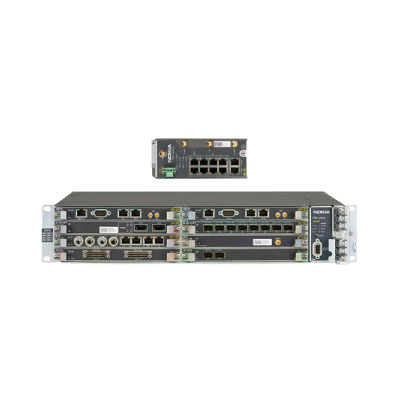
What is the Nokia 7705 SAR?
The Nokia 7705 Service Aggregation Router (SAR) represents a benchmark solution in the utility sector, trusted by hundreds of organizations globally for over fifteen years. This IP/MPLS platform provides a comprehensive migration path that maintains support for existing legacy applications while delivering a foundation ready for the latest grid technologies.
The 7705 SAR delivers exceptional performance characteristics specifically designed for utility environments:
- Carrier-grade reliability with 99.999% availability
- Comprehensive interface support for seamless legacy integration
- Advanced security features protecting critical grid communications
- Scalable architecture accommodating future technology requirements
- Proven field deployment across diverse utility environments worldwide
Key Technical Advantages of IP/MPLS Architecture
The transition to IP/MPLS architecture delivers fundamental improvements over traditional TDM-based systems:
Enhanced Network Efficiency: IP/MPLS networks provide statistical multiplexing capabilities that optimize bandwidth utilization, allowing multiple services to share network resources dynamically based on actual demand rather than fixed allocations.
Superior Quality of Service: Advanced traffic engineering and quality of service mechanisms ensure critical applications receive priority treatment, guaranteeing performance for time-sensitive protection and control functions.
Network Convergence Benefits: A unified IP/MPLS infrastructure supports voice, data, and video applications on a single network platform, reducing operational complexity and infrastructure costs.
Future-Ready Foundation: IP-based architecture provides the flexibility needed to integrate emerging technologies, including Internet of Things (IoT) devices, advanced analytics platforms, and artificial intelligence applications.
Supporting Legacy Systems While Enabling Modernization
Comprehensive Interface Support
The Nokia 7705 SAR provides extensive support for legacy system integration through a comprehensive array of TDM and analog interfaces. This capability ensures seamless communication for existing systems during the transition to IP/MPLS networks.
Critical legacy applications maintain full functionality, including:
- Teleprotection schemes for transmission line protection
- Current differential protection for transformer and bus protection
- SCADA communications for system monitoring and control
- Operational analog voice for maintenance and emergency communications
This interoperability approach enables utilities to implement a confident, stepwise migration strategy that minimizes operational risk while maximizing the benefits of modern network architecture.
Maintaining Service Continuity During Migration
The migration process requires careful planning to ensure uninterrupted service delivery. The Nokia 7705 SAR supports hybrid operation modes that allow both legacy TDM and modern IP applications to coexist during the transition period.
Key migration capabilities include:
- Circuit emulation services that transport TDM traffic over IP networks
- Pseudowire technology for transparent legacy service transport
- Quality of service preservation maintaining critical application performance
- Network synchronization support ensuring timing accuracy across hybrid networks
Advanced Protection Capabilities for Critical Grid Operations
Industry-Leading Differential Protection Features
Grid protection applications demand the highest levels of reliability and performance. The Nokia 7705 SAR incorporates innovative technologies specifically designed for differential protection requirements:
Active/Active Hitless Pseudowire Redundancy Switching: Differential relay data is replicated and transmitted simultaneously over multiple IP/MPLS paths. When a path failure occurs, switchover is completely hitless, ensuring zero impact to protection systems.
Asymmetric Delay Compensation (ADC): This advanced technology eliminates delay asymmetry that can affect line differential protection relay communication, ensuring consistent performance regardless of network path variations.
Hitless Control Card Architecture: Should the active control card experience a failure, all communications continue without interruption, achieving zero network convergence delay.
Meeting IEC TR 61850-90-12 Performance Standards
These combined innovations deliver 0 ms recovery time, exceeding traditional SONET capabilities and achieving the stringent requirements outlined in IEC TR 61850-90-12 for differential protection over packet networks. This performance level has been validated in real operational environments through comprehensive testing and industry demonstrations.
The result is protection system reliability that meets or exceeds existing SONET-based implementations while providing the flexibility and advanced features of modern IP/MPLS networks.
Precision Timing and Synchronization Solutions
Critical Timing Requirements for Grid Operations
Accurate timing and synchronization are fundamental requirements for many grid operations, including:
- Protection system coordination requiring precise time stamps
- Revenue metering applications demanding synchronized measurements
- Phasor measurement units (PMUs) for wide-area monitoring systems
- Distributed automation coordinating actions across multiple devices
Comprehensive Timing Solution Portfolio
Nokia’s platforms provide integrated timing solutions that support multiple synchronization standards and deployment scenarios:
GPS Integration: Direct GPS timing input provides primary reference source with automatic fallback capabilities during GPS outages or interference.
IEEE 1588 Precision Time Protocol (PTP): Advanced PTP implementation supports both transparent clock and boundary clock modes, enabling precise time distribution across complex network topologies.
Synchronous Ethernet: Integrated synchronous Ethernet capability provides frequency synchronization that complements PTP time synchronization for complete timing solutions.
Best Time Transmitter Clock Algorithm: Nokia’s proprietary algorithm enhances timing resilience by automatically selecting the best available timing source and managing seamless transitions during timing reference changes.
This comprehensive approach ensures timing accuracy and availability regardless of network topology or external conditions, providing utilities with reliable synchronization for all grid applications.
Accelerating Operational Technology Virtualization
Network Foundation for OT Cloud Initiatives
Modern grid operations increasingly rely on virtualized operational technology platforms that require secure, high-performance network infrastructure. The Nokia 7705 SAR enables secure multiservice network segmentation that supports consistent delivery of both operational technology (OT) and information technology (IT) applications.
Key virtualization enablers include:
- Network slicing capabilities that create isolated virtual networks for different application types
- Quality of service guarantee ensuring performance consistency for virtualized applications
- Security segmentation protecting OT applications from IT network threats
- Bandwidth management optimizing resource allocation across virtualized workloads
On-Ramp for Emerging Technologies
This network foundation provides utilities with flexibility to implement emerging operational technologies without compromising existing system performance or security. The platform supports migration toward private OT clouds while maintaining the reliability and security standards required for critical infrastructure operations.
Advanced Cybersecurity for Critical Infrastructure Protection
Quantum-Safe Security Implementation
The evolving threat landscape, including emerging quantum computing risks, requires advanced security measures that protect grid communications against current and future attack vectors. Nokia’s security portfolio addresses these challenges through multiple layers of protection.
Quantum-Safe Encryption: Implementation of post-quantum cryptographic algorithms protects against future quantum computing threats while maintaining compatibility with existing systems.
Stateful Firewall Protection: Integrated firewall capabilities provide deep packet inspection and application-aware filtering to prevent unauthorized access and malicious traffic.
Secure Boot and Hardware Security: Hardware-based security features ensure system integrity from initial startup through ongoing operations.
Regulatory Compliance and Standards Adherence
These comprehensive security measures ensure compliance with evolving regulatory requirements, including directives from the Federal Energy Regulatory Commission (FERC) and other industry bodies. The multilayered approach provides utilities with confidence that their critical infrastructure communications remain protected against sophisticated cyber threats.
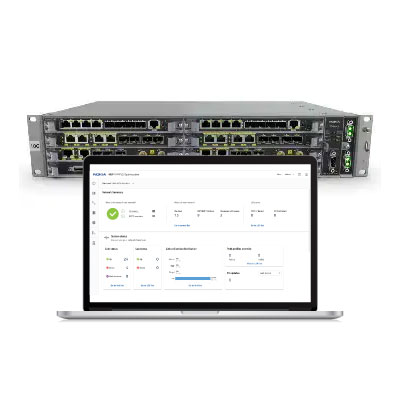
Centralized Network Management with Nokia NSP
What is Nokia Network Services Platform?
The Nokia Network Services Platform (NSP) provides utilities with powerful, centralized tools for managing complex grid communication networks. NSP transforms network operations through automation and intelligent management capabilities specifically designed for utility environments.
Operational Excellence Through Automation
NSP delivers comprehensive network management capabilities that simplify day-to-day operations:
Provisioning Templates: Pre-configured templates for teleprotection, SCADA, and other critical applications enable rapid service deployment while ensuring consistent configuration standards.
Jitter Buffer Management: Automated jitter buffer optimization maintains application performance across varying network conditions without manual intervention.
Performance Analytics: Comprehensive analytics suite provides visibility into network reliability, security posture, and performance optimization opportunities.
Fault Management: Proactive fault detection and automated remediation capabilities minimize service disruptions and reduce operational overhead.
These capabilities enable utilities to operate their communication networks more efficiently while maintaining the high reliability standards required for critical infrastructure.
Making the Strategic Transition to Modern Grid Communications
The transition from legacy multiplexers represents more than a technology upgrade—it constitutes a strategic transformation toward a high-performance, flexible, and secure grid architecture. The Nokia 7705 SAR provides utilities with a proven migration path that maintains operational continuity while unlocking the advanced capabilities required for modern grid operations.
The comprehensive feature set addresses both immediate operational requirements and future technology adoption needs. This approach ensures that infrastructure investments deliver long-term value while supporting the utility’s grid modernization objectives.
Partner with MCA for Your Grid Transformation Journey
As Nokia’s top distribution and resale partner in the USA, MCA delivers the expertise and support utilities need to successfully implement modern grid communication solutions. Our technical teams understand the complexities of utility environments and provide comprehensive support throughout the migration process—from initial assessment through deployment and ongoing lifecycle management.
The Nokia 7705 SAR represents one component of MCA’s carefully researched portfolio of innovative communication and infrastructure solutions. Our collaborative approach ensures that each utility receives the optimal solution for their specific requirements, whether from Nokia or other technology partners in our portfolio.
Contact MCA today to explore how Nokia’s proven grid communication solutions can support your utility’s modernization objectives with confidence, reliability, and long-term strategic value. Our expert teams are ready to help you navigate the transition from legacy systems to the advanced, secure infrastructure your operations demand.
About MCA and Our NIS Team
MCA combines industry-leading technology partnerships with extensive engineering expertise to deliver solutions that meet current operational needs while anticipating future technological advancements. We believe every workplace should be safe, secure, and efficient, and we serve as trusted advisors delivering integrated communication, connectivity, and security solutions with a service-first approach—driven by a team that cares deeply about our customers and each other.
