
How Integrated Monitoring, Connectivity, and Edge Intelligence Protect Critical Rail Infrastructure
Railway networks are the arteries of modern logistics and transportation, moving goods and people with precision and efficiency. Central to this intricate system are cross-over railway sites, which serve as critical junctures where trains can switch between parallel tracks. These sites provide the operational flexibility needed for routing, passing other trains, and managing rail traffic in yards and on main lines. However, their complexity and constant use also make them potential sources of risk. Ensuring the safety and integrity of these crossovers is paramount, requiring advanced monitoring solutions that can operate reliably in harsh, remote environments.
The need for continuous surveillance at these locations cannot be overstated. From preventing collisions and derailments to enabling proactive maintenance, effective monitoring helps railway operators mitigate hazards before they lead to catastrophic failures. This involves keeping a vigilant eye on switches, track conditions, and the surrounding area for obstructions or unauthorized intrusions. The challenge lies in deploying technology that offers real-time visibility and data backhaul from sites that are often exposed to the elements and may lack consistent power or wired network access.
The Critical Need for Reliable Crossover Monitoring
Cross-over railway site monitoring uses sophisticated technology to oversee the condition, performance, and safety of railway switches and crossings. The primary goal is to proactively identify and address potential issues before they escalate, forming a cornerstone of modern railway safety and maintenance programs.
The purpose of this monitoring is multifaceted:
Safety Enhancement: The foremost objective is to prevent accidents. This includes identifying hazards such as malfunctioning boom gates, faulty warning lights, or obstacles on the tracks that could lead to collisions involving trains, vehicles, or pedestrians.
Proactive Maintenance: Continuous condition monitoring allows operators to detect gradual deterioration in components, such as wear on switches or insufficient lubrication. This data enables a shift from reactive repairs to scheduled maintenance, minimizing service disruptions and reducing long-term costs.
Operational Efficiency: Automating inspections with remote data analysis improves maintenance scheduling and overall network efficiency. It reduces the dependency on manual, on-track inspections, which can be hazardous and time-consuming.
Incident Investigation: In the event of an accident, recorded data provides a precise chronological log of equipment status, train speeds, and environmental conditions. This information is invaluable for investigations and helps prevent future occurrences.
Given the remote and rugged nature of many crossover sites, deploying reliable surveillance and communication equipment requires a specialized approach. These systems must be self-contained, durable, and capable of transmitting data wirelessly over long distances.
Integrated Solutions for Uncompromising Surveillance
To address the unique challenges of monitoring cross-over railway sites, a comprehensive solution must bring together ruggedized hardware, reliable connectivity, and intelligent data processing. This often involves a custom-engineered system housed within a protective enclosure, designed to function autonomously in any environment.
Custom-Built NEMA-Rated Enclosures
The foundation of a durable remote monitoring solution is the enclosure that protects its sensitive electronic components. For railway applications, NEMA-rated communications enclosures are the industry standard.
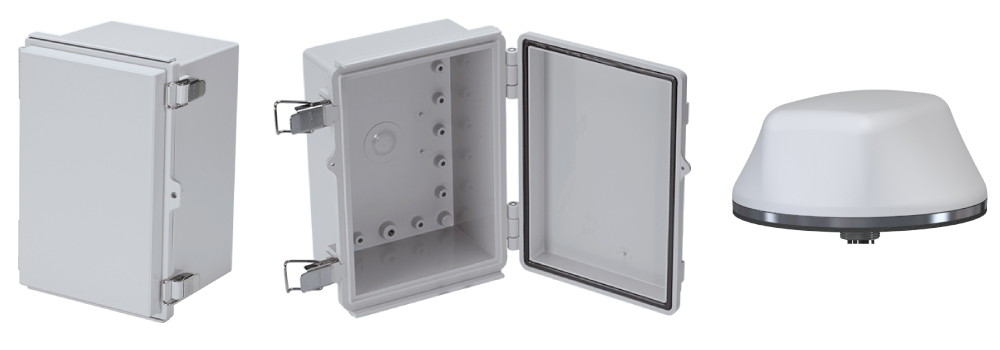
So, what is this solution? It is a purpose-built, ruggedized communications box designed to safeguard vital equipment. These enclosures are constructed to protect cellular gateways, routers, and other wireless backhaul equipment from severe weather, dust, and impact.
Key features of these enclosures include:
Ruggedized Construction: Built from materials such as polycarbonate, these enclosures are designed to withstand harsh indoor and outdoor environments.
Environmental Protection: They often carry ratings such as NEMA 4/4X for protection against water and corrosion, as well as C1D2, IECEx, and ATEX certifications for hazardous locations.
Customization: Each enclosure can be tailored to meet specific size and durability requirements, with options for pole or wall mounting.
Power Solutions: They can be equipped with backup batteries or solar photovoltaic arrays to ensure continuous operation, even during power outages or in off-grid locations.
Cellular Routers for Resilient Connectivity
Reliable data backhaul is essential for any remote surveillance system. Cellular routers provide the crucial link between cameras at the crossover site and the central monitoring station.
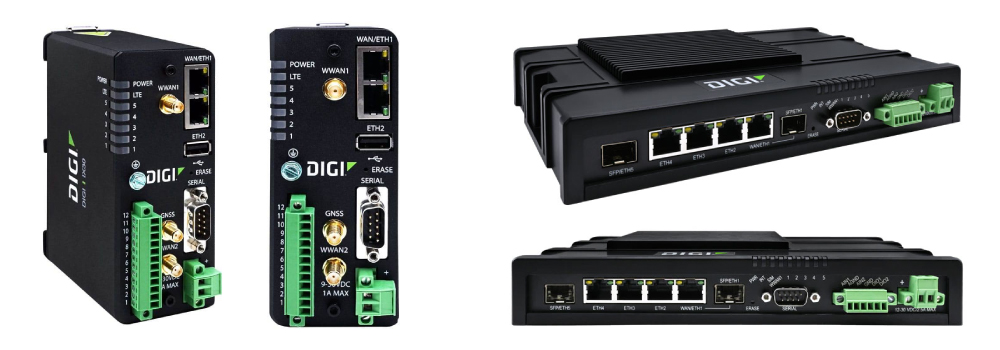
So, what is this solution? It is an industrial LTE router engineered for critical infrastructure applications. The Digi IX30 Industrial Cellular Router is specifically designed for optimal performance and reliability in harsh conditions, providing secure connectivity for industrial controllers, surveillance cameras, and other essential assets. The IX30 supports LTE (4G) connectivity, featuring global carrier certification, dual SIM slots for redundancy, robust security capabilities, and rugged construction for sustained operation in demanding railway environments. It is not equipped for 5G connectivity and is ideally suited for remote monitoring or data acquisition where data transmission requirements are moderate.
When operational needs include high-bandwidth applications—such as high-definition video feeds or real-time, live streaming—a 5G-capable device becomes necessary. In these scenarios, the Digi IX40 provides 5G connectivity, supporting the increased throughput and reduced latency essential for advanced surveillance and other data-intensive use cases.
Key distinctions in the industrial cellular router line-up include:
Digi IX30 (4G LTE): Designed for remote monitoring, data acquisition, and environments where moderate bandwidth is sufficient. Offers worldwide 4G coverage, dual-SIM failover, advanced VPN and security features, and rugged certifications such as C1D2 and ATEX.
Digi IX40 (5G): Tailored for advanced deployments requiring high-speed data transfer and low latency, such as HD video surveillance and future-facing communications. The preferred option is where bandwidth and real-time performance are critical.
This differentiation ensures both standard and advanced surveillance requirements at cross-over railway sites are met with an appropriate, reliable solution.
Edge Gateways with RTU Functionality
Modern surveillance goes beyond simple video feeds. By incorporating an intelligent IoT gateway with Remote Terminal Unit (RTU) functionality, railway operators can process sensor data at the network’s edge, enabling faster responses and more efficient operations.
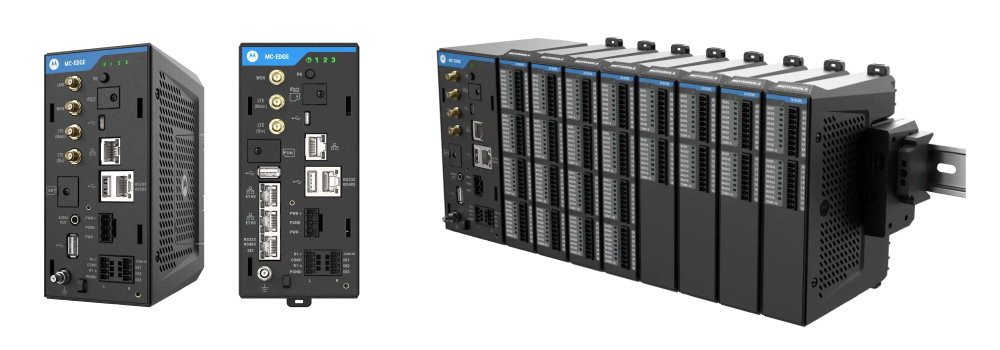
So, what is this solution? A device like the Motorola Solutions MC-Edge Intelligent IoT Gateway acts as a powerful hub for mission-critical IoT and SCADA connections. It sits at the edge to process, analyze, and act on data from various wired and wireless devices, including surveillance cameras and environmental sensors.
The primary strengths of an edge gateway are:
Communication Versatility: It operates across diverse networks, including LMR (MOTOTRBO, P25), LoRaWAN, public and private LTE, and Ethernet, ensuring redundant communication paths.
Edge Computing: By processing data locally, the gateway can filter information, make real-time decisions, and trigger immediate alerts without waiting for instructions from a central server. This reduces network load and enhances system responsiveness.
Mission-Critical Security: Engineered with multi-layered security, including AES 256-bit encryption and centralized authentication, to protect critical infrastructure from cyber threats.
Modular I/O: Support for various digital and analog input/output modules allows direct connection to a wide range of industrial sensors and control equipment.
Ruggedized Video Surveillance Cameras
A critical component of cross-over railway site monitoring is the deployment of advanced video surveillance cameras engineered to withstand harsh, hazardous environments. Pelco’s line of explosion-proof and anti-corrosion cameras—such as the ExSite Pro Bullet, Esprit Enhanced Anti-Corrosion Fixed, and ExSite Enhanced2 Fixed—are purpose-built for challenging outdoor locations where reliability and performance are paramount.
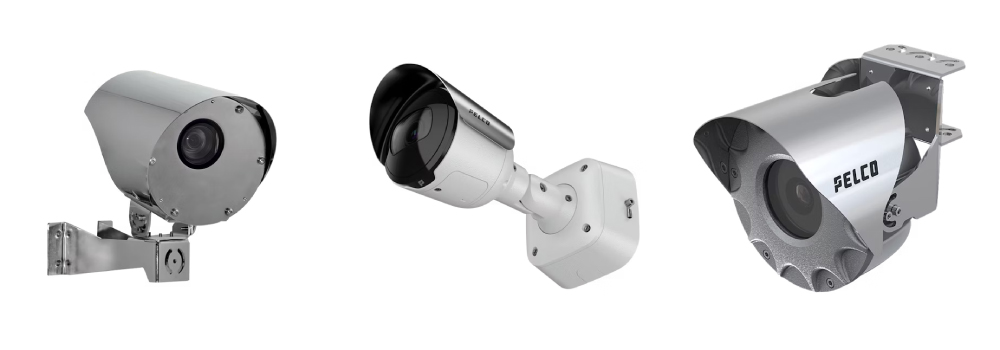
So, what is this solution? Ruggedized surveillance cameras, specified for cross-over railway sites, provide 24/7 high-resolution video monitoring, ensuring comprehensive coverage of critical rail infrastructure.
Key capabilities and features include:
Environmental Resilience: Each camera is housed in heavy-duty enclosures constructed from materials such as AISI 316L stainless steel or high-grade aluminum. These housings are rated for NEMA 4/4X, C1D2, ATEX, and IECEx compliance, and offer ingress protection up to IP66/IP6X, delivering robust defense against dust, water, corrosive elements, and extreme weather.
Vibration and Shock Resistance: These cameras are designed to withstand significant mechanical shocks and vibrations from rail traffic, utilizing engineered mountings and internal stabilization features to maintain image clarity and dependability even during continuous operation near active tracks.
Temperature and Climate Tolerance: Operational temperature ratings ranging from ‑50° to 65°C (‑58° to 149°F) ensure reliable performance across extreme seasonal fluctuations, reducing the risk of equipment outages or image degradation.
Integrated Video Analytics: Onboard AI-powered analytics enable real-time detection of intrusions, obstacles, movement patterns, and unauthorized access within the monitored zone, automating alerts for immediate operator response and supporting post-incident analysis.
Flexible Imaging Options: Available in various form factors and configurations—including bullet, fixed, and PTZ—these cameras deliver clear, high-definition video feeds for live monitoring, recording, and forensic review. Infrared (IR) illumination models are available to ensure visibility in complete darkness and low-light scenarios.
Compliance and Certification: Cameras are certified to meet stringent industry standards, including FIPS-140-2, NDAA compliance, and ONVIF-conformance, providing assurance for use in regulated and security-sensitive railway environments.
Broad System Integration Capabilities: Pelco cameras feature standard Ethernet interfaces for direct integration with edge gateways (such as MC-Edge) and cellular routers (such as Digi IX30 or IX40 when 5G is required for HD/livestreaming needs). This enables secure data transmission, centralized management, and remote maintenance within the larger monitoring solution.
By utilizing Pelco’s ruggedized surveillance cameras, operators gain a resilient visual intelligence layer that delivers actionable situational awareness, enhances real-time decision-making, and strengthens the safety and operational efficiency of rail cross-over sites.
- Seamless System Integration: These cameras interface directly with edge gateways and cellular routers via Ethernet connections, facilitating secure data transmission, remote access, and centralized management within the broader monitoring solution.
By leveraging ruggedized cameras within the overall surveillance ecosystem, operators benefit from a resilient, autonomous visual monitoring platform that delivers actionable intelligence and supports the safety and reliability objectives of critical rail operations.
The Complete Assembled Solution
When these components are integrated, they form a robust, autonomous monitoring platform designed specifically for the challenges of cross-over railway sites. At the core is a custom NEMA-rated enclosure, engineered to protect and organize the system’s critical hardware. Within the enclosure, a Digi IX30 router (offering LTE cellular backhaul, with the IX40 as the 5G-capable alternative for high-bandwidth or HD video applications) establishes resilient, secure connectivity.
Alongside, the MC-Edge Intelligent IoT Gateway delivers edge computing and RTU functionality, managing data processing, protocol conversion, and redundant communications across multiple networks.
Backup batteries and power management systems are included to maintain continuous uptime, even during utility interruptions or when external power is unavailable. High-gain antennas, either pole- or wall-mounted for optimal reception, support both cellular and GNSS requirements to maximize connectivity and situational awareness.
Externally, ruggedized Pelco surveillance cameras—built for harsh environments and capable of withstanding extreme vibration, temperature variations, and weather—are strategically deployed. These cameras provide high-definition, real-time video of track infrastructure and fouling zones, integrating seamlessly with the MC-Edge and Digi router over secured IP-based networks.
This complete solution delivers:
- Real-time, high-definition video surveillance of critical areas around the crossover.
- AI-driven alerts and analytics for obstacle, intrusion, and anomaly detection, reducing manual oversight requirements.
- Sensor-driven operational data capturing the status of switches, track conditions, and environmental factors, routed through the MC-Edge gateway.
- Redundant communication and power paths to ensure uninterrupted monitoring and alerting, regardless of network or utility disruptions.
By combining rugged enclosures, industrial routers, intelligent edge gateways, resilient power, and advanced video surveillance, the deployed system provides comprehensive, proactive monitoring that enhances safety and operational reliability at cross-over railway sites.
The Partner of Choice for Critical Solutions
At MCA, we understand that deploying technology for critical infrastructure is about more than just hardware; it is about engineering a reliable, end-to-end solution. We are committed to being the partner of choice for implementing these advanced systems. The integrated solutions discussed here, featuring best-in-class products from partners like Digi, Motorola Solutions, and Pelco represent our dedication to providing robust and secure platforms for unifying surveillance and control systems.
Our expert teams collaborate with customers to design and deploy systems tailored to unique operational requirements. The products highlighted are key parts of our larger portfolio of voice, data, and security solutions. To determine whether this specific combination or another solution from our extensive offerings is the best fit for your organization, a detailed consultation with our specialists is the next step. We are here to help you build a safer, more efficient railway network.
Frequently Asked Questions
Cross-over railway site monitoring is the use of surveillance, sensors, and connectivity technologies to continuously observe rail switches, crossings, and surrounding areas. The goal is to detect hazards, equipment failures, or unauthorized activity before they cause accidents or service disruptions.
Cross-over sites involve complex track switching mechanisms and frequent train movements. Mechanical failures, obstructions, or human error at these locations can lead to derailments, collisions, or significant operational delays, making them critical points for enhanced monitoring.
Video surveillance provides real-time visibility into track conditions, switch positions, and fouling zones. When paired with analytics, cameras can automatically detect intrusions, obstacles, or abnormal activity, enabling faster response and reducing reliance on manual inspections.
Connectivity is typically provided through industrial cellular routers using LTE or 5G networks. These routers securely transmit video and sensor data from remote sites to centralized monitoring systems, even in locations without wired network infrastructure.
Edge computing allows data from cameras and sensors to be processed locally at the site using intelligent gateways. This enables faster alerts, reduces network bandwidth usage, and ensures critical actions can occur even if connectivity to a central system is temporarily disrupted.
Yes. Many cross-over monitoring systems include backup batteries or solar power solutions. These ensure continuous operation during power outages or at off-grid locations, maintaining safety and visibility at all times.
About MCA
We believe every workplace should be safe, secure, and efficient. As trusted advisors, we deliver integrated communication, connectivity, and security solutions with a Service First mindset – driven by a team that cares deeply about our customers and each other.
Why MCA? At MCA, we help solve critical communication, connectivity, and security challenges with turnkey, integrated system solutions – from two-way radios and in-building wireless to video surveillance, access control, and more. MCA is built from over 50 companies with deep technical expertise and strong local roots. And we’re still growing – expanding our capabilities, our reach, and our team. Our 100+ Solution Centers bring together sales, installation, service, and customer operations teams to deliver seamless, nationwide support. Guided by our Service First value, we don’t just connect the wires and walk away – we provide customized solutions backed by deep expertise and lifecycle support.
