

Why Optical DCI is Essential for Private and Hybrid Cloud Networks
Businesses are handling more data than ever, driven by advancements in artificial intelligence, IoT, and cloud computing. The need for reliable, high-speed, and secure data center interconnect (DCI) solutions has never been greater. As companies consolidate and virtualize their IT infrastructures, they must implement scalable DCI solutions that support flexible and dynamic cloud environments.
Nokia’s business-critical optical DCI solutions provide a scalable, reliable, and secure way to interconnect data centers within private and hybrid cloud environments. By implementing optical DCI, businesses can ensure seamless connectivity, enhanced data security, and improved performance across distributed IT infrastructures.
Optical DCI: High-capacity optical links interconnecting data centers for low-latency, secure traffic.
What is Nokia Optical Data Center Interconnect (DCI)?
Optical Data Center Interconnect (DCI) is a networking solution that uses fiber optic technology to create ultra-high-speed, low-latency, and secure connections between data centers.
It leverages advanced technologies like Dense Wavelength Division Multiplexing (DWDM) and the latest coherent optical engines to transmit massive amounts of data over a single fiber. This enables organizations to build a resilient and scalable foundation for their most critical operations, ensuring seamless data synchronization and supporting the ever-growing demands of cloud services, AI, and other data-intensive applications.
Why Data Center Interconnect (DCI) Matters
As businesses increasingly move toward cloud-driven operations, data center interconnectivity becomes the backbone of enterprise IT infrastructures. The key drivers for adopting optical DCI include:
Growing Data Volumes and Bandwidth Demand
The rise of AI, IoT, and big data analytics has driven exponential increases in data transmission requirements. As enterprises deploy AI-based analytics, autonomous use cases in transportation and manufacturing, and advanced 5G services, the demand for high-capacity DCI solutions will continue to grow.
Reduced Latency for Business-Critical Applications
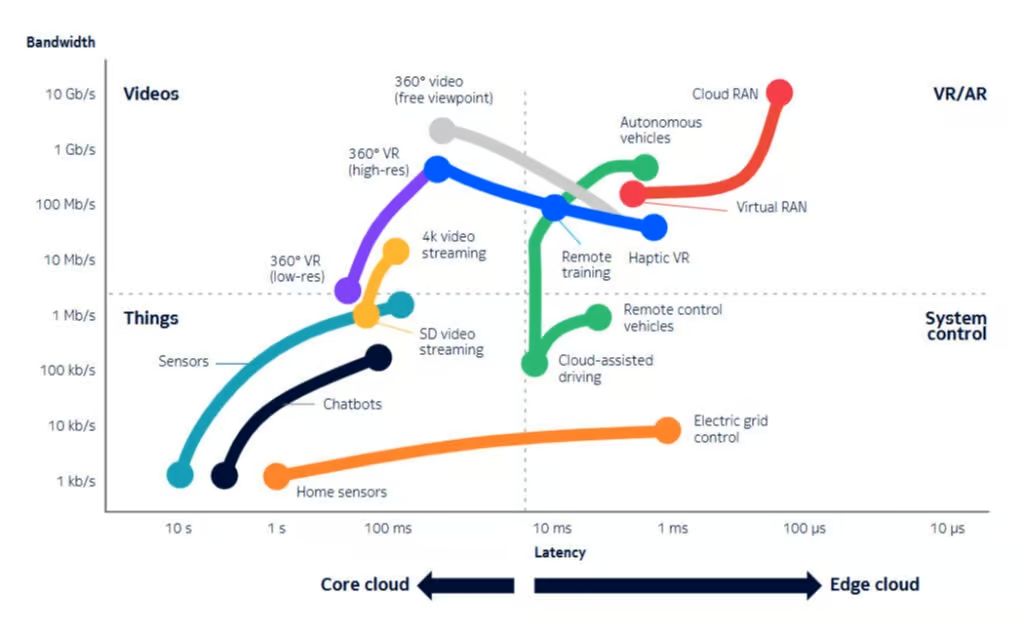
In an AI-automated world, reducing latency is paramount. Applications such as autonomous systems, remote control operations, and real-time analytics rely on near-instantaneous data transmission. Optical DCI solutions enable enterprises to move processing power closer to data sources through edge computing, ensuring ultra-fast response times and robust local analytics.
Security and Compliance Requirements
Data security is a top concern for enterprises operating in regulated industries such as finance, healthcare, and government. Nokia’s DCI solutions integrate Quantum-Safe Networks (QSN), leveraging AES 256-bit encryption, symmetric key distribution, and optical intrusion detection to provide multi-layered protection against cyber threats.
Quantum-Safe Networking: Crypto and keying methods designed to withstand quantum attacks.
Business Continuity and Disaster Recovery
Enterprises need resilient DCI solutions to support real-time business continuity, disaster recovery, and cloud backup strategies. Optical DCI ensures reliable and fast data replication, minimizing downtime during a network failure.
Optical DCI Architectures: Connecting Data Centers at Scale
To effectively connect data centers, enterprises can leverage different optical DCI architectures based on their operational needs:
Wavelength Division Multiplexing (WDM) and Optical Transponders
The most traditional approach to optical DCI involves using a WDM line system and optical transponders. This setup best suits high-capacity, long-reach applications, including intercontinental submarine links. Nokia offers advanced Photonic Service Engines (PSEs) optimized for capacity, reach, and fiber efficiency.
- WDM: Multiplexing many optical wavelengths on one fiber to multiply capacity.
Digital Coherent Optics (DCO) for Metro-Regional Connectivity
For data centers operating within a metro-regional range, an emerging solution is using pluggable Digital Coherent Optics (DCOs) directly within network routers. DCOs eliminate the need for external transponders, reducing hardware complexity and cost while maintaining high-speed, secure connectivity.
- DCO (Digital Coherent Optics): Pluggable coherent optics in routers for metro/regional 100–400G wavelengths without external transponders.
Dark Fiber for Private DCI Builds
Enterprises with stringent data sovereignty and control requirements can deploy private DCI solutions using dark fiber. This approach enables organizations to maintain full control over their network infrastructure while benefiting from high scalability and low operational costs.
- Dark Fiber: Leased/owned unlit fiber you light with your own optics for full control.
Quantum-Safe Networks for Advanced Security
As cyber threats become increasingly sophisticated, protecting data in-flight is crucial. Nokia’s Quantum-Safe Networks (QSN) provide the highest level of security at any data rate, employing tools such as:
- AES 256-bit encryption
- Symmetric key distribution
- Optical intrusion detection and wavelength tracking
- Optical Time-Domain Reflectometry (OTDR) for fiber monitoring
- OTDR: Optical test method that pinpoints fiber faults/taps by measuring backscatter.
Key Takeaways
- Optical DCI delivers cloud-scale bandwidth with ultra-low latency for AI/analytics and real-time apps.
- Nokia integrates DCI with quantum-safe security and fiber intrusion detection.
- DCO simplifies metro/regional builds by removing external transponders.
- Dark fiber + automation = lower long-term OPEX and higher control.
- MCA designs, deploys, and supports nationwide DCI programs.
Key Benefits of Nokia Optical DCI Solutions
Nokia’s business-critical optical DCI solutions are designed to address enterprise connectivity, security, and scalability challenges. Here are some of the key benefits:
Cost Savings and IT Optimization
By consolidating and virtualizing data centers, businesses can achieve significant OPEX savings while optimizing IT utilization. Optical DCI reduces operational complexity and lowers long-term infrastructure costs.
Scalability and Performance
Nokia’s DCI solutions provide greater resiliency, enabling businesses to scale their networks with high-capacity, high-speed connectivity at lower costs. Enterprises can ensure seamless network performance by interconnecting data centers across metro, regional, or international locations.
Enhanced Data Control and Security
With increasing concerns over data sovereignty and regulatory compliance, enterprises need greater control over their data. Optical DCI solutions provide the security and encryption needed to safeguard sensitive business information while meeting industry regulations.
Faster Service and Response Times
Business-critical applications, such as financial transactions, AI-driven analytics, and real-time communications, require rapid data transmission between data centers. Optical DCI minimizes latency, enabling faster decision-making and improved customer experiences.
Agility and Flexibility in Cloud IT Models
Moving to a private or hybrid cloud model allows businesses to adapt to changing workloads and IT demands more flexibly. Optical DCI supports dynamic and programmable networking, reducing the need for manual intervention across multi-layered IT environments.
Building vs. Buying a DCI Solution: Making the Right Choice
Enterprises evaluating their DCI strategy must consider whether to build a private DCI network using dark fiber or opt for a managed service. This decision hinges on several factors, including security, performance, cost, and operational control.
Control and Security
Security control is paramount for organizations that handle sensitive or regulated data. A private DCI build allows enterprises to implement encryption, authentication, and monitoring protocols, reducing reliance on third-party service providers. This is particularly important for finance, healthcare, and government industries, where data privacy and compliance requirements are strict.
Scalability and Performance
Managed DCI services provide convenience but often come with predefined service levels and limited scalability. In contrast, a private DCI build enables businesses to expand network capacity on demand, ensuring bandwidth and latency meet their evolving needs. Dark fiber-based DCI enables enterprises to fully leverage high-speed, low-latency connections without being constrained by a service provider’s infrastructure limitations.
Operational Costs
While a private DCI build requires a higher initial capital expenditure (CAPEX) for fiber procurement and equipment installation, it can lead to significant long-term operational savings (OPEX). Managed services typically entail recurring costs that increase over time, whereas private infrastructure enables businesses to amortize their investment and reduce their reliance on external providers. Additionally, as data demands grow, private DCI offers cost-effective scalability with lower incremental costs than managed alternatives.
Network Reliability and Uptime
A private DCI build provides organizations with direct network oversight, allowing them to implement redundancy and failover strategies tailored to their specific requirements. While often reliable, managed services may not offer the same level of customization in redundancy planning. For enterprises with mission-critical applications, ensuring maximum uptime and minimizing disruptions is a key consideration in favor of a private build.
Customization and Flexibility
Building a private DCI network gives enterprises complete control over their infrastructure. They can tailor routing, traffic prioritization, and security policies to fit their unique business needs. Managed services, by contrast, often come with standardized configurations that may not align with an organization’s specific operational requirements.
Long-Term Strategic Value
For businesses with long-term IT strategies, a private DCI network can be a strategic investment that provides sustained value. Owning the infrastructure ensures independence from vendor pricing fluctuations, service restrictions, and potential network congestion from shared services. It also enables enterprises to future-proof their IT environments by incorporating emerging technologies like quantum-safe encryption and SDN-driven automation without waiting for service providers to roll out updates.
How to Implement a Scalable Optical DCI Solution
Enterprises looking to implement optical DCI should follow a strategic approach to ensure seamless deployment and long-term success:
Step 1: Assess Network Requirements
Evaluate current and future data center connectivity needs, including bandwidth demand, security considerations, and regulatory compliance.
Step 2: Choose the Right DCI Architecture
Select the optimal DCI architecture based on distance, capacity, and security needs. WDM with optical transponders is ideal for long-haul applications, while metro-regional data centers can benefit from DCO-enabled routers.
Step 3: Leverage Nokia’s Professional Services
Nokia offers a range of professional services to streamline DCI deployment, including:
- Financial analysis and high-level design consulting
- Certification as a service
- Build, operate, and transfer (BOT) services for cost-effective network management.
Step 4: Deploy Quantum-Safe Security Measures
Integrate encryption, symmetric key distribution, and optical intrusion detection tools to safeguard data against cyber threats and unauthorized access.
Step 5: Optimize Performance with Automation
Modern DCI networks should be software-defined and automated to enable seamless scalability and network efficiency. Nokia’s Data Center Interconnection Fabric provides a unified, multi-layered approach to simplify operations.
Future-Proofing Your Enterprise with Optical DCI
As digital transformation accelerates, enterprises must invest in scalable, secure, and high-performance data center interconnect solutions. Nokia’s optical DCI technology ensures businesses can meet the demands of modern cloud IT models while maintaining security, compliance, and operational efficiency.
By leveraging advanced architectures, quantum-safe security measures, and automation-driven networking, businesses can future-proof their IT infrastructures and seamlessly adapt to evolving data demands. Whether interconnecting data centers across regional hubs or global networks, Nokia’s optical DCI solutions offer the speed, reliability, and agility needed for today’s data-driven world.

Partnering for a Connected Future
As we’ve explored, the future of data center interconnectivity hinges on scalable, secure, and high-performance optical solutions. Nokia’s Optical DCI technology provides the powerful foundation needed to meet the demands of modern cloud environments, but realizing its full potential requires a partner with proven expertise and a commitment to your success.
At MCA, we specialize in transforming powerful technology into tangible results. Our team of experts works alongside you to design, deploy, and support resilient DCI networks that align with your strategic goals. We bring a deep understanding of mission-critical environments, ensuring your DCI solution is implemented seamlessly and operates flawlessly. From initial design to long-term support, we are your dedicated partner in building a network that is not only ready for today’s challenges but also prepared for tomorrow’s opportunities.
Nationwide Design and Deployment
MCA’s Network Infrastructure team delivers Nokia optical DCI planning, buildouts, and lifecycle support across 100+ U.S. Solution Centers – serving utilities, finance, healthcare, service providers, and hyperscale/enterprise data centers.
Plan a Quantum-Safe Optical DCI with MCA
Evaluate dark fiber vs. managed services, model total cost, and design an automated, secure interconnect. Contact MCA’s Network Infrastructure Solutions team to start your assessment.
Frequently Asked Questions about Optical DCI
High-capacity, encrypted optical links that interconnect data centers for low latency, resilience, and cloud-scale bandwidth.
Use WDM + transponders for long-haul/very high reach; use DCO pluggables for metro/regional simplicity and lower cost/complexity.
Nokia adds multi-layer protection (AES-256, symmetric keying, intrusion detection, OTDR monitoring) to safeguard in-flight data now and against future quantum threats.
Private builds have higher CAPEX but lower long-term OPEX and more control; managed services offer fast start but ongoing recurring costs and less customization.
Strategy, design, fiber/optics selection, deployment, automation, and 24/7 support—tailored to compliance, performance, and growth targets.
About MCA
We believe every workplace should be safe, secure, and efficient. As trusted advisors, we deliver integrated communication, connectivity, and security solutions with a Service First mindset – driven by a team that cares deeply about our customers and each other.
Why MCA? At MCA, we help solve critical communication, connectivity, and security challenges with turnkey, integrated system solutions – from two-way radios and in-building wireless to video surveillance, access control, and more. MCA is built from over 50 companies with deep technical expertise and strong local roots. And we’re still growing – expanding our capabilities, our reach, and our team.
Our 100+ Solution Centers bring together sales, installation, service, and customer operations teams to deliver seamless, nationwide support. Guided by our Service First value, we don’t just connect the wires and walk away – we provide customized solutions backed by deep expertise and lifecycle support.
