
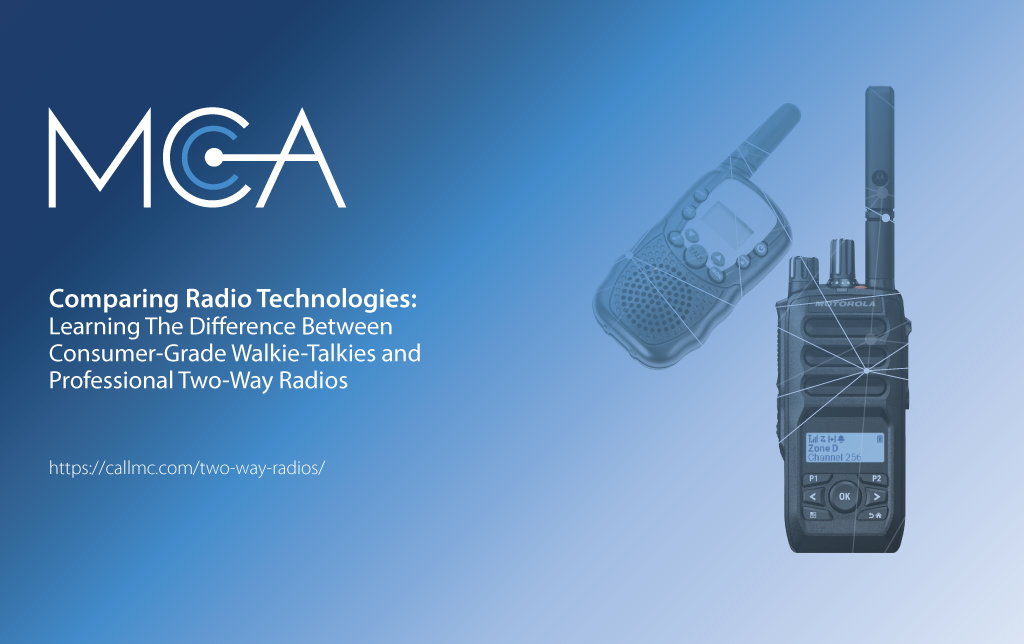
Walkie-Talkies vs. Professional Two-Way Radios: A Comprehensive Guide
When operations require dependable, real-time team communication, a handheld radio is the go-to tool. However, the market offers two distinct categories: consumer walkie-talkies and professional two-way radios. While they may appear similar at a glance, they are engineered for fundamentally different applications. Selecting the incorrect device can result in communication failures, operational inefficiencies, and significant safety vulnerabilities.
This guide, which we’ve published before and are republishing now, provides a comprehensive analysis of these two communication tools. We will define each device, conduct a detailed comparison of their capabilities, and explore the critical factors—from durability to security—that should inform your decision. Making an informed choice is the foundational step toward deploying a communication system that is safe, reliable, and perfectly aligned with your organization’s demands.
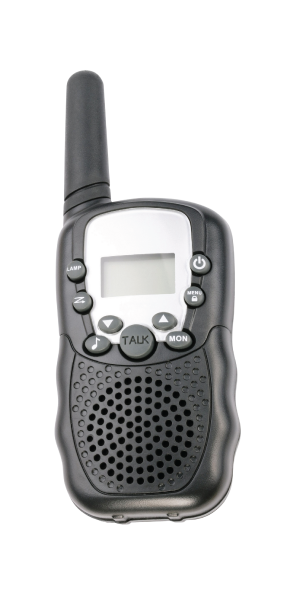
What is a Walkie-Talkie?
A walkie-talkie is a handheld, portable radio transceiver designed for simple, short-range communication. In the consumer electronics market, this term almost always refers to license-free devices that operate on shared, public frequencies, such as the Family Radio Service (FRS) in the United States or PMR446 in Europe.
FRS (Family Radio Service): U.S. license-free consumer channels with low power and short range.
These devices are characterized by their simplicity, affordability, and immediate usability. They are primarily intended for light-duty, recreational use by families, hikers, and hobbyists. This convenience, however, is offset by significant limitations in power, range, audio quality, durability, and security, rendering them unsuitable for most business, industrial, or public safety operations.
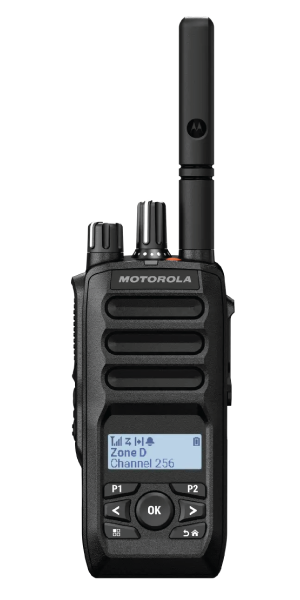
What is a Two-Way Radio?
While a walkie-talkie is technically a type of two-way radio, within professional contexts, the term “two-way radio” signifies business-grade or professional-grade equipment. These are purpose-built communication instruments engineered for daily, mission-critical deployment in commercial, industrial, and public safety environments.
Professional two-way radios operate on licensed or coordinated frequency bands (such as VHF and UHF), which permits higher power output, significantly greater range, and protection from interference. They are constructed to endure harsh environmental conditions and are part of a larger ecosystem that includes advanced features, system infrastructure like repeaters, and specialized accessories.
Core Differences: A Detailed Comparison
The choice between a consumer device and a professional tool hinges on a clear understanding of your operational requirements. Key differentiators include range, power, durability, security, and scalability.
Range and Power
- Walkie-Talkies: These devices are restricted to low power output, typically between 0.5 and 2 watts. This limits their effective range to 1-5 miles under ideal, line-of-sight conditions. In practice, obstructions like buildings, hills, or even dense foliage drastically reduce this range. Their direct radio-to-radio architecture offers no path to extend coverage.
- Two-Way Radios: Professional radios operate at higher power levels, with portable units reaching up to 5 watts and vehicle-mounted mobile radios going even higher. Crucially, they are designed to integrate with system infrastructure such as repeaters, Bi-Directional Amplifiers (BDAs), and Distributed Antenna Systems (DAS). This capability extends coverage across large facilities, multi-building campuses, or entire municipalities.
BDA / DAS: In-building systems that boost and distribute radio coverage through large facilities.
Durability and Construction
- Walkie-Talkies: Built with consumer-grade plastics, these devices are lightweight but offer minimal resistance to impact, vibration, dust, or moisture. They are not designed to withstand the daily rigors of a professional work environment.
- Two-Way Radios: Engineered for reliability in harsh conditions, professional radios are often certified to military standards (MIL-STD-810) for durability against shock, vibration, and extreme temperatures. They also carry Ingress Protection (IP) ratings, which specify their resistance to dust and water. Intrinsically Safe (IS) models are available for use in hazardous locations with flammable gases or combustible dust.
Frequency Bands and Security
- Walkie-Talkies: Operating on shared, public frequencies means anyone with a similar device can listen in or interrupt conversations. While some models offer “privacy codes” (CTCSS/DCS), these only mask interference; they do not encrypt communication.
- Two-Way Radios: These utilize licensed VHF (Very High Frequency) and UHF (Ultra High Frequency) bands. Licensing provides exclusive use of specific channels, preventing interference and unauthorized access. This enables the use of digital privacy codes or, for sensitive operations, advanced encryption standards like AES-256 to ensure communications are secure.
AES-256 Encryption: Military-grade scrambling that prevents eavesdropping on digital radio traffic.
Cost and Total Cost of Ownership (TCO)
- Walkie-Talkies: These have a very low upfront cost, making them attractive for casual users. However, their lack of durability leads to frequent replacement, and they cannot be serviced, resulting in a higher long-term cost for any organization that relies on them.
- Two-Way Radios: The initial investment for professional radios is higher. This cost is justified by a much longer service life, multi-year warranties, repairability, and firmware support. Their reliability reduces downtime and replacement costs, leading to a lower total cost of ownership over the life of the system.
TCO (Total Cost of Ownership): Purchase + service + lifespan costs over time—not just the sticker price.
Reference Table: Key Differences Between Walkie Talkies and Two Way Radios
| Category | Consumer Walkie-Talkies (FRS/PMR446-type) | Business & Professional Two-Way Radios |
| Intended use | Recreational, light duty | Daily business operations, industrial, public safety |
| Licensing | License-free (fixed channels, low power) | FCC/Ofcom licensed or enterprise-managed spectrum; coordinated channels |
| Power & range | Typically ≤ 2 W, radio-to-radio only; short range | Up to 5 W portable, higher for mobiles; supports repeaters for facility-wide/campus/city coverage |
| Audio performance | Basic audio, limited noise rejection | Very loud, clear audio; advanced noise suppression and feedback control |
| Durability | Consumer plastics; limited drop/water resistance | MIL-STD, IP-rated, intrinsically safe options; built for harsh environments |
| Battery system | Small packs, limited duty cycle | High-capacity, smart batteries; all-shift performance, fleet charging/analytics |
| Feature set | Few channels, basic PTT & volume | Hundreds of channels, digital privacy/encryption, emergency/lone worker, man-down, GPS, Bluetooth, text/data, work-order tickets |
| Interoperability | Standalone only | Works with repeaters, base stations, dispatch consoles, recording, indoor location beacons |
| Scalability | Fixed pair/groups, no system growth | Scales from a single site to multi-site networks; roaming, capacity expansion |
| Security | Open channels; anyone can listen | Digital privacy codes, AES encryption options; controlled access and auditing |
| Compliance | Not designed for OSHA/NFPA operational needs | Built to support safety programs and event logging; industry/code-aligned accessories |
| Total cost of ownership | Low upfront; higher long-term churn | Higher upfront; lower failure rate, serviceable, longer lifecycle, vendor support |
Legal, Licensing, and Privacy Considerations
The use of radio frequencies is regulated to prevent interference and ensure reliable communication for critical services.
- Licensing Requirements: In the United States, the Federal Communications Commission (FCC) governs the radio spectrum. Using professional two-way radios on business bands (UHF/VHF) typically requires an FCC license, which grants an organization the authority to operate on specific frequencies, protecting its communications from interference. However, unlicensed business-grade radios also exist and operate within the FCC license-free 900 MHz ISM band. Most consumer walkie-talkies (FRS) are “licensed-by-rule,” meaning no individual license is required.
- Global Regulations: Other countries have similar regulatory bodies, such as Ofcom in the UK. Rules vary globally, and it is essential to comply with local regulations before operating any radio device.
- Privacy Concerns: The open, unencrypted nature of walkie-talkies presents a significant privacy risk. For any organization handling sensitive information—such as schools, hospitals, or security firms—using a device where conversations can be easily intercepted is untenable. Professional radios with encryption are the only viable solution for secure communications.
Do I need a license in the US?
❌ FRS: no
✅ Business VHF/UHF: yes
❌ ✅ 900 MHz license-free business: sometimes viable but limited
How to Decide: Which Device is Right for You?
To select the appropriate communication tool, evaluate your operational needs against these key questions:
- What is the operational environment? Will the radios be used in noisy areas, through concrete and steel structures, or exposed to weather? If so, the superior audio performance and durability of a professional two-way radio are necessary.
- What is the required coverage area? If you need communication beyond a single open space or across a large building, campus, or multiple sites, you will need a professional radio system with repeaters.
- Are your communications sensitive? If you discuss student safety, patient health, security matters, or proprietary business information, the encryption capabilities of professional two-way radios are mandatory.
- Is communication mission-critical? If a missed call could result in a safety incident, production downtime, or a security breach, you need the reliability and advanced features (like emergency buttons and lone worker alerts) of a professional system.
- Do you anticipate growth? Professional radio systems are scalable. You can add users, expand coverage, and integrate new features as your organization grows. Consumer walkie-talkies offer no path for growth.
What MCA Sells: Your Partner for Professional Communications
Understanding the distinction between consumer gadgets and professional tools is fundamental to building a reliable communication strategy. MCA is a solutions provider focused exclusively on professional and business-grade communication systems.
We do not sell consumer-grade walkie-talkies.
Our mission is to equip organizations with robust, purpose-built systems that enhance safety, security, and operational efficiency. We specialize in providing Motorola Solutions products, the global leader in professional communications. Our portfolio includes:
- Business-Grade Radios: We offer both licensed and license-free business-tier Motorola radios that provide a strong balance of performance and value for industries like retail, hospitality, and property management.
- Professional MOTOTRBO™ Radios: This industry-leading digital platform delivers exceptional audio clarity, data capabilities, and advanced safety features. Available as portables (handhelds) and mobiles (vehicle-mounted), MOTOTRBO™ is the solution of choice for healthcare, manufacturing, logistics, education, and transportation.
- Professional APX™ Series Radios: Built on the P25 mission-critical standard, the APX™ series is the trusted choice for public safety. These portable and mobile radios offer unmatched reliability, interoperability, and ruggedness for police, fire, and EMS personnel who depend on their equipment in life-or-death situations.
MCA is the trusted partner for implementing these solutions. Our offerings are part of a larger portfolio of voice, data, and security technologies. The right system for your organization may be one of these, or it may involve a different solution from our diverse range of partners. To determine the optimal fit, a consultation with our experts is the necessary next step.
MCA designs, licenses, installs, and supports radio systems nationwide through 100+ Solution Centers. Contact MCA today for a comprehensive assessment of your communication needs.
Frequently Asked Questions About Walkie-Talkies and Two-Way Radios
The primary difference lies in their intended use and capabilities. A walkie-talkie is typically a low-power, license-free consumer device designed for recreational use over short distances. A professional two-way radio is a robust, higher-power communication tool engineered for business, industrial, or public safety operations, often requiring a license and supporting system infrastructure for extended range and enhanced features.
Technically, yes. Any device that can both transmit and receive radio signals is a two-way radio. However, in professional and commercial contexts, the term “two-way radio” specifically refers to business-grade or professional-grade equipment, distinguishing it from the simpler, consumer-oriented “walkie-talkie.”
Professional and business two-way radios provide reliable communication with greater range, durable designs for tough environments, clear audio in noisy settings, and advanced features like GPS and emergency alerts. With licensed frequencies and encryption, they ensure secure communication, making them ideal for demanding workplaces.
It depends on the type of radio. Consumer walkie-talkies (like FRS radios) are license-free. However, professional two-way radios operating on business-specific VHF and UHF frequencies require a license from the Federal Communications Commission (FCC) in the United States. This licensing process, which MCA can manage for you, ensures your communications are protected from interference.
Generally, no. The low power of consumer walkie-talkies and their inability to penetrate materials like concrete and steel make them unreliable inside large buildings. Their range is also insufficient for city-wide coverage. Professional two-way radio systems are designed to overcome these limitations through infrastructure like repeaters and Distributed Antenna Systems (DAS).
Professional two-way radios are essential for industries requiring instant, reliable communication, including public safety, manufacturing, education, healthcare, hospitality, retail, and construction. They enable secure coordination, improve efficiency, and enhance safety in critical environments.
Professional two-way radios are vastly more secure. Walkie-talkies operate on open, public channels, making conversations easy to intercept. Professional radios use licensed, private channels and can be equipped with digital privacy codes or military-grade encryption (like AES-256) to ensure sensitive information remains confidential.
The range of a professional two-way radio is not a fixed number; it is engineered to meet specific needs. While a radio-to-radio connection might cover several miles in open terrain, the true advantage is system scalability. By using repeaters and other infrastructure, a professional radio system can be designed to provide seamless coverage across an entire high-rise building, a sprawling industrial campus, or an entire city.
At MCA, we deliver integrated communication, connectivity, and security solutions with a service-first mindset. As trusted advisors, we help our partners solve critical challenges with turnkey systems. Our portfolio includes a wide array of solutions from industry-leading manufacturers. The right system for your organization may be a Curve, Wave PTX™, MOTOTRBO™, or APX™ radio system, or it may involve a different solution from our diverse range of partners. To determine the optimal fit, a consultation with our experts is the necessary next step.
VHF/UHF: Licensed business bands (Very/Ultra High Frequency) used for professional radios with better building/area penetration.
About MCA
We believe every workplace should be safe, secure, and efficient. As trusted advisors, we deliver integrated communication, connectivity, and security solutions with a Service First mindset – driven by a team that cares deeply about our customers and each other.
Why MCA? At MCA, we help solve critical communication, connectivity, and security challenges with turnkey, integrated system solutions—from two-way radios and in-building wireless to video surveillance, access control, and more. MCA is built from over 50 companies with deep technical expertise and strong local roots. And we’re still growing—expanding our capabilities, our reach, and our team.
Our 100+ Solution Centers bring together sales, installation, service, and customer operations teams to deliver seamless, nationwide support. Guided by our Service First value, we don’t just connect the wires and walk away—we provide customized solutions backed by deep expertise and lifecycle support.
