

Understanding Potential Points of Failure Allows for Proactive Maintenance and Routine Care
Once a DAS is constructed, a robust and thorough maintenance program should be implemented to ensure the system remains in good working order. Additionally, some components of DAS can be more prone to damage and are common points of failure for systems experiencing degraded service. As DAS technology continues to evolve, understanding and addressing potential points of failure become paramount for maintaining optimal performance.
Businesses and organizations can identify and mitigate risks at various levels to ensure a robust and uninterrupted wireless communication infrastructure. Regular maintenance, strategic planning, and collaboration with carriers are critical elements in sustaining the reliability of Distributed Antenna Systems.

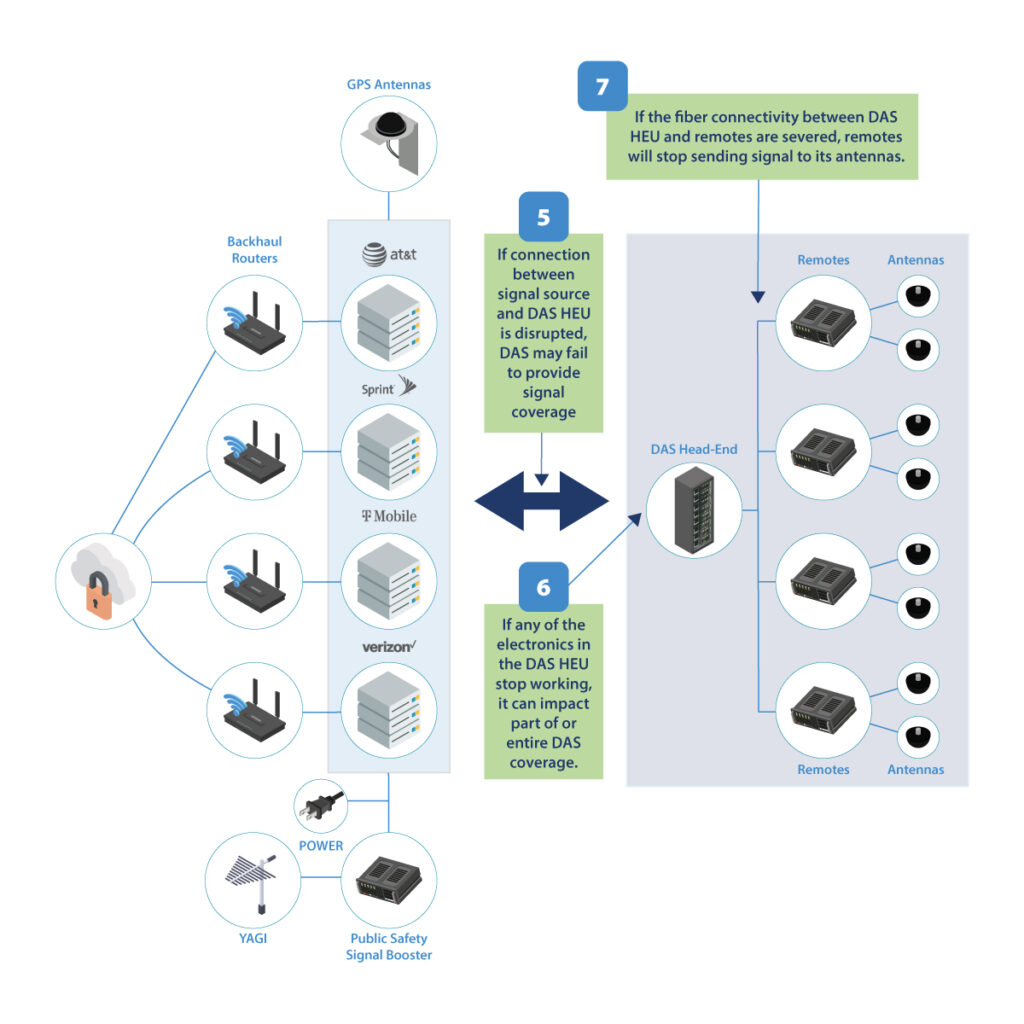
At the heart of every DAS is the DAS head-end, a cluster of electronics that serves as the initial point of contact for the RF signal from carrier-provided sources. The RF signal undergoes conversion to an optical signal before being transmitted to remote electronics through fiber optic cables. These remotes then convert the optical signal to RF, broadcasting it to antennas for cell phone reception.
Common Points of Failure
In theory, any malfunctioning component can potentially disrupt the entire DAS, but certain key elements are predisposed to issues more than others. By becoming aware of these vulnerabilities in advance and understanding critical components that demand meticulous attention and proactive measures, you can ensure the continuous and unhindered operation of the DAS infrastructure.

Defects in DAS Head-End Electronics
The DAS head-end is crucial, and any defects in its electronics can disrupt the entire system.
Defects in Remotes
Remote electronics play a vital role in signal conversion, and any malfunctions can impact the RF signal transmission.
Damage in Coaxial Cable
The coaxial cable is susceptible to damage, and any issues can impede the smooth flow of signals.
Damaged Fiber Cable
Fiber optic cables are integral to DAS operations, and damages can result in signal transmission failures.
Components of Signal Sources
Understanding the intricacies of signal sources is incredibly important since disruptions in their functionality can directly and immediately impact the overall efficiency of a DAS. Each component plays a crucial role in maintaining seamless wireless communication, from the electronics of base stations to the connection between the DAS and signal sources.

Understanding the signal sources is essential, as disruptions in their functionality can directly affect DAS service.
Base Station Electronics
The electronics of base stations are critical, and malfunctions can lead to service interruptions.
Electrical Circuit or Power Source
The power supply to base stations must remain stable to ensure uninterrupted service.
Connection to the Internet (Backhaul Router)
Backhaul router failures can impact the connection to the carrier’s core network, affecting call processing.
GPS Signal
GPS synchronization is crucial for maintaining accurate time, and disruptions can have delayed impacts on signal sources.
Connection Between DAS and Signal Source
Any failure in the connection between DAS and signal sources can lead to service disruptions.
Extent of Disruption
While not as catastrophic as critical failures, major failures still pose significant challenges to DAS functionality, impacting specific segments of the coverage area. By understanding the different types of disruption extent, including both critical and major failures, DAS administrators and maintenance teams with the knowledge needed to craft effective strategies for maintaining system integrity and minimizing service interruptions.
Understanding these major failures is essential for targeted maintenance and swift resolutions:
Critical Failures
- Carrier Signal Source Failure: System-wide outage.
- Power Circuit Failure: Impacts all coverage areas.
- Backhaul Router Failure: Calls cannot reach the core network.
- GPS Connection Failure: Delayed impact, usually within 24 hours.
Major Failures
- Remote Failure: Disruption in a part of the coverage area.
- Fiber Connection Failure: Disrupts service in specific areas.
- Coax or Antenna Failure: Antenna coverage interruptions.

Mitigation Strategies
To ensure the robustness of the system and address potential vulnerabilities, it is critical to employ proactive measures. These strategies aim to fortify the DAS against potential failures and ensure a seamless operation.
The following key mitigation strategies are recommended:
Regular Equipment Maintenance
Conduct routine checks and maintenance of DAS components to identify and address potential issues.
Redundancy and Backup Systems
Implement backup power sources, redundant connections, and failover mechanisms to minimize disruptions.
Monitoring and Alarming Systems
Utilize advanced monitoring systems to detect issues promptly and implement alarms for critical components.
Collaboration with Carriers
Establish communication channels with carriers to promptly address backhaul router and signal source issues.
Fiber Network Redundancy
Integrate redundant fiber networks to minimize the impact of critical fiber connection failures.
About MCA
MCA is one of the largest and most trusted DAS integrators in the United States, offering world-class voice, data, and security solutions that enhance the quality, safety, and productivity of customers, operations, and lives.
More than 65,000 customers trust MCA to provide carefully researched solutions for a safe, secure, and more efficient workplace. As your trusted advisor, we reduce the time and effort needed to research, install, and maintain the right solutions to make your workplace better.
Our team of certified professionals across the United States delivers a full suite of reliable technologies with a service-first approach. The MCA advantage is our extensive service portfolio to support the solution lifecycle from start to finish.
