

Enhancing Communications With PLTE Networks on CBRS Spectrum
Private LTE (PLTE) networks can provide a dedicated and secure communication infrastructure in scenarios where critical and secure communications are essential, such as in industrial settings or emergency response. Additionally, they can offer high capacity and performance, suitable for applications with demanding bandwidth requirements. This especially benefits manufacturing, healthcare, and utilities requiring reliable and low-latency communication.
Private LTE networks in the Citizens Broadband Radio Service (CBRS) spectrum allow organizations to establish dedicated and controlled wireless networks for their specific needs. Organizations can customize network parameters, optimize coverage, and tailor the network to specific applications and use cases while integrating PLTE with existing enterprise systems, IoT devices, and other technologies, providing a seamless and unified communication platform.
Deploying CBRS Networks
CBRS operates with three user tiers, each assigned distinct priorities, necessitating continuous coordination of information transactions. This crucial task is achieved through Spectrum Sensing and coordination, a distinctive and pivotal feature of CBRS. At the core of this orchestration is the Spectrum Access System (SAS), akin to a traffic controller or conductor directing the various components.
The SAS is a cloud-based service designed to oversee wireless communications within the CBRS band, preventing detrimental interference to higher-priority users. A CBRS device, called a CBSD, must obtain authorization from the SAS before initiating transmission in the CBRS band. Meanwhile, the Certified Professional Installer (CPI) provides essential information to the SAS for CBRS radios to ensure proper installation and configuration.
The CPI assumes full accountability for the completeness and accuracy of all installation parameters transmitted to the SAS, as any inaccuracies could result in harmful interference from the device.
CBSDs
There are two main types of CBSDs: Class A and B.
Class A CBSD
This type is best suited to indoor or low-power outdoor small cells with a maximum power of 24 dBm (per 10 MHz) and a maximum Effective Isotropic Radiated Power (EIRP) of 30 dBm (1 watt).
Essentially, Class A CBSDs are comparable to “enterprise-class” small cells.
Class B CBSD
Designed for outdoor use, Class B CBSDs have a maximum EIRP of 47 dBm (50 watts) and are intended for fixed wireless purposes.
To provision a CBSD, a CPI must supply the SAS with comprehensive data. This includes – and is not limited to – installation parameters specific to the CBSD, ensuring that things such as power levels, frequency bands, and other relevant configurations adhere to the regulatory standards. The accuracy and completeness of this information are pivotal to the proper functioning of CBSDs within the CBRS framework and the avoidance of interference issues.
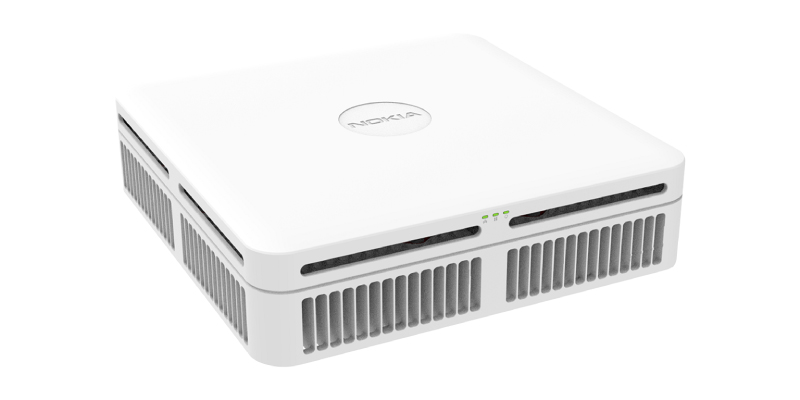
CBSDs require specific information for proper registration and operation within the CBRS framework.
The following details are crucial:
Location
- CPI must input latitude and longitude manually if the CBSD lacks built-in GPS or operates in areas with weak GPS signals.
- CBSDs must consistently remain in the reported location for SAS coordination.
Height Above Average Terrain (HAAT)
- A measure of antenna site height above the surrounding landscape.
- CPI reports device location and height above ground level; SAS calculates HAAT.
- Important for categorizing as Class A or B CBSD.
FCC ID
- FCC-issued identification for the CBSD device model.
CBSD’s Unique Serial Number
- Every CBSD has a unique serial number.
- Combined with FCC ID, forms a unique identifier for SAS registration.
Sector ID for CBSD with Multiple Antennas
- Each antenna is treated as a separate CBSD.
- CPI assigns a sector ID to antennas and adds it to the base device’s serial number.
- Enables unique identification for each antenna.
CBSD’s Air Interface
- Specifies the radio technology employed by the device, with information usually found in the device manual.
There are eight defined air interfaces as of Document WINNF-SSC-0002 Version 8.0.0 (1-29-20):
1.) E_UTRA: LTE technology.
2.) CAMBIUM_NETWORKS: Proprietary Cambium network waveforms.
3.) 4_BBW_SAA_1: IEEE 802.16E devices.
4.) NR (New Radio)
5.) DOODLE_CBRS
6.) CW: Supports Continuous Wave transmissions for testing.
7.) REDLINE
8.) TARANA_WIRELESS: Proprietary and designed for fixed wireless access, with compatibility with TDD LTE.
Device manuals and the latest approved air-interface document (WInnForum recognized CBRS air interfaces and measurements) should be consulted for accurate information.
Antennas
When attaching antennas to the CBSD, the CPI reports the following information for each antenna. Ensuring accuracy in reporting these antenna details is essential for proper SAS coordination and adherence to CBRS regulations.

Location
- The latitude and longitude of the CBSD’s antenna indicate the center of radiation accuracy to 50 meters or better. Designing in the iBwave program facilitates the retrieval of this information.
Antenna Height
- Reported within 3 meters. There are two acceptable reporting methods:
- Above Ground Level (AGL): Height above the ground, usually more accurate.
- Above Mean Sea Level (AMSL): Height relative to the average ocean level, providing a broader context.
Antenna Azimuth
- Horizontal pointing angle relative to true north.
- Must be a whole number between 0 and 359 degrees.
- Adjustments for magnetic declination when using a compass.
- For omnidirectional antennas, azimuth can be entered as zero.
Antenna Down Tilt
- Measure of how far the antenna is tilted towards the ground or sky.
- Recorded in whole-number degrees.
- Negative values (e.g., -90) indicate tilt towards the sky, while positive values (e.g., +90) indicate tilt towards the ground.
Antenna Gain
- Describes how efficiently the antenna converts input power into radio waves in a specific direction.
- Reported as a whole number between -127 and +128 dBi.
- Values found in the device datasheet; if in dBd, add 2.15 for dBi.
- No specific limit on antenna gain for CBRS devices, but SAS will restrict Effective Radiated Power (ERP).
Antenna Beamwidth
- Aperture angle from where most power is radiated.
- Measures the spread of the antenna pattern.
- Report 3-dB beamwidth as a whole number between 0 and 360 degrees.
- For omnidirectional antennas, enter 360 degrees.
About MCA
MCA is one of the largest and most trusted integrators in the United States, offering world-class voice, data, and security solutions that enhance the quality, safety, and productivity of customers, operations, and lives.
More than 65,000 customers trust MCA to provide carefully researched solutions for a safe, secure, and more efficient workplace. As your trusted advisor, we reduce the time and effort needed to research, install, and maintain the right solutions to make your workplace better.
Our team of certified professionals across the United States delivers a full suite of reliable technologies with a service-first approach. The MCA advantage is our extensive service portfolio to support the solution lifecycle from start to finish.
