
Electromagnetic Interference (EMI) Challenges in DAS Design Across Industries
What Is Electromagnetic Interference (EMI)?
The design and seamless operation of in-building wireless systems (IWS) are key to ensuring constant communications. However, as mentioned in our previous article, achieving this across various industries often involves overcoming numerous hurdles.
One of these hurdles we’ve previously discussed is Electromagnetic Interference (EMI).
EMI refers to the unwanted disruption or degradation of the wireless signals within a building caused by external electromagnetic sources. The interference can negatively impact the performance of wireless communication systems operating inside a building.
In-building wireless systems provide connectivity within a specific structure, including Wi-Fi, cellular networks, distributed antenna systems (DAS), and other wireless communication systems. These systems use radio frequency (RF) signals to transmit data wirelessly.
EMI can be caused by various electronic devices and sources within and outside the building. Some common sources of EMI include:
Electronic Equipment
Devices such as computers, routers, microwave ovens, and other electronic equipment emit electromagnetic radiation, which can interfere with wireless signals.
Power Lines
Electrical wiring and power lines can generate electromagnetic fields that may interfere with wireless signals, especially if the wiring is not properly shielded.
Other Wireless Devices
Nearby wireless devices operating on the same frequency bands can cause interference. For example, if multiple Wi-Fi networks are close, they may interfere with each other.
External Signals
Signals from nearby cell towers or other external sources can penetrate the building and interfere with the in-building wireless systems.
To mitigate the effects of EMI in in-building wireless systems, several strategies can be employed:
Frequency Planning
Choose appropriate frequency bands and channels to minimize interference from nearby wireless devices.
Shielding
Use shielding materials and techniques to protect against external sources of interference.
Signal Isolation
Employ directional antennas and signal filters to isolate and minimize interference.
Proper Grounding
Ensure proper grounding of equipment and wiring to minimize the impact of electrical interference.
Site Survey
Conduct a thorough site survey to identify potential sources of interference and optimize the placement of wireless devices.
Regulatory Compliance
Adhere to regulatory standards and guidelines that govern the use of wireless technologies to minimize interference.
In-building wireless systems can provide reliable and efficient wireless communication services within a structure by addressing and mitigating electromagnetic interference.
How Does EMI Affect In-Building Wireless Systems of Various Industries?
EMI, caused by specific devices emitting electromagnetic radiation, can disrupt wireless signals and compromise the functionality of DAS.
Some of the industries that encounter EMI challenges and the unique devices associated with each are:
Hospitals: MRI Machines
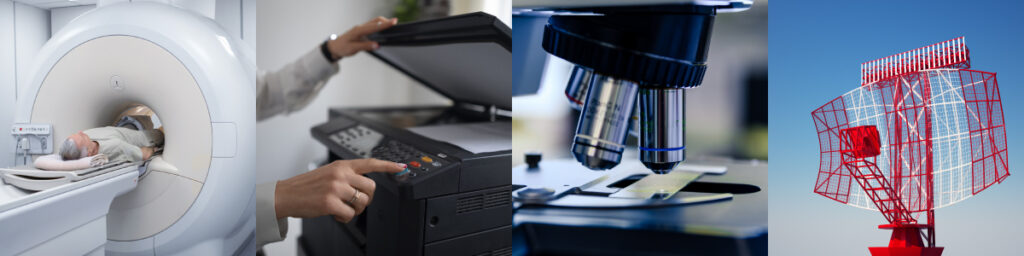
The strong magnetic fields generated by Magnetic Resonance Imaging (MRI) machines pose a challenge in the medical realm. The wireless communication hubs in hospitals and other large medical centers often struggle to maintain signal integrity due to these powerful devices.
Manufacturing Facilities: Welding Machines
Manufacturing settings frequently utilize welding machines emitting electromagnetic radiation during operation. The interference from these machines can disrupt wireless networks crucial for efficient operations and communication.
Office Buildings: Photocopiers
Office environments equipped with high-speed photocopiers often face EMI concerns. These devices can interfere with nearby wireless signals if not adequately shielded, negatively affecting day-to-day office communication.
Research Labs: Scientific Equipment
Research laboratories house many scientific equipment, some of which emit EMI. Devices that are vital for research, like electron microscopes and spectrometers, can compromise nearby wireless networks if the proper precautions aren’t taken.
Airports: Radar Systems
Due to the large radar systems used for air traffic control, airports often grapple with EMI interference. These powerful electromagnetic waves – which are absolutely essential to passenger and aircraft safety – can disrupt airport buildings’ wireless systems, impacting staff and passengers.
Theater or Auditorium: Stage Lighting
Entertainment venues face challenges due to EMI from sophisticated stage lighting equipment. Theatrical productions, essential for the entertainment industry, can suffer from disrupted wireless signals without proper shielding.
Power Plants: Generators
Power plants utilize electrical generators emitting EMI. These interference sources can impact wireless communication systems within the facility, hindering efficient operations.

Educational Institutions: Research Equipment
Scientific research equipment like electron microscopes and particle accelerators can generate EMI in universities and research institutions. This interference can pose a significant obstacle to wireless communication systems used for academic and research purposes.
Construction Sites: Heavy Machinery
Construction sites, often bustling with activity and heavy machinery, face challenges from EMI emitted by these devices. Ensuring uninterrupted wireless communication amidst such interference is crucial for safety and operational efficiency.
Broadcasting Stations: Transmitter Towers
Broadcasting stations, pivotal for media communication, have transmitter towers emitting powerful electromagnetic waves. These waves can interfere with nearby wireless communication systems without proper shielding, impacting media operations.
Tailoring DAS Designs for EMI Challenges
Understanding the diverse sources of Electromagnetic Interference in various industries is fundamental for DAS designers. By recognizing these challenges, industries can implement tailored solutions such as strategic shielding, frequency management, and device placement to ensure uninterrupted wireless connectivity.
Overcoming these hurdles ensures that the heart of modern communication, the DAS, continues to function seamlessly, irrespective of the industry it serves. DAS solutions can conquer the interference challenges posed by diverse EMI-emitting devices through careful consideration and innovative design, guaranteeing reliable wireless communication across industries.
About MCA
MCA is one of the largest and most trusted DAS integrators in the United States, offering world-class voice, data, and security solutions that enhance the quality, safety, and productivity of customers, operations, and lives.
More than 65,000 customers trust MCA to provide carefully researched solutions for a safe, secure, and more efficient workplace. As your trusted advisor, we reduce the time and effort needed to research, install, and maintain the right solutions to make your workplace better.
Our team of certified professionals across the United States delivers a full suite of reliable technologies with a service-first approach. The MCA advantage is our extensive service portfolio to support the solution lifecycle from start to finish.
