
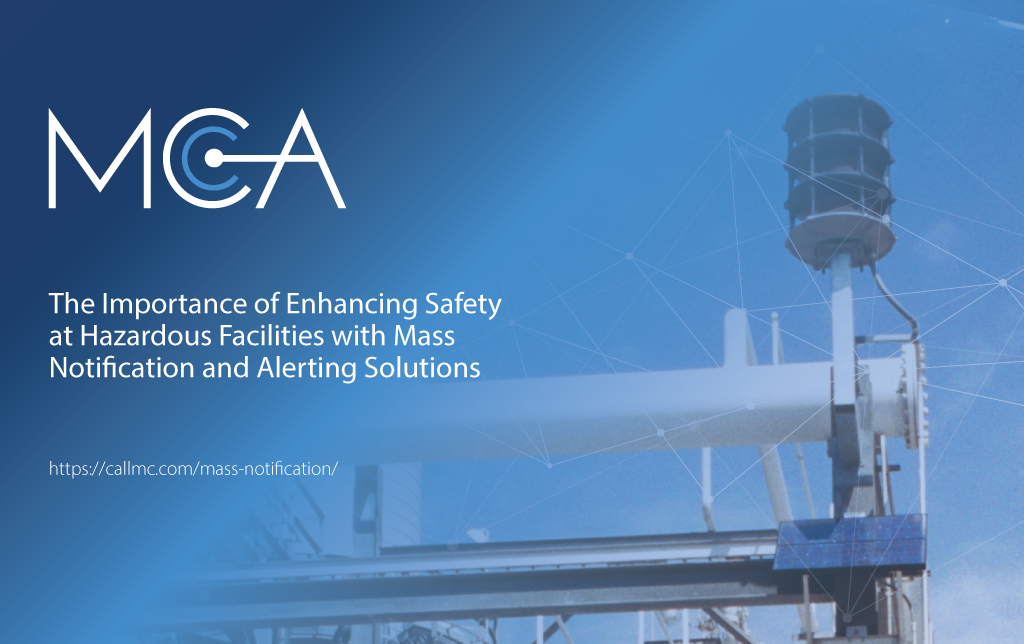
The Critical Role of Mass Notification Systems
Safety is a top priority for many of our nation’s utilities. This is especially true within the oil and gas sector and oil and gas-dependent power generation facilities. These environments are complex and inherently hazardous, requiring robust safety measures to protect personnel, infrastructure, and the environment. One of the most effective tools for maintaining safety in these sectors is deploying mass notification systems (MNS). These systems can ensure critical information is relayed quickly and accurately during emergencies.
Why Mass Notification Systems Are Essential
Oil and Gas Industry
The oil and gas industry faces numerous hazards, including fires, explosions, chemical spills, and equipment failures. According to the Bureau of Labor Statistics (BLS), the oil and gas extraction industry experienced an average of 115 fatalities and 22,000 nonfatal injuries annually between 2012 and 2021. In 2023, the United States refined an average of 18.4 million barrels of oil per day, accounting for almost 20% of the world’s crude oil. This includes 12.933 million barrels of crude oil, 6.431 million barrels of hydrocarbon gas liquids, 1.301 million barrels of biofuels and oxygenates, and 1.026 million barrels of refinery processing gain.
For work environments with hazardous materials of a combustible nature, systems that are either intrinsically safe or explosion-proof are typically required. These systems are designed to operate safely in explosive atmospheres and are durable enough to withstand harsh conditions.
Electric Power Industry
Electric power generation facilities, particularly those utilizing natural gas, also encounter significant hazards. Natural gas accounted for about 40% of the country’s electricity generation in 2022, a significant increase from 12.3% in 1990. This growth has driven the construction of new natural gas power plants with the industry reporting an average of 45 fatalities and 12,000 nonfatal injuries per year from 2012 to 2021.
Electric power generation facilities, especially those utilizing natural gas, face safety challenges similar to those in the oil and gas sector. These facilities require specialized mass notification systems that adhere to ATEX and Class 1, Div 2 safety standards. Just like in oil and gas, these systems must be either explosion-proof or intrinsically safe to avoid igniting surrounding flammable gasses or materials.
These industries deal with large workforces and remote, difficult-to-access locations, which complicate emergency responses. Additionally, accidents in these sectors can have severe environmental impacts, such as oil spills and toxic clouds, making rapid communication essential for safety and environmental protection.
Intrinsically Safe vs. Explosion-Proof Devices
While ensuring safety is one of the biggest priorities in hazardous environments, equipment choice can significantly impact safety, efficiency, and compliance with regulations. Two critical equipment categories in such settings are intrinsically safe and explosion-proof devices. These devices typically include a combination of UL Certifications, ATEX designations, or Class 1 Div 1, 2, or 3 ratings. Understanding their differences and applications is essential for selecting the right equipment.
Intrinsically Safe Devices
Intrinsically Safe Devices are designed to operate safely in environments with a high risk of explosions or fires due to flammable gasses, vapors, or dust. These devices are engineered to be safe even if they fail. The core principle behind intrinsically safe equipment is to limit the energy (both electrical and thermal) that could potentially ignite a hazardous atmosphere. These devices are almost always ATEX and/or IECEx certified for use in such environments.
Our partnership with Honeywell for example, enables us to provide intrinsically safe sirens and digital displays. These advanced explosion-proof designs, housed in blast-rated NEMA enclosures with backup battery power sources, offer the highest levels of safety for critical areas.
Key Features of Intrinsically Safe Devices
- Low Energy Levels: They are designed to prevent any potential ignition by operating at low energy levels that are incapable of causing an explosion.
- Close Proximity Usage: Intrinsically safe devices can be used very close to hazardous materials and are suitable for environments with high risks.
- Compliance: They meet strict safety standards, such as ATEX or UL ratings, ensuring they are safe for use in specific hazardous environments.
Benefits of Intrinsically Safe Systems
- High Safety Standards: Ensures safety for workers near hazardous materials.
- Reliability: Functions effectively even in extreme conditions.
- Advanced Protection: Combines explosion-proof features with intrinsically safe technology for added security.
Applications
Intrinsically safe devices are ideal for use in environments such as chemical plants, oil refineries, and other locations where flammable gasses or vapors are present. Examples include intrinsically safe sensors, alarms, and communication equipment.
Explosion-Proof Devices
Explosion-proof devices are designed to contain any explosion within the device itself, preventing the ignition of hazardous atmospheres surrounding the equipment. These devices are built to withstand explosive conditions and prevent any internal explosions from escaping and igniting the external environment.
Standard mass notification systems, such as those we offer through our partnership with Whelen, are effective in non-hazardous areas. These systems provide cost-effective, wide-reaching coverage ideal for broadcasting sirens and audio messages across large campuses. However, specialized equipment, like one of Whelen’s UL certified explosion-proof horns is necessary in hazardous zones with a risk of sparks causing explosions.
Key Features of Explosion-Proof Devices
- Containment: Explosion-proof devices are constructed to contain and isolate any explosions, ensuring the internal explosion does not spread to the external environment.
- Limited Proximity Usage: While explosion-proof devices can be used in hazardous areas, they should not be placed directly in the most hazardous zones where explosive conditions are most severe.
- Robust Design: These devices are typically housed in rugged enclosures that can endure harsh conditions and potential explosions.
Benefits of Explosion-Proof Systems
- Enhanced Safety: Designed specifically for hazardous environments.
- Durability: Built to withstand exposure to harsh conditions and potential explosions.
- Regulatory Compliance: Meets stringent safety regulations.
Applications
Explosion-proof devices are used in environments with a moderate explosion risk. They suit areas like refineries, petrochemical plants, and certain manufacturing facilities.
Selecting The Right Mass Notification System
Selecting the correct mass notification system for hazardous environments in the oil and gas sector and natural gas power generation facilities. MCA offers a range of MNS solutions tailored to meet the specific needs of these industries, ensuring safety, reliability, and compliance with industry standards.
For more information on how MCA can help enhance the safety of your facilities with advanced mass notification systems, contact us today.
About MCA
MCA is one of the largest and most trusted technology integrators in the United States, offering world-class voice, data, and security solutions that enhance the quality, safety, and productivity of customers, operations, and lives.
More than 65,000 customers trust MCA to provide carefully researched solutions for a safe, secure, and more efficient workplace. As your trusted advisor, we reduce the time and effort needed to research, install, and maintain the right solutions to make your workplace better.
Our team of certified professionals across the United States delivers a full suite of reliable technologies with a service-first approach. The MCA advantage is our extensive service portfolio to support the solution lifecycle from start to finish.
