

Evaluating Security Camera Options for Commercial Applications
For organizations evaluating physical security investments, surveillance cameras remain one of the most foundational – and most complex – decisions. Commercial security environments require more than basic visibility; they demand reliability, scalability, and integration with broader security and IT systems. With a wide range of camera types, recording technologies, and deployment models available, understanding the differences between options is essential to building an effective surveillance strategy.
Selecting the right commercial security camera system is not simply about choosing hardware. It involves evaluating how cameras capture data, how video is transmitted and stored, and how the system supports long-term operational and security goals. A clear understanding of these variables helps ensure surveillance investments deliver value, clarity, and future readiness.
Types of Cameras Used in Commercial Security Systems
Commercial security cameras are designed for different environments, use cases, and operational needs. Each type offers unique strengths depending on coverage requirements, lighting conditions, and monitoring objectives.

Analog Cameras
Analog cameras represent legacy technology that continues to appear in older systems. These cameras transmit video over coaxial cable and typically provide standard-definition footage. While reliable, analog systems are increasingly limited in resolution, scalability, and analytics capabilities.
TVI Cameras
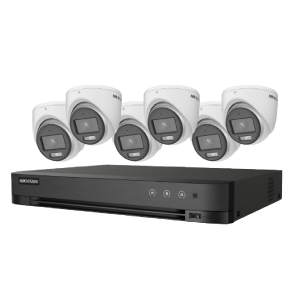
TVI (Transport Video Interface) cameras bridge the gap between analog and modern systems by delivering high-definition video over coaxial cabling. TVI allows organizations to upgrade image quality without fully replacing legacy wiring, making it a transitional option in retrofit environments.

360-Degree Cameras
360-degree cameras, often referred to as fisheye cameras, capture a full panoramic view of large open spaces. These cameras are well-suited for lobbies, warehouses, and retail floors where broad coverage is needed without installing multiple devices.

Wireless & IP Cameras
Wireless and IP cameras represent the standard for modern commercial surveillance. IP cameras transmit digital video over Ethernet or Wi-Fi networks and support higher resolutions, remote access, and advanced analytics. While wireless cameras reduce cabling requirements, they still require reliable power and network connectivity.
Bullet Cameras
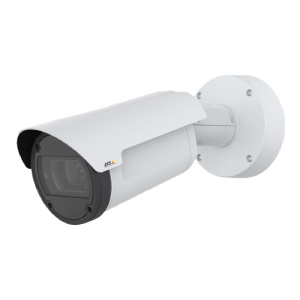
Bullet cameras are among the most common types of commercial cameras. Their compact, directional design makes them effective for hallways, entrances, and perimeter monitoring. Bullet cameras can be deployed indoors or outdoors and are often chosen for their visibility as a deterrent.

Turret Cameras
Turret cameras feature a ball-and-socket design that allows flexible positioning during installation. They are easy to aim and less prone to glare, though adjustments must be made physically rather than remotely.

Dome Cameras
Dome cameras enclose the lens in a protective dome, obscuring the field of view and reducing the risk of tampering. These cameras are frequently used in retail, healthcare, and corporate interiors where discretion and durability matter.

PTZ Cameras
PTZ (pan-tilt-zoom) cameras offer remote control over viewing direction and zoom levels. While more expensive, PTZ cameras can reduce the total number of cameras required in certain environments. However, because they only record what they are actively viewing, they are often paired with fixed cameras for comprehensive coverage.
Comparing Commercial Security Camera System Options
Choosing the right surveillance system requires evaluating several technical and operational factors.
WiFi vs. Ethernet
Wired Ethernet connections, particularly Power over Ethernet (PoE), remain the most reliable option for commercial deployments. PoE allows cameras to receive power and transmit data through a single Ethernet cable, simplifying installation and improving stability. While Wi-Fi can be effective in some environments, it may introduce limitations related to bandwidth, interference, and security.
DVR vs. NVR
Recording architecture is another key consideration. DVR systems process video from analog cameras, while NVR systems receive digital video streams directly from IP cameras. Modern commercial systems increasingly rely on NVR or hybrid architectures to support higher resolutions and analytics.
Local Storage vs. Cloud Storage
Storage strategy plays a critical role in system design. Many organizations use a combination of local and cloud storage to balance redundancy, accessibility, and cost. Local storage offers independence from internet connectivity, while cloud storage enables remote access and additional layers of protection.
SD vs. HD vs. 4K
Resolution – ranging from standard definition to 4K – determines the level of detail captured. Higher resolution improves identification and investigation but increases bandwidth and storage demands. Field of view also impacts clarity; cameras covering wider areas may require higher resolution to maintain detail.
Bandwidth
Bandwidth planning is essential, especially in multi-camera deployments. Higher resolutions and frame rates require sufficient network capacity to avoid congestion and performance issues.
IP Cameras vs. Analog Cameras in Modern Deployments
The shift from analog to IP-based surveillance has transformed commercial security. IP cameras support higher resolutions, Power over Ethernet, and easier integration with video management software. They also enable advanced video analytics, such as motion detection, object classification, and behavior analysis, turning surveillance systems into sources of actionable intelligence rather than passive recording tools.
While IP cameras often carry higher upfront costs, their higher installation efficiency and long-term flexibility often make them more cost-effective over time. Their compatibility with modern software platforms also future-proofs security investments as analytics and AI capabilities continue to advance.
Key Considerations Before Investing in a Commercial Surveillance Solution
Before selecting a surveillance system, organizations should evaluate installation requirements, camera placement, storage needs, and environmental conditions. Choosing reputable manufacturers and experienced integrators ensures systems are properly designed and aligned with existing power, network, and security infrastructure.
Decisions around indoor versus outdoor deployment, lighting conditions, frame rate, audio recording needs, and retention periods all influence system performance. For example, environments requiring nighttime monitoring benefit from cameras equipped with infrared capabilities, while high-traffic areas may require higher frame rates for effective tracking.
Working with an experienced integrator such as MCA helps organizations navigate these decisions, ensuring surveillance systems are not only technically sound but operationally effective and scalable.
Frequently Asked Questions
Commercial security systems commonly use IP cameras, analog cameras, bullet cameras, dome cameras, PTZ cameras, turret cameras, and 360-degree cameras, each designed for different coverage and operational needs.
In most modern deployments, IP cameras are preferred due to higher resolution, Power over Ethernet support, easier installation, and compatibility with advanced video analytics and software platforms.
DVR systems process video from analog cameras, while NVR systems receive digital video streams directly from IP cameras. NVR systems are standard in modern commercial surveillance environments.
Many businesses use a combination of local and cloud storage. Local storage offers independence from internet connectivity, while cloud storage provides remote access and additional redundancy.
HD is the minimum standard for most commercial applications, while 4K is recommended for large areas or situations requiring detailed identification.
Key considerations include camera type, placement, lighting conditions, storage requirements, network bandwidth, indoor or outdoor use, and integration with existing security systems.
About MCA
We believe every workplace should be safe, secure, and efficient. As trusted advisors, we deliver integrated communication, connectivity, and security solutions with a Service First mindset – driven by a team that cares deeply about our customers and each other.
Why MCA? At MCA, we help solve critical communication, connectivity, and security challenges with turnkey, integrated system solutions – from two-way radios and in-building wireless to video surveillance, access control, and more. MCA is built from over 50 companies with deep technical expertise and strong local roots. And we’re still growing – expanding our capabilities, our reach, and our team.Our 100+ Solution Centers bring together sales, installation, service, and customer operations teams to deliver seamless, nationwide support. Guided by our Service First value, we don’t just connect the wires and walk away – we provide customized solutions backed by deep expertise and lifecycle support.
